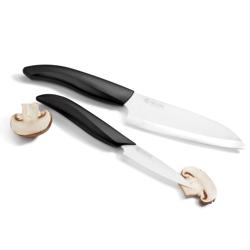
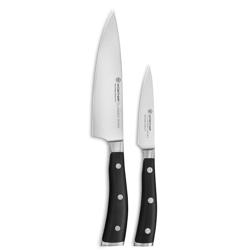
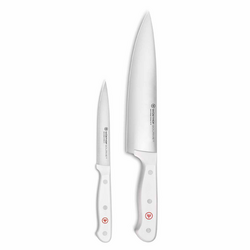
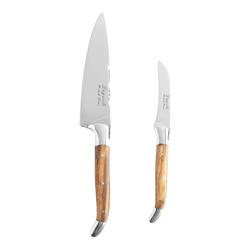
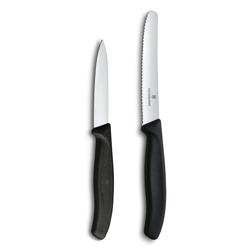
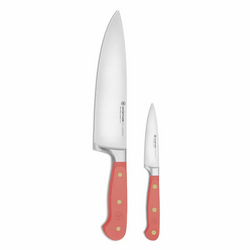
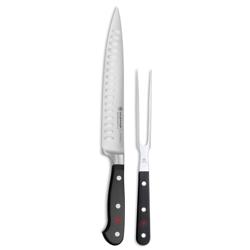
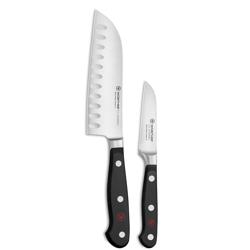
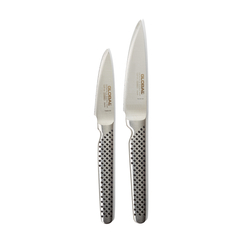
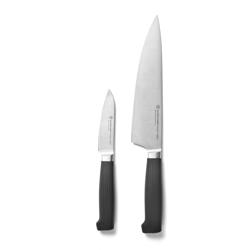
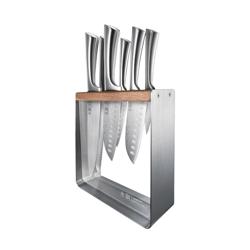
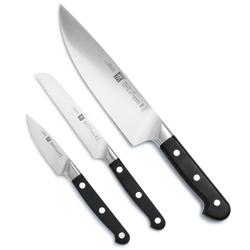
A knife set of two often pairs a chef’s knife with a paring knife, giving home cooks a larger blade for chopping and slicing and a smaller blade for peeling and detailed prep. A common combination is an 8-inch chef’s knife and a paring knife measuring 3 to 4 inches, though blade lengths and pairings vary by set. Together, these complementary shapes cover much of the work behind everyday meals: dicing an onion for soup, slicing a chicken breast for stir-fry, trimming strawberries for breakfast or mincing parsley to finish a dish. The appeal is straightforward. Instead of filling a drawer with tools that see occasional use, a compact knife set keeps the focus on a few blades that earn their place at the cutting board. The broader chef’s blade provides room for working through vegetables and boneless proteins, while the narrow paring blade offers control around an apple stem or beneath a strip of citrus peel. Some pairings serve a different purpose, combining a chef’s knife with a utility knife or bringing together blades intended for serving and dining. The included knife types matter more than the piece count alone, especially when choosing a set to complement cutlery already in the kitchen. A cook who makes salads and vegetable-heavy dinners may appreciate a versatile prep pairing, while someone looking for table knives will have different needs for blade shape and edge style. For a first apartment, a shared kitchen or a smaller cooking space, a thoughtfully chosen pair can establish a useful foundation without requiring a large countertop block. Experienced cooks can also appreciate the simplicity of replacing two frequently used knives together. The right pairing supports familiar cooking habits, whether that means quick sandwich prep at lunch or chopping onions, carrots and celery for a pot of sauce.
Materials and construction influence how those knives feel in use and how much attention they need afterward. Stainless steel is a practical choice for everyday cutlery because it resists corrosion, although it still benefits from prompt washing and thorough drying. High-carbon stainless steel combines corrosion resistance with the potential for a durable, keen edge, but the steel’s formulation and heat treatment help determine its actual performance. Carbon steel can take a fine edge and develop a patina over time; it also requires more care to prevent rust, particularly after cutting acidic ingredients. Neither a steel label nor a blade’s appearance tells the whole story. A harder blade may hold its edge longer but can be less forgiving of twisting or contact with bones, while a tougher blade may tolerate everyday bumps better and need more frequent sharpening. Forged blades often have a substantial feel, while stamped blades are often lighter, though construction alone does not establish quality or comfort. Blade geometry matters just as much during dinner prep. A gently curved chef’s knife edge supports a rocking motion through herbs, while a flatter profile suits cooks who favor an up-and-down chopping motion. A fine tip helps with precise trimming, and adequate space beneath the handle keeps knuckles from bumping the board. Handle shape, texture and balance deserve equal attention. Wood offers natural variation and a warm feel, while synthetic materials can provide consistent texture and relatively simple care. Smooth metal handles offer another distinct feel, with grip depending on their shape and finish. A comfortable knife should feel secure without requiring a tight squeeze, and a heavier knife is not automatically a better match for a larger hand. For someone preparing several meals at once, a manageable weight and a grip that stays comfortable through repeated cuts can matter more than decorative details.
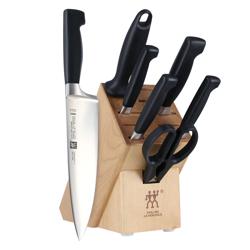
Everyday durability depends on matching the knives to their intended work and giving the edges a little protection between meals. Chef’s knives and paring knives are generally designed for controlled cuts through food, not for prying lids, separating frozen ingredients or chopping through bones. A wood or suitable plastic cutting board provides a more forgiving surface than glass, stone or a dinner plate, helping preserve the edge through repeated use. Hand-wash knives individually with mild soap, rinse them carefully and dry them promptly rather than leaving them in a sink or running them through the dishwasher. Prolonged moisture, harsh detergents and contact with other utensils can damage handles and edges even when the blade is stainless steel. Protected storage also makes a difference. Blade guards, fitted drawer storage or a suitable knife block keep sharp edges from knocking against loose utensils; whichever option fits the kitchen, each knife should be clean and dry before being put away. Regular maintenance helps keep slicing predictable, but honing and sharpening are not interchangeable. A compatible honing tool can help maintain some edges between sharpenings, while sharpening removes metal to restore a worn edge. The appropriate method depends on the blade, so the manufacturer’s care recommendations are worth keeping with the set. These practical details also make a compact knife set a thoughtful housewarming, wedding or graduation gift, particularly for someone who enjoys cooking but has not yet settled on everyday cutlery. The recipient’s habits offer useful direction: frequent vegetable prep calls for different strengths than serving steaks at the table, and a person who prefers low-maintenance tools may appreciate stainless steel over carbon steel. For a kitchen that needs a broader selection of blade shapes,
knife sets of seven offer another format to consider, with the included components determining how the set supports different tasks. A well-matched pair remains an appealing choice when the goal is simpler: dependable knives for the chopping, slicing and small finishing cuts that bring a meal together.