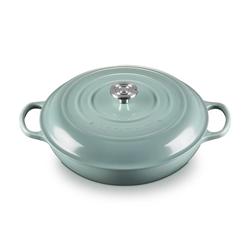
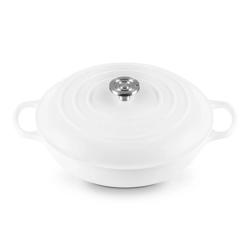
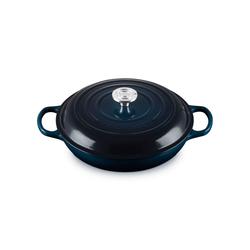
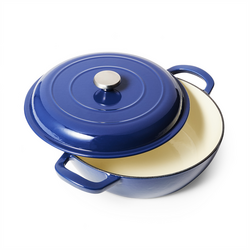
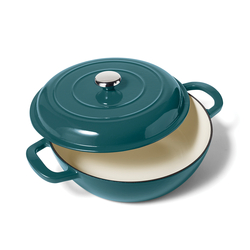
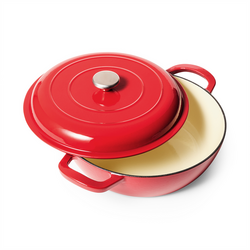
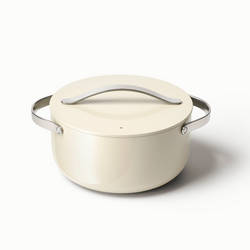
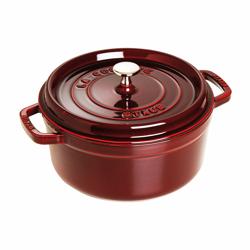
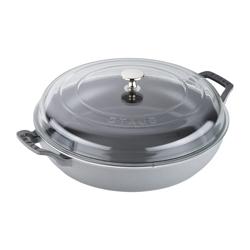
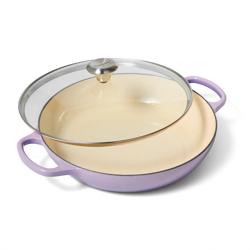
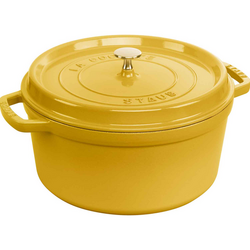
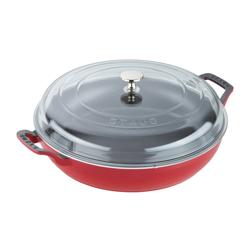
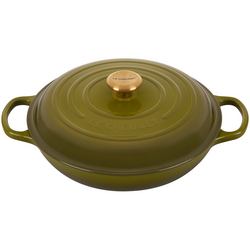
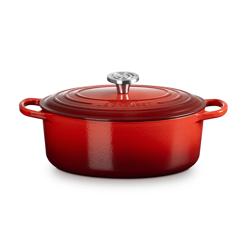
A 5-quart enameled cast iron braiser combines a wide cooking surface for browning with a fitted lid that helps retain moisture during slow cooking. Its cast iron body holds heat, while the enamel finish requires no seasoning and is well suited to dishes made with tomatoes, wine or other acidic ingredients. That combination makes these pans useful for much more than their namesake cooking method. Chicken thighs can develop golden skin before finishing over softened onions, short ribs have room to brown before a long simmer and wedges of cabbage can caramelize before becoming tender in broth. Compared with a tall Dutch oven, a braiser generally has lower sides and a broader footprint, making it easier to turn food, arrange ingredients in a single layer and let sauces reduce when uncovered. Compared with an open skillet, it offers the depth and covered cooking space needed for meals that start with a sear and finish with gentle, moist heat. A 5-quart capacity provides room for family dinners and dishes intended to leave leftovers, although the number of servings depends on the recipe and the size of the ingredients. Bone-in cuts take up more space than diced vegetables, and a pan filled with sauce needs enough headroom to simmer without spilling. The broad surface is especially helpful for arranging stuffed peppers, nestling meatballs into tomato sauce or finishing beans with greens. It also makes serving straightforward: individual portions remain easy to reach rather than stacked deep in a pot. For cooks who enjoy building a meal in one vessel, 5-quart enameled cast iron braisers bring browning, covered simmering and oven finishing together without requiring several pans. They are particularly useful when a recipe calls for developing browned bits on the bottom, then incorporating those flavorful pieces into a sauce that cooks alongside the main ingredients.
The material and shape matter as much as the stated capacity. Cast iron warms more slowly than lightweight cookware, but its ability to retain heat helps maintain a steady cooking environment once heated. Gradual preheating and a burner suited to the base are more useful than simply turning the heat to high; a wide pan still needs time to warm across its surface. Enamel creates a barrier between food and bare iron, eliminating routine seasoning while allowing the pan to move comfortably between rich meat dishes and bright, acidic sauces. It is not the same as a nonstick coating, so a little cooking fat, appropriate heat and patience while food browns still matter. Interior finishes can be light or dark, with a lighter surface making changes in butter, onions and pan drippings easier to see. Exterior color is a matter of preference, especially for cookware that may sit on an open shelf or go directly to the table. For baked pasta, layered vegetables and other oven-to-table meals,
enameled cast iron braisers for casseroles offer generous surface area for browned toppings and accessible portions. Shape affects those results: shallower sides encourage evaporation, while deeper designs provide extra room for bulky greens or saucy preparations. Overall dimensions deserve a close look because two pans with the same capacity may occupy different amounts of stovetop, oven and cabinet space. Handles should provide a secure grip with oven mitts, and their width counts when checking oven fit. A filled cast iron braiser is substantial, so consider the combined weight of the pan, lid and meal, along with the distance between stove, oven and table. Cast iron bases are generally compatible with induction, but cooktop compatibility should always be confirmed for the chosen design. Oven-temperature limits, lid materials and knob construction can differ, too, so check those details before planning high-heat roasting or a broiler finish rather than assuming every part has the same heat tolerance.
With thoughtful care, enameled cast iron can serve as dependable everyday cookware for many years. The enamel is durable, but it benefits from protection against sharp impacts, metal utensils and sudden temperature changes. Wooden or silicone tools are practical companions for stirring sauces and lifting food without scraping the interior. After cooking, allow the pan to cool before washing; adding cold water to a very hot vessel can damage the finish. Warm, soapy water and a soft sponge are usually a good starting point, with a soak helping loosen stubborn food once the cookware has cooled. Follow the manufacturer’s recommendations for cleaners and dishwasher use, and avoid abrasive pads or harsh scraping that can dull or damage the enamel. Even when dishwasher cleaning is permitted, hand-washing is often recommended to help preserve the finish. Dry the pan thoroughly before putting it away, including the rim and any exposed edges, and use a soft protector if another piece of cookware will sit inside it. A secure storage spot is worth planning for a pan of this weight and width. These considerations make a braiser a good match for cooks who appreciate cookware that moves from preparation to serving and are comfortable lifting and caring for cast iron. It can be a thoughtful wedding or housewarming gift for someone establishing a kitchen, or a useful addition for an experienced cook who already has a deep Dutch oven but wants more browning space. A recipient who regularly makes chicken dinners, vegetable gratins or slow-cooked beans may find the format especially useful. At the table, place the hot pan on a sturdy, heat-safe trivet and keep mitts nearby, since both the handles and lid can remain hot well after cooking. The appeal is practical: a roomy pan that supports careful browning, gentle simmering and an inviting meal served straight from the oven.