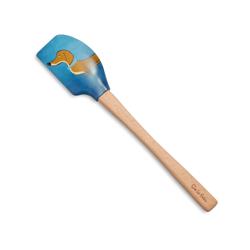
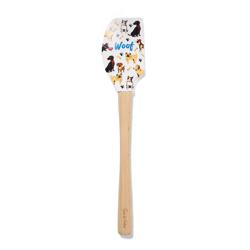
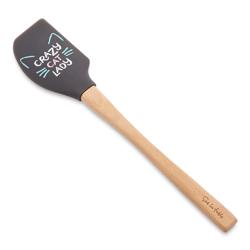
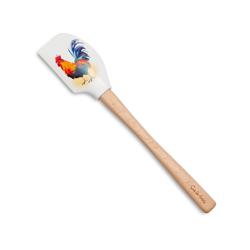
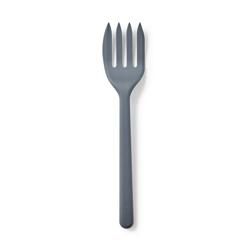
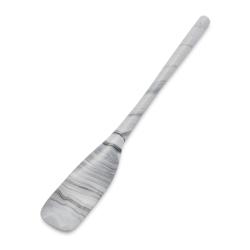
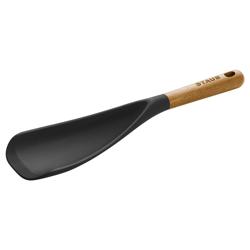
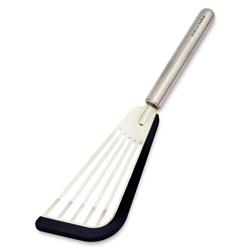
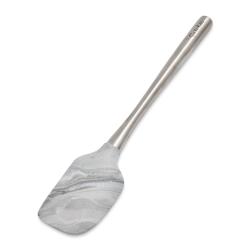
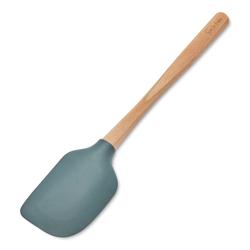
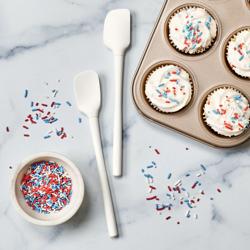
An animal spatula brings a little personality to the everyday work of mixing, folding and scraping. A familiar creature on the handle or a playful illustration across the head can make a practical kitchen tool feel more personal without changing its place in the cooking routine. Animal-themed spatulas appeal to bakers, pet lovers and anyone who enjoys a cheerful detail beside the mixing bowl. Their usefulness still comes down to the same things that matter in any spatula: a comfortable grip, a shape that reaches into the cookware and enough flexibility for the task. A broad head suits sweeping cake batter from the side of a bowl, while a narrower profile can reach into a jar of nut butter or help spread a filling. A gently curved edge follows rounded bowls; a straighter edge helps gather ingredients from flatter surfaces. For folding whipped cream into a chocolate mixture, a flexible edge backed by a supportive center offers a useful balance of movement and control. For thicker cookie dough, a firmer tool may feel steadier in the hand. The word “spatula” can also describe a turner, so the working shape matters as much as the animal design. A scraper intended for mixing is different from a flat blade made to slide beneath a pancake. Looking at the head, handle and intended use helps keep the choice grounded in what happens at the counter. Decorative details are most satisfying when they complement that everyday function, whether the spatula spends its time smoothing frosting or scraping the last spoonful of hummus from a food processor bowl. Size deserves a little attention, too: a compact spatula can feel just right for small prep bowls, while a longer handle offers more reach in a deep mixing bowl. The best fit is one that feels natural to pick up, with an animal motif that makes it easy to recognize among the other tools in a crock or drawer.
Materials make a noticeable difference in how an animal spatula handles food and holds up to regular use. Silicone is a common choice for flexible scraping edges because it bends against the contours of a bowl and is generally gentle on nonstick cooking surfaces when used as directed. Its flexibility varies, though, so a soft edge for folding delicate mixtures may behave differently from a thicker head designed for sturdier stirring. Heat resistance also varies by construction, making the manufacturer’s care and use instructions important whenever a spatula will touch hot cookware. A baking spatula should not be assumed suitable for stovetop cooking simply because its head is silicone. Handle materials bring their own qualities to the task. Wood offers a familiar feel and a natural appearance that can balance a colorful animal illustration, while a smooth molded handle may appeal to cooks who prefer a continuous surface. A secure connection between the head and handle matters when moving through dense batter, and a grip that remains comfortable during repeated stirring is worth considering alongside the artwork. Care requirements should fit the household routine as well. Some spatulas are dishwasher safe, but that depends on the entire tool, including the handle and any printed decoration. Wood-handled tools generally benefit from prompt hand-washing and thorough drying rather than soaking. Where a head is designed to detach, cleaning and drying the connection helps keep trapped food and moisture from becoming a problem. A one-piece design has fewer joints to clean, although its printed or molded details still deserve the care recommended by the maker. For lasting usefulness, a smooth working edge and a firmly attached handle matter more than how elaborate the decoration looks. Cuts, splitting or a loosening head are reasons to stop and assess the tool before using it again. Gentle cleaning, appropriate storage and using the spatula for its intended purpose help preserve both its working surface and the animal design that made it appealing in the first place.
The right animal spatula can feel especially thoughtful when its design reflects the person who will use it. For a devoted dog lover, a cat enthusiast or someone with a fondness for woodland creatures, an animal motif adds a personal connection to an otherwise practical gift. It is a natural fit for a birthday, housewarming or thank-you, particularly when the recipient enjoys baking or has begun setting up a kitchen. Pairing the theme with the person’s cooking habits makes the gesture more useful: an enthusiastic cake baker may appreciate a shape suited to folding and scraping, while someone who regularly prepares small batches may get more use from a compact size. For households that cook together, a distinctive animal design can also give a familiar tool a recognizable place in the routine. A child helping an adult stir muffin batter may enjoy choosing the animal-themed spatula, but the tool should still suit the task and the child’s grip. A decorative kitchen utensil is not a toy, and adult supervision remains important around appliances, hot pans and uncooked ingredients. Even away from family baking, a playful design can sit comfortably in a hardworking kitchen. It does not need matching accessories to belong beside plain mixing bowls, everyday bakeware or a collection of well-used wooden spoons. Cooks drawn to cheerful kitchen details can also explore
Cute Spatulas for a broader decorative direction. Whether the appeal is a favorite animal, an expressive illustration or a small touch of color, the most rewarding choice combines that visual connection with a shape that earns regular use. A spatula that reaches the bottom of the bowl, rests comfortably in the hand and cleans up without fuss is more likely to become part of the daily rotation. The animal detail adds the smile; the fit and function keep it close at hand.