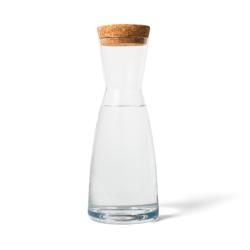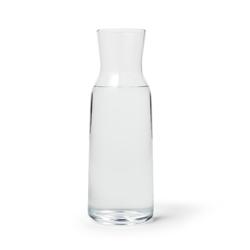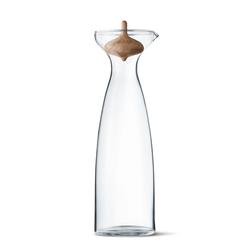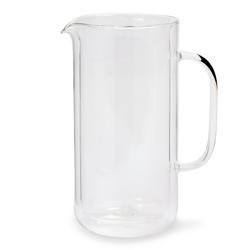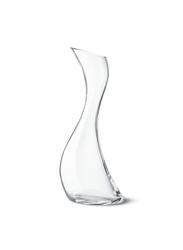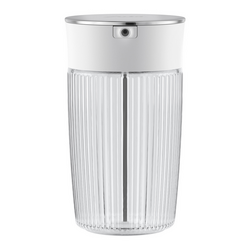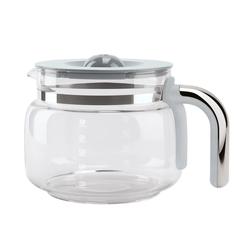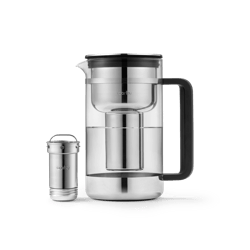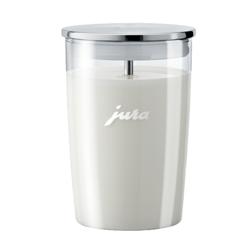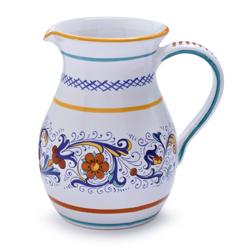
Beverage carafes are serving vessels for water, juice, coffee, tea and wine, with shapes and materials suited to different drinks and occasions. They bring beverages to the table without the packaging, giving everything from a glass of orange juice at breakfast to water shared over dinner a more considered presentation. Unlike a pitcher, which typically has a handle and a pronounced spout, a carafe often has a narrower neck and may be designed to pour directly from its rim. Some have handles, lids or stoppers, while others keep the silhouette simple and open. Clear glass makes the contents easy to see, whether that means checking how much water remains or showing off thin slices of lemon and cucumber. Its transparency also works well with colorful juices, iced tea and wine, letting the drink become part of the table rather than hiding it behind a label. Ceramic offers a different character, with an opaque surface that can complement everyday dishes or add contrast to clear drinking glasses. Stainless steel is less vulnerable to breakage than glass, and insulated construction can help maintain a beverage’s serving temperature. Material alone does not determine what a carafe can hold, though: hot coffee and tea belong only in vessels specifically rated for hot liquids. For wine, shape has another purpose. A broad base exposes more wine to air, while a narrower serving carafe may be intended mainly for pouring and presentation rather than substantial aeration. Water and juice carafes tend to emphasize comfortable handling, controlled pouring and an opening that suits the contents. These differences make beverage carafes useful well beyond a formal dining setting. A small vessel can sit beside a breakfast plate, a larger one can keep water within reach during a family meal and an insulated design can support a coffee service without repeated trips back to the kitchen. The right choice fits the drink being served as naturally as it fits the table.
Capacity, proportions and the way a carafe feels when full all matter in daily use. A compact carafe is easy to place beside a bedside glass or on a small café table, while a larger capacity suits shared meals and gatherings where several people are pouring from the same vessel. Bigger is not automatically more convenient: a full glass carafe can be heavy, and a tall design may need more clearance than a refrigerator shelf provides. For water or juice stored between servings, the overall height, base width and lid clearance deserve as much attention as the stated capacity. A handle can offer a familiar grip, while a comfortably shaped neck can make a handle-free carafe easier to hold. A balanced base and a rim that directs the stream neatly are especially useful when pouring at a crowded table or filling smaller glasses. Wide openings accommodate ice cubes, citrus wedges and a cleaning brush more easily; narrow openings create a different profile but may require smaller additions and more deliberate cleaning. Lids help cover the contents between pours, although a loose-fitting lid should not be treated as a leakproof seal for travel. Depending on the design, a stopper or pouring lid may also help keep fruit and ice inside as the drink flows out. For coffee service, insulation and lid construction matter more than a transparent view of the contents. For infused water, visibility and access to the interior may take priority. Juice with pulp benefits from an opening and pouring mechanism that are easy to rinse thoroughly. At a brunch table, separate carafes for water and juice make each drink easy to identify, while a single water carafe on a dinner table keeps the setting uncluttered. These practical details help distinguish a vessel that looks appealing on a shelf from one that earns a place in an everyday routine.
A carafe’s finish and shape can connect it to the rest of a table without requiring a perfectly matched collection. Clear glass works alongside patterned plates, textured linens and a mix of drinking glasses, while ceramic can introduce a softer outline or a color that echoes serving bowls. Stainless steel brings a different texture and can sit comfortably beside flatware and other metal accents. A
beautiful carafe can serve as a focal point, but its usefulness comes from details that remain welcome after the table is cleared: an accessible interior, a comfortable grip and care requirements that suit the household. Dishwasher-safe construction can simplify cleanup, provided that designation applies to every component being washed. Lids, seals and insulated bodies may have different care instructions, so the vessel and its accessories should be considered separately. Hand-washing may be necessary for delicate glass, decorative finishes or insulated designs, and a soft bottle brush can help reach the base without abrasive scrubbing. Coffee, tea and juice residue are easier to remove before they dry, particularly around spouts and beneath removable seals. Thorough drying before storage helps prevent trapped moisture and lingering odors. Durability also depends on handling: glass rims can chip if they knock against a faucet, and sudden temperature changes can damage glass that is not designed to withstand them. Even heat-resistant glass needs to be used within its stated limits. Those considerations make care as important as appearance when choosing a carafe for frequent use. As a gift, a beverage carafe suits a housewarming, wedding or host who enjoys gathering people around the table. The most thoughtful choice reflects the recipient’s habits, whether that is pouring coffee over a leisurely breakfast, setting out water for dinner or serving wine with friends. Paired with compatible drinking glasses or given on its own, a well-chosen carafe offers a useful balance of presentation and everyday purpose.