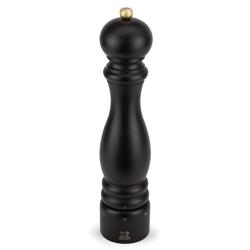
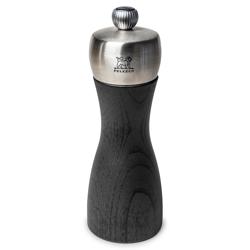
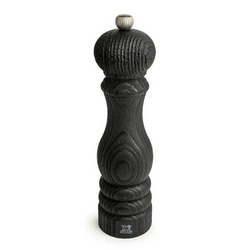
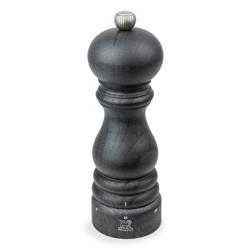
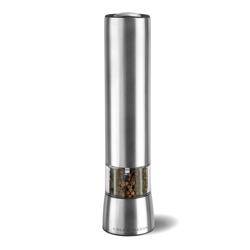
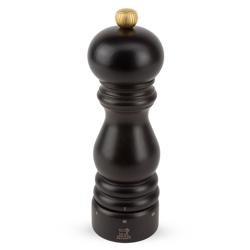
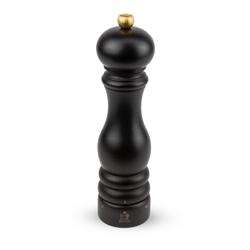
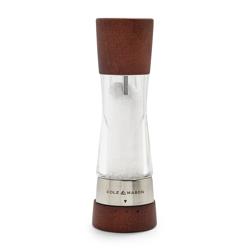
Black wooden salt and pepper grinders combine wood bodies with grinding mechanisms that crush peppercorns and salt crystals just before serving or cooking. Many designs offer adjustable coarseness, making it possible to move from a fine sprinkle over scrambled eggs to a more noticeable crack of pepper on a sliced steak. Their appeal is practical as well as decorative: a black finish gives familiar wooden mills a clean, coordinated look that works beside stainless steel cookware, white dinnerware and natural wood serving boards. Depending on the finish, the surface may reveal some grain or have a more uniform appearance, while rounded profiles and turned details bring different character to the table. A slender pair can sit comfortably beside everyday place settings without crowding the meal; a larger pair may make more sense near a preparation area where seasoning happens throughout the day. Height is only part of the fit, though. The width of the body, the shape of the top and the effort needed to turn the mechanism all affect how comfortable a grinder feels in use. A gently curved body can give the hand a natural place to rest, while a broader base can help a mill stand securely between uses. Weight matters, too, especially for anyone who prefers a lighter tool or finds repeated twisting tiring. For a coordinated table, matching grinders create a consistent look, but clear salt and pepper markings help guests reach for the right seasoning without guessing. Different heights or subtly different tops can also make a pair easier to tell apart. The same understated approach carries through to
modern wood salt & pepper grinders, where shape and natural material can complement a contemporary setting. Whether placed beside a bowl of pasta or kept within reach of the cutting board, the most useful grinders balance appearance with a comfortable grip and a size that suits the way you cook.
The mechanism inside a wooden grinder matters just as much as the finish outside. Pepper mills commonly use hardened steel or ceramic grinding components, while salt mills need components designed to resist salt corrosion, such as ceramic or another material specifically intended for salt. A matching exterior does not mean the two grinders are interchangeable, so each should be filled only with the seasoning its manufacturer recommends. Whole peppercorns are a familiar choice for pepper mills, but oversized peppercorns, blends and other spices may not suit every mechanism. Salt grinders also have requirements for crystal size and moisture content; damp salt can clump, and crystals that are too large may not feed properly. Those details are worth checking before choosing a refill. Adjustable coarseness adds flexibility, although the way it is controlled varies by design. Some mills use a top knob, while others have a separate adjustment near the base. A finer grind distributes seasoning more evenly through a vinaigrette or over a delicate piece of fish. A coarser grind leaves distinct flecks on roasted vegetables, grilled meat or a tomato salad, adding texture along with flavor. Freshly ground pepper is especially useful when its aroma is part of the dish, whether that means a final turn over creamy pasta or a generous finish on a simple bowl of beans. Grinding salt is primarily about controlling crystal size and distribution rather than developing aroma. Capacity also affects everyday convenience. A smaller chamber keeps the mill compact for the table, while a larger one can reduce refilling in a kitchen that sees frequent cooking. Look beyond overall height when considering capacity, since a tall wooden body does not always contain a large reservoir. An accessible refill opening, clear adjustment markings and a top that is easy to remove can make routine use less fussy. These small details become noticeable when seasoning several dishes for dinner or passing the grinders around a full table.
Wooden salt and pepper grinders hold up best when their finish and internal parts receive the care recommended for their construction. For many finished wood bodies, that means wiping the exterior with a soft, lightly damp cloth and drying it promptly rather than soaking it or putting it in the dishwasher. A black coating may be painted, stained or applied through another finishing process, so abrasive scrubbers and harsh cleaners can affect its appearance. Wood oils and conditioners are not automatically suitable for every finish; use them only when the care instructions recommend them. The mechanism may have separate cleaning directions, particularly if parts can be removed, and water should not be introduced unless those directions allow it. Everyday placement helps protect the grinders as well. Keeping them away from sink splashes and the direct steam rising from a pot reduces exposure to moisture, which can affect wood and encourage seasoning to clump. When cooking over a steaming pan, grinding into a small dish first lets you add seasoning without holding the mill directly above the moisture. A tray or small plate beneath a pair can catch stray salt crystals and pepper dust while keeping the counter easier to wipe clean. For frequent use, a secure base, a comfortable turning action and a refill process that does not require awkward handling can matter more than an elaborate silhouette. Check whether replacement mechanisms or other service parts are offered if long-term repairability is important to you. Black wooden grinders also make thoughtful housewarming or wedding gifts for people who enjoy cooking, setting the table or improving the tools they reach for every day. A pair that is easy to identify, comfortable to handle and straightforward to refill can suit an experienced home cook as well as someone furnishing a first kitchen. Their lasting usefulness comes from that combination of familiar function and considered design: seasoning close at hand, a welcoming table and tools that feel at home in the daily rhythm of preparing a meal.