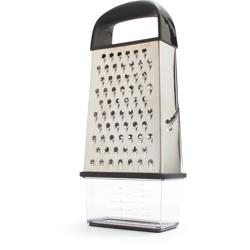
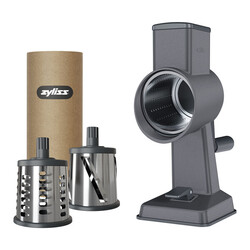
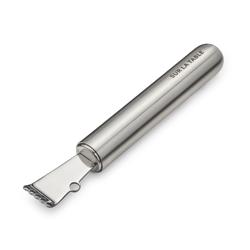
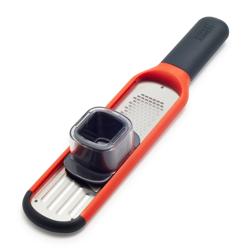
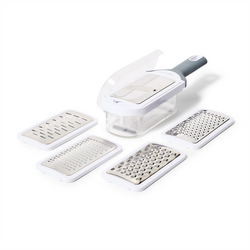
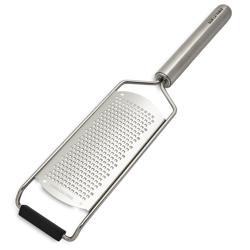
A good box grater for shredding cheese has sharp stainless steel teeth, a stable nonslip base and a comfortable handle. Multiple grating surfaces let the same tool produce generous shreds for casseroles, smaller pieces for sauces and fine gratings for finishing a plate of pasta. That range makes a box grater useful for everything from a quick quesadilla to a baking dish of macaroni and cheese. Coarse holes work well with firm cheddar, Monterey Jack and chilled low-moisture mozzarella, creating distinct strands that are easy to scatter over pizza or tuck into an omelet. Smaller holes produce finer pieces that distribute evenly through fillings, savory doughs and cheese sauces. For aged cheeses, a
grater for Parmesan with fine, sharp teeth helps turn a dense wedge into delicate gratings for risotto, roasted vegetables or a bowl of spaghetti. Traditional four-sided box graters put several textures within reach, although the combination of coarse, fine, slicing and zesting surfaces varies by design. The right arrangement depends less on having the greatest number of functions than on having surfaces that suit the foods being prepared. A household that makes pizza regularly may use the coarse side most often, while someone who enjoys pasta may reach for a finer surface at nearly every meal. Starting with a block of cheese also gives the cook control over shred size and the amount prepared. Packaged shredded cheese often contains anti-caking ingredients that keep the pieces separate but can affect the texture of a melted sauce. Freshly grated cheese offers an alternative without those added ingredients, though melting results still depend on the cheese itself. Firm, chilled cheese generally passes across the teeth more cleanly than soft, sticky cheese, helping preserve separate shreds rather than leaving a smear across the grating surface. Fresh mozzarella and other very moist cheeses are often better suited to tearing or slicing.
Materials and construction make a noticeable difference when a grater becomes part of everyday cooking. Stainless steel grating surfaces resist corrosion and provide a durable working surface, but sharpness, panel rigidity and the shape of the teeth matter as much as the material name. Etched teeth can offer sharp cutting edges that remove small pieces with relatively light pressure; stamped surfaces can also perform well when their edges are sharp and their openings suit the cheese. A grater should cut rather than require the cheese to be forced against it. That distinction becomes especially apparent with an aged cheddar or a firm wedge of Pecorino Romano. A sturdy body helps the panels stay steady under pressure, while a broad base gives the tool a secure footprint on a cutting board. Nonslip edging can help reduce sliding, although the board and work surface also need to be stable. Handle shape deserves attention because the supporting hand stays in place throughout the task. A rounded grip with enough room for the fingers can feel more manageable than a narrow handle, especially when preparing several cups of cheese. Overall size matters, too. A taller grating face allows longer strokes, while a compact body may fit more comfortably in a small cabinet or a kitchen with limited counter space. The base should sit fully on the cutting board rather than hang over an edge. An open-bottom design lets shreds collect directly underneath, ready to lift into a bowl. Designs with a collection container can help contain the cheese and make transferring it less messy; marked containers can also be useful when a recipe calls for cheese by volume. Removable bases and containers introduce additional parts to wash, so convenience during cooking is only part of the consideration. Smooth joins, accessible corners and a comfortable grip help make a box grater practical beyond its first use, whether it is handling a small topping for lunch or a larger batch for a shared meal.
Care is straightforward, but a few details help protect both the cutting surfaces and the hands using them. Cheese residue is easier to remove before it dries inside the openings, making a prompt rinse useful after grating. A dish brush helps reach around the teeth without rubbing fingertips or a sponge directly across sharp edges. Cleaning and dishwasher instructions vary, particularly when a grater includes a soft-grip handle, nonslip trim or a removable container. Dishwasher-safe construction can simplify cleanup, while a design that requires hand-washing needs enough interior space for a brush to reach the corners. Thorough drying is important around seams and attached parts, and the grater should be stored so its teeth do not rub against other utensils or catch a hand reaching into a drawer. A protective cover, when included, can help with storage, though a tall cabinet space may be a better fit for a traditional box shape. During use, keeping fingertips away from the cutting face matters more than grating every last bit; a small remaining piece can be chopped or saved for another use. Those everyday details are part of what makes a well-chosen cheese grater a lasting kitchen tool rather than an occasional convenience. Its usefulness can extend beyond cheese, with suitable surfaces handling carrots for slaw, zucchini for fritters or chocolate for a dessert topping. Each surface has its own purpose, and a slicing face still calls for the same attention to hand placement as the grating teeth. For a first apartment, a wedding gift or a housewarming, a box grater makes sense for someone who enjoys practical tools that serve several familiar meals. Paired with a sturdy cutting board or a favorite pasta recipe, it supports the kind of cooking that happens often: shredding cheddar for scrambled eggs, preparing mozzarella for family pizza night or adding a final snowfall of hard cheese to dinner. The lasting value is in comfortable handling, dependable cutting and a design that is easy to clean and store.