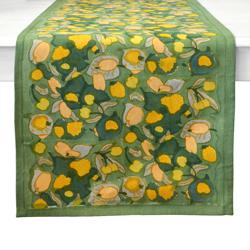
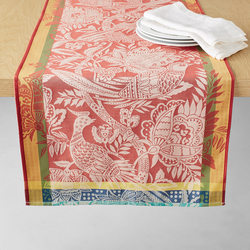
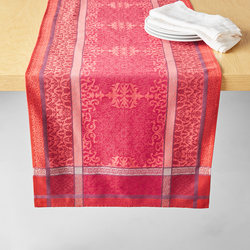
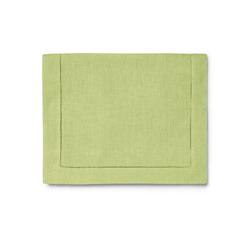
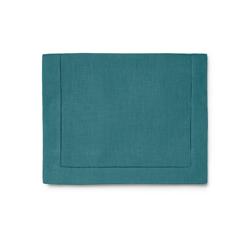
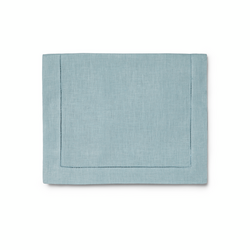
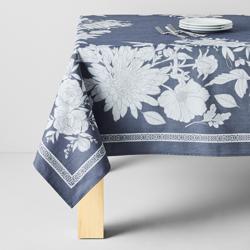
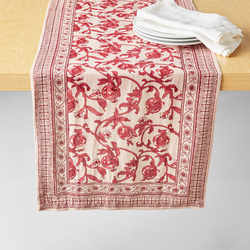
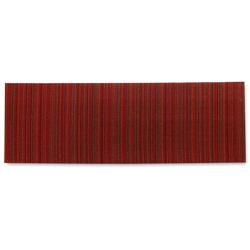
Bright table runners are decorative table linens that bring vivid color and pattern to dining tables, kitchen tables and serving surfaces. Their narrow shape leaves much of the tabletop visible while creating a defined space for a centerpiece or a row of serving dishes. A sunny yellow stripe can brighten a simple breakfast setting, while saturated blue, coral or green can give everyday white dinnerware a more expressive backdrop. Unlike a full tablecloth, a runner lets the grain of a wood table or the finish of a painted surface remain part of the setting. That balance makes bright runners especially useful when you want color without covering the furniture completely. They can make a casual meal feel more considered, pull together mismatched chairs and dishes or introduce a favorite shade into a room with neutral walls. The effect depends as much on the design as on the color itself. Broad stripes have a clear, graphic presence, small repeating motifs add detail and large floral patterns can become the focal point of an otherwise simple table. A multicolored runner also gives you several shades to draw from when choosing napkins, glassware or flowers. For an easy combination, repeat one color from the fabric elsewhere on the table and let the remaining pieces stay relatively quiet. A bowl of lemons beside a yellow-accented pattern or blue napkins alongside a blue-and-white stripe can feel connected without looking overly matched. Brightness does not have to mean a busy setting, either. A single colorful length of fabric, plain plates and a low arrangement of greenery may be all a table needs. For people who enjoy hosting but prefer a small collection of versatile dinnerware, changing the runner offers a practical way to give familiar place settings a different character. It also works for everyday meals, bringing a little definition to the spot where breakfast, homework and dinner share the same table.
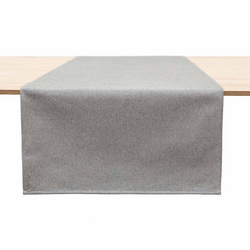
The right fit starts with the surface and how you use it. Measure the length and width of the table before choosing a runner, including any leaves that normally stay in place for entertaining. A runner should leave enough room along both sides for plates, glasses and comfortable seating; on a narrow table, an especially wide runner may extend beneath the place settings rather than frame a separate center area. For a traditional arrangement, choose a length that allows roughly six to 12 inches of overhang at each end, checking that the fabric will not bunch in someone’s lap or interfere with chairs. A shorter runner that sits entirely on the tabletop creates a contained display area and can be useful on a console, sideboard or smaller dining table. On a round table, a runner placed through the center creates a strong line across the surface, while a centered arrangement with no overhang keeps the outline of the table visible. Material affects both the appearance and the practical feel of the setting. Cotton generally has a familiar, relaxed hand and can suit frequent use when the care instructions allow easy washing. Linen often brings visible texture and a softer drape, with natural creasing that suits a less formal table. Blended fabrics may offer a balance of texture and wrinkle resistance, though performance depends on the fibers and construction. Tightly woven fabric tends to create a smoother surface, while open weaves, embroidery and raised details add dimension but need more consideration around glassware. Place stemmed glasses on a flat, stable area rather than across a thick seam or textured embellishment. Well-finished hems, even stitching and a fabric weight suited to the intended use are useful details to consider for lasting wear. If a gentle drape and understated texture are priorities alongside color,
Soft Runners offer another direction to explore. Whether the look is crisp or relaxed, the runner should support the way the table is used rather than make setting it more complicated.
Care is particularly worth considering when a bright runner will see daily meals, shared platters or children reaching across the table. Read the care label before washing, since fiber content, dyes, trim and decorative stitching can require different treatment. Some runners can be machine-washed, while others need hand-washing or professional cleaning; a colorful design alone does not indicate how easy it will be to maintain. Prompt attention to spills helps keep food and drink from settling into the fibers. Blot rather than scrub, and use a cleaning method appropriate for the fabric instead of reaching immediately for bleach or a strong stain treatment that could affect the color. Washing with compatible colors, following the recommended water temperature and avoiding excessive dryer heat can help preserve the runner’s appearance. Smooth the fabric after laundering and press only as directed, paying particular attention to hems and any embellishments. Store clean runners folded loosely or rolled when space allows, and avoid prolonged direct sunlight that may fade vivid shades. A table runner can provide a light layer between decorative objects and a tabletop, but ordinary fabric should not be treated as heat protection or a spillproof barrier. Use suitable trivets beneath hot dishes and keep candle flames well away from fabric, fringe and nearby decorations. Those small practical choices make it easier to enjoy a colorful setting without fuss. For a buffet, position the runner where it adds color behind or between serving pieces while leaving a clear area for setting down plates. On a sideboard, it can frame a ceramic bowl or a small collection of favorite objects without requiring a full dining arrangement. Bright runners can also make thoughtful housewarming or host gifts when the recipient enjoys table linens and you know something about their space. Consider their table dimensions, preferred colors and willingness to handle special care rather than choosing by pattern alone. A washable, easygoing fabric may suit someone who gathers friends for frequent dinners, while a more decorative texture may appeal to someone who enjoys carefully composed place settings. The most useful choice is one that feels at home with the furniture, stands up to its intended routine and makes setting the table a pleasure.