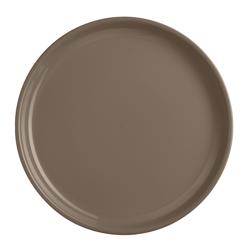
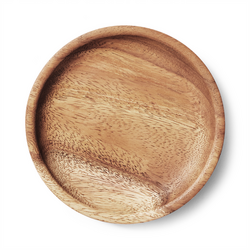
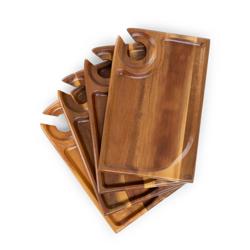
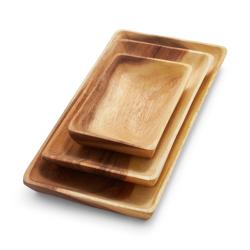
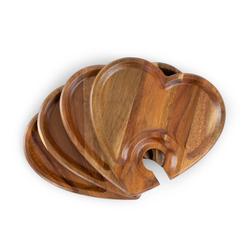
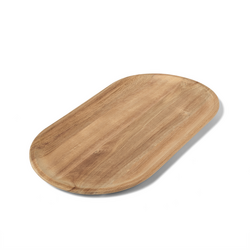
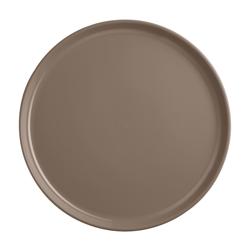
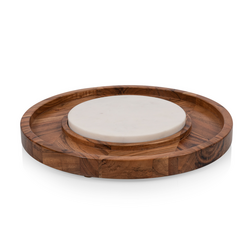
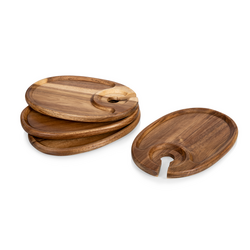
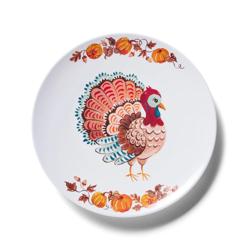
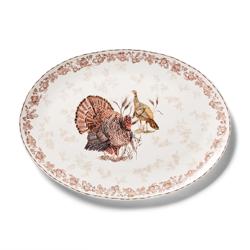
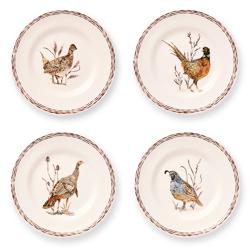
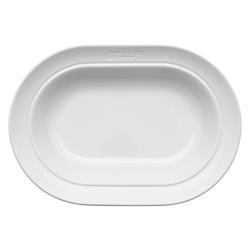
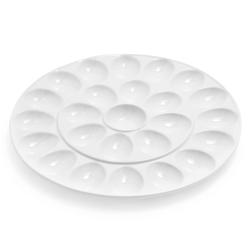
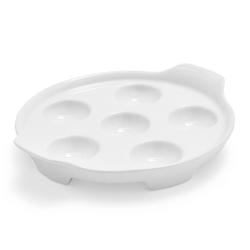
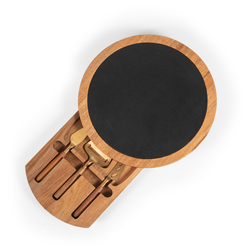
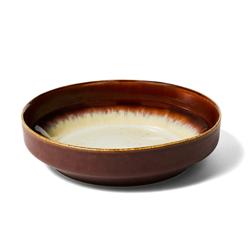
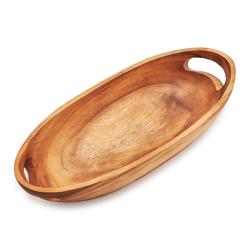
Brown serving plates are dishes for presenting appetizers, side dishes, desserts and shared meals in earthy shades ranging from light tan to deep chocolate. Their color can come from a ceramic glaze, the natural grain of wood or another food-safe finish, giving each material a different look and feel at the table. A brown serving plate can ground a place setting without drawing attention away from the food: roasted carrots, leafy salads, sliced bread and a wedge of soft cheese each bring their own color and texture against the surface. Lighter brown tones create a gentle backdrop for darker foods, while rich espresso shades offer contrast for pale cheeses, golden pastry and creamy dips. Brown also works comfortably with white dinnerware, clear glassware, linen napkins and stainless steel flatware, making it easy to introduce a serving piece without replacing an existing table setting. The overall effect depends as much on the finish as the shade. A glossy surface reflects light and gives the table a polished feel, while a matte finish looks more understated. Speckles, tonal variation and visible grain can add character without requiring a patterned tablecloth or elaborate centerpiece. Shape and proportion matter just as much as color. Round serving plates suit arrangements that guests approach from several directions, such as pastries at brunch or small bites on a coffee table. Oval and rectangular shapes can follow the length of a dining table, leaving room for glasses and individual plates on either side. A broad, open surface gives sliced food room to spread out, while a raised rim helps contain crumbs, dressing or a little sauce. The useful serving area is worth considering alongside the outside dimensions, since a wide decorative border leaves less space for food. For a compact table, a moderately sized plate that can be replenished often may feel more comfortable than an oversized platter that crowds every place setting.
Material influences how a brown serving plate handles everyday meals, cleanup and storage. Glazed stoneware often has a substantial feel and can bring depth to brown finishes, especially when the glaze pools around a rim or varies slightly across the surface. Porcelain can offer a finer profile and a smooth backdrop, although weight and thickness vary by design. Earthenware can have a relaxed, pottery-like character, but its care requirements depend on the clay body and glaze. A rustic appearance does not necessarily mean a plate is handmade, just as a refined finish does not automatically mean it needs delicate handling. Natural wood offers a different kind of warmth, with grain patterns that make even simple arrangements of bread or dry snacks look considered. Wood generally needs more attention around moisture and is better suited to foods that will not leave it soaking in liquid. Whatever the material, food-contact suitability matters; a decorative plate is not necessarily intended for serving food. Dishwasher, microwave and oven compatibility also depend on the individual piece rather than its color or general material category. A serving plate should only go into an oven or microwave when the manufacturer specifically permits that use, and any stated temperature limits still apply. For ceramics, avoiding sudden temperature changes helps reduce the risk of thermal shock. For wood, brief hand-washing followed by prompt drying is generally preferable to soaking or dishwasher cleaning, with any conditioning done according to the maker’s directions. Gentle cleaning tools help preserve finishes, while care with metal utensils can limit visible marking on some glazed surfaces. Durability also includes how a plate fits into the kitchen routine. Heavier pieces may feel steady on the table but require more effort to carry when full. A defined rim can offer a better place to grip, especially when moving food from the counter to the dining room. Cabinet depth, shelf height and dishwasher clearance are practical details that make a difference long after the first meal. Protective layers between stacked pieces can help limit rubbing during storage, particularly when an unglazed foot rests against the serving surface below.
Brown serving plates lend themselves to both everyday use and meals with guests because they do not need a fully coordinated setting to look at home. A single plate can hold toast and sliced fruit for breakfast, carry sandwiches to the table at lunch or present a simple cake after dinner. For family-style meals, separate serving surfaces let guests help themselves without passing a heavy cooking vessel around the table. Foods with plenty of liquid are usually more comfortable in deeper serving dishes, while flatter plates work well for grilled vegetables, sliced meats, cookies and other foods that hold their shape. Leaving a little space between portions makes serving easier and lets the brown finish remain part of the presentation. Serving utensils deserve a place in the arrangement, too, so guests can lift a portion without reaching across another dish. For bread, cheese and sliced fruit,
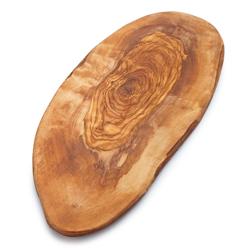
Brown Serving Boards offer a complementary surface, bringing wood grain and different proportions into a spread alongside ceramic plates. Mixing related brown tones can feel more relaxed than matching every piece exactly, especially when a shared detail, such as a simple rim or rounded shape, connects them. For someone furnishing a first kitchen, a versatile serving plate can take on several roles without demanding much storage space. For an experienced host, a different size or shape can fill a useful gap in an established collection. Brown serving plates can also make thoughtful housewarming or wedding gifts when their dimensions, weight and care requirements suit the recipient’s home. A plate that fits a familiar loaf, a favorite batch of cookies or a regular family meal is likely to earn its place in everyday use. The most satisfying choice balances appearance with those small practical details: comfortable handling, enough room for the food and a finish that feels at ease with the dishes already on the table.