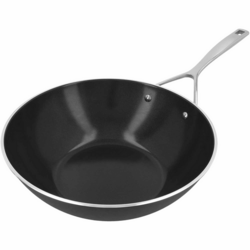
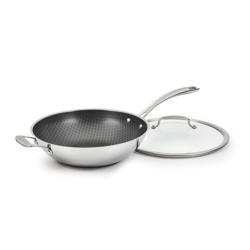
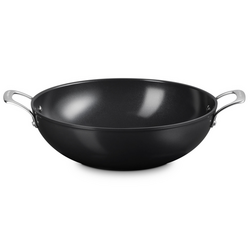
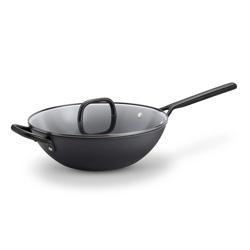
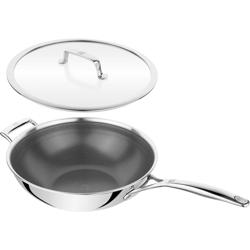
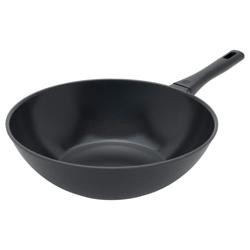
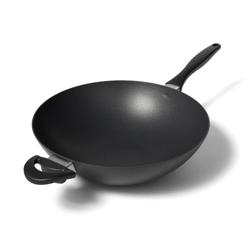
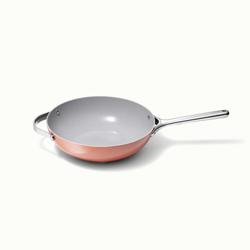
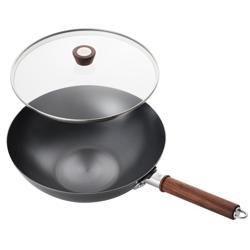
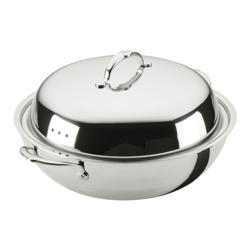
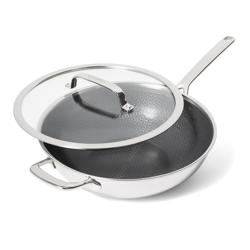
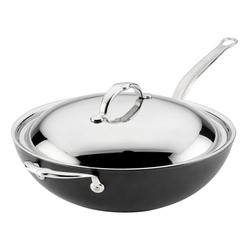
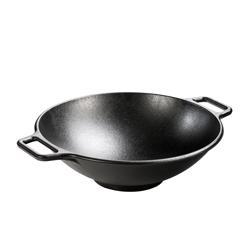
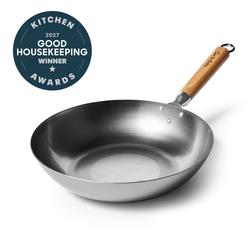
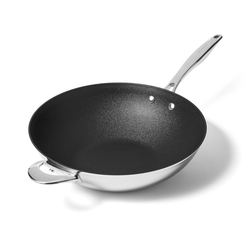
Ceramic woks for stir-fry are typically metal pans with a ceramic nonstick coating, designed to help vegetables, noodles and proteins release easily with a modest amount of oil. Their curved sides give ingredients room to move while helping contain splashes from sauces and quick tosses. Unlike traditional carbon steel woks, ceramic-coated woks do not need seasoning to establish a cooking surface. That makes them appealing for everyday meals when convenient food release and straightforward cleanup matter more than developing a seasoned patina. Think tender shrimp folded through snow peas, tofu with broccoli and ginger or noodles coated in a glossy sesame sauce. The coating can be especially helpful with delicate fish, eggs and other ingredients that tend to cling to an uncoated pan. A ceramic wok is not necessarily a solid ceramic vessel; the term usually describes the cooking surface rather than the material beneath it. That distinction matters because the underlying metal affects weight, heat response and stovetop compatibility. Ceramic nonstick also has different heat requirements from bare carbon steel or cast iron. These woks are generally better suited to controlled cooking within the manufacturer’s recommended heat range than to the intense heat associated with wok hei, the smoky character of traditional wok cooking. Medium heat is often sufficient, with higher settings used only as permitted by the cookware’s instructions. A little cooking oil still contributes flavor and helps carry heat across ingredients, even when the surface releases food readily. Many ceramic coatings are made without intentionally added PFAS, including PTFE, but those claims should be checked in the manufacturer’s specifications rather than assumed from the word ceramic alone. For cooks who enjoy vegetable stir-fries, saucy noodle dishes and smaller portions of meat alongside plenty of produce, this style of wok offers easy release without the upkeep of a seasoned pan.
Construction, size and shape all influence how a ceramic wok fits into a kitchen. Aluminum bodies are often relatively light and responsive to changes in burner settings, while hard anodized aluminum provides a hardened underlying surface. A stainless steel exterior or base may add weight, and induction compatibility depends on the presence of a suitable magnetic base rather than on the ceramic coating itself. Compatibility with gas, electric, glass-top or induction cooking should always be confirmed for the individual pan. A flat-bottom wok generally makes practical sense on a flat cooking surface because it provides stable contact with the burner. Round-bottom designs need an appropriately configured cooking setup and are not interchangeable with flat-bottom pans on every range. When comparing options in the
Stir Fry Cookware collection, the diameter of the cooking base deserves as much attention as the width across the rim. A broad opening provides tossing room, but a smaller base still limits how much food can cook in direct contact with the hottest area at once. A wok measuring 12 to 14 inches across may provide generous space for family cooking, though serving capacity also depends on depth and the ingredients being prepared. Smaller households may prefer a lighter pan that is easier to lift, wash and store. Cooking in batches remains useful even with a roomy wok, since crowded vegetables can release enough moisture to steam rather than brown. Handle design matters, too: A long handle supports stirring and tilting, while a helper handle can make a filled pan easier to carry with appropriate protection from heat. A fitted lid adds flexibility for briefly steaming broccoli, softening thicker vegetables or finishing a saucy dish. If oven use is important, check the temperature limits for the pan, handles and lid separately. Storage deserves consideration as well, especially when a deep bowl and long handle must share cabinet space with everyday skillets.
The durability of a ceramic wok depends on its construction and how it is used, cleaned and stored. A ceramic nonstick surface does not develop the renewable seasoning layer associated with carbon steel, and its easy-release performance can diminish over time. Gentle treatment helps preserve that performance, but no coating should be treated as permanently nonstick. Wood, bamboo or suitable silicone utensils are sensible companions because they avoid the scraping that sharp metal edges can cause. Cutting food directly in the pan can damage the surface, as can abrasive pads or harsh cleaning methods. For routine cleanup, allow the wok to cool before washing it with warm water, mild dish soap and a soft sponge. Even when dishwasher use is permitted, hand-washing is generally the gentler choice. Stubborn sauce residue is better softened according to the manufacturer’s care directions than scrubbed aggressively, and repeated overheating or prolonged empty-pan heating should be avoided. Aerosol cooking sprays can leave difficult residue, so a small amount of an appropriate cooking oil is often more practical. A pan protector or soft cloth between stacked pieces can help keep another pan’s base from rubbing against the coating. These are manageable habits for cooks who want a wok for regular use rather than a pan reserved for occasional elaborate meals. Beyond stir-fry, the shape can accommodate fried rice, vegetables tossed with aromatics or noodles finished with a measured splash of sauce, provided the cooking method stays within the pan’s instructions. It is less suited to cooks whose main goal is blazing-hot searing or a heavily seasoned cooking surface. As a housewarming or wedding gift, a ceramic wok can suit someone who enjoys cooking vegetables, experimenting with sauces or preparing quick dinners with fewer pans. Matching its size, weight and cooktop compatibility to the recipient’s kitchen makes the gift more useful, whether dinner means ginger-scallion noodles for two or a shared bowl of chicken and crisp vegetables.