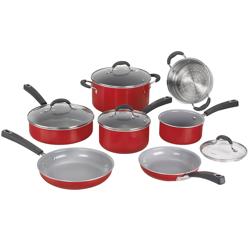
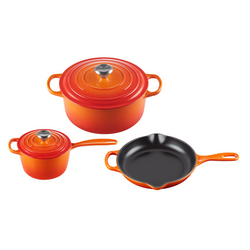
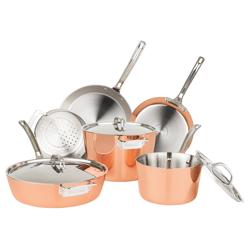
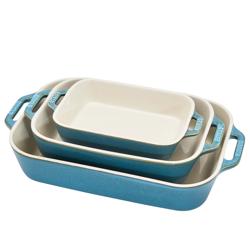
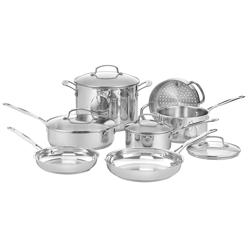
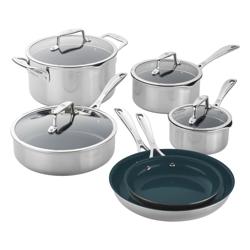
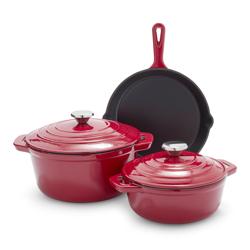
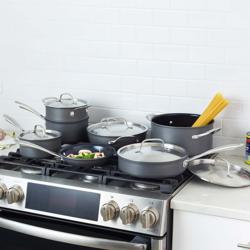
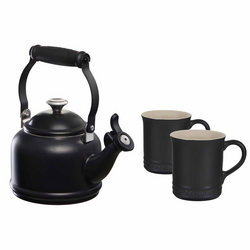
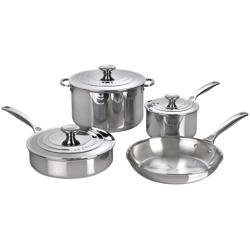
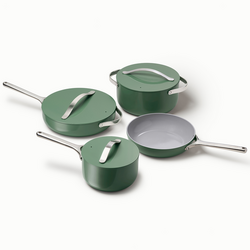
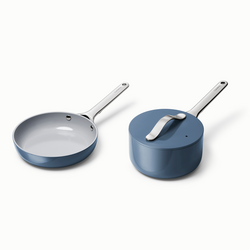
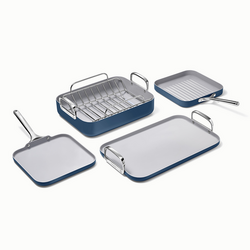
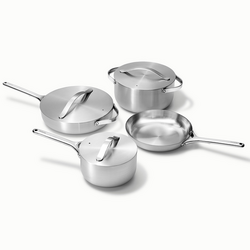
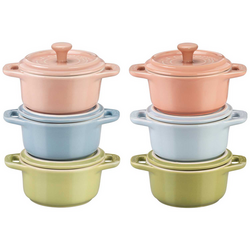
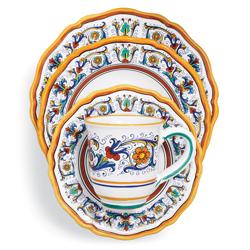
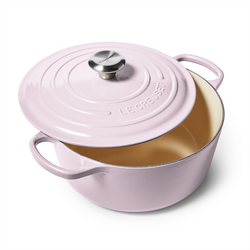
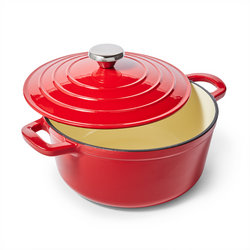
Colorful cookware sets bring coordinated pots and pans into the kitchen with finishes that range from soft neutrals and muted greens to lively blues, pinks and reds. Common constructions include aluminum with a colored exterior and nonstick cooking surface, as well as enameled cast iron; the material beneath the color helps determine how the cookware heats, handles and holds up over time. A matching finish gives everyday cooking tools a sense of continuity, whether they hang from a rail, sit on open shelving or come out only when dinner gets underway. Color can be a quiet complement to wood cabinets and stone counters or a bright contrast in a kitchen with stainless steel appliances. A deep blue or green feels at home beside natural textures, while a warmer shade can soften the look of a mostly white space. Mixed colors offer a more collected feel, especially when repeated in kitchen linens or tabletop pieces. Beyond appearance, a useful set brings together shapes suited to the way you cook: a skillet for eggs and sautéed vegetables, a saucepan for oatmeal or rice and a larger pot for pasta, soup or a generous batch of chili. During the cooler months, those pieces might move from a quick breakfast to a slowly simmered supper, making their everyday usefulness just as important as their finish. For a coordinated look from kitchen to table,
Colorful Dinnerware Sets can echo a favorite cookware shade or introduce a complementary color without making every piece match. The most satisfying combination leaves room for personal taste and familiar routines. A compact kitchen may benefit from a small group of versatile pans in one color, while a household that cooks several dishes at once may put a broader assortment to work. Either way, the appeal goes beyond decoration: cookware that feels comfortable to use and looks good within reach fits naturally into the rhythm of preparing meals.
Materials and cooking surfaces make the biggest difference in how colorful pots and pans perform. Aluminum conducts heat readily and is relatively lightweight, which can make it comfortable for everyday tasks such as tossing vegetables or lifting a saucepan to drain its contents. Hard anodized aluminum has a hardened surface, though any added nonstick coating still needs care appropriate to that coating. Ceramic nonstick cookware typically has a ceramic-based coating over a metal body rather than being made entirely of ceramic. It can offer easy food release for delicate foods, but its performance depends on proper use and will change with wear. Traditional nonstick surfaces also suit foods that tend to cling, including eggs, pancakes and tender fish. Neither the exterior color nor the word “ceramic” alone establishes a pan’s durability, composition or suitability for high heat, so the stated construction and care instructions matter. Enameled cast iron provides a different cooking experience: its substantial weight and heat retention suit gentle braises, simmering stews and dishes that benefit from steady heat. The enamel adds color and removes the need to season the coated surface, although food can still stick and the finish can chip if struck or dropped. A colorful exterior may also surround a stainless steel cooking surface, which is useful for browning and developing the flavorful bits that become a pan sauce. Across these constructions, cooktop compatibility deserves attention. Induction cooking requires a compatible magnetic base; aluminum alone will not work unless the cookware incorporates one. Oven suitability depends on the entire piece, including handles, lids and knobs, and the lid’s temperature limit may differ from the pan’s. For someone who likes to brown dinner on the stovetop and finish it in the oven, those details are more useful than color alone. A set that supports familiar techniques will earn its place through everything from a single grilled cheese sandwich to a full family meal.
Fit includes capacity, weight and storage as much as the number of pieces in a set. Set counts may include lids or accessories, so the mix of actual cooking vessels gives a clearer picture of what can be prepared at once. Someone cooking for one or two people may reach most often for a smaller saucepan and an everyday skillet, while larger households may appreciate roomier pots and a sauté pan that holds vegetables without crowding. Broad cooking surfaces allow moisture to escape more readily, helping food brown rather than steam. At the same time, a pan should fit the burner reasonably well and leave space for neighboring cookware. Handle shape, balance and a second helper handle can make a meaningful difference when a vessel is full, especially with heavier materials. Secure-fitting lids help with covered cooking, while clear lids allow a look at simmering contents without lifting them, though steam can obscure the view. Storage is another practical consideration: stacked pans need enough room to lift out without scraping their neighbors, and soft protectors can help shield coated interiors and decorative exteriors. Everyday care protects both function and color. Allow cookware to cool before washing, avoid sudden temperature changes and use nonabrasive cleaning tools suited to the finish. Wood or silicone utensils are generally gentle choices for coated surfaces, and low to medium heat is often sufficient for nonstick cooking; the manufacturer’s directions should govern use. Dishwasher-safe labeling does not necessarily mean machine washing is the gentlest option, particularly for preserving finishes over repeated cleaning. Thoughtful handling helps cookware last, but no colored finish or nonstick coating is immune to wear. As a housewarming, wedding or shared-household gift, a colorful cookware set combines a personal touch with practical purpose when its capacities and construction match the recipient’s kitchen. A favorite shade makes the gift feel considered; compatible pans, manageable weight and straightforward care make it useful long after the first meal.