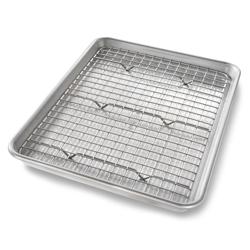
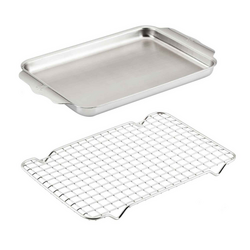
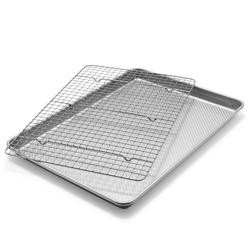
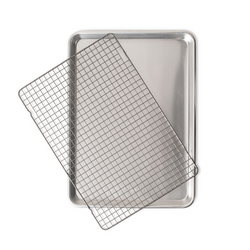
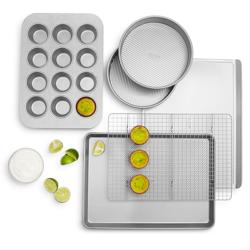
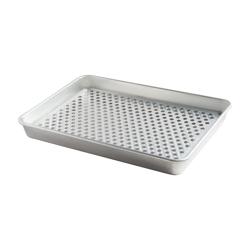
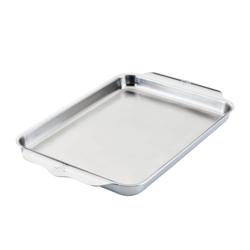
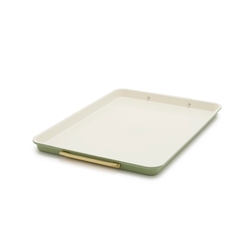
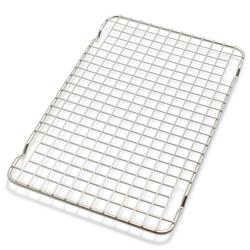
Cookie sheets with cooling racks pair a baking surface with a raised wire rack, giving you a place to bake cookies and a separate surface where air can circulate beneath them as they cool. A well-matched set makes the move from oven to countertop easier, whether you’re baking a few oatmeal cookies or several batches of cutout shapes. Cookies bake directly on the sheet, then move to the rack after the brief resting time called for in the recipe. That pause lets delicate centers set enough for lifting, while the rack helps moisture escape rather than collect underneath. For shortbread, crisp-edged chocolate chip cookies and thin butter cookies, that airflow helps preserve the texture you worked to create. A grid-style rack also supports smaller cookies more evenly than widely spaced parallel wires, reducing the chance that a tender edge will slip through. The two pieces have uses beyond a single batch: the sheet provides a flat surface for portioning dough, while the rack holds baked cookies awaiting icing or sandwich filling. Set a rack over a rimmed sheet when drizzling chocolate or glazing small cakes, and the pan catches the excess instead of leaving it across the counter. For bakers who like an orderly workspace, having these pieces sized to work together keeps several messy tasks contained in one place. Some combinations can also handle savory cooking, with the rack elevating food above the pan so drippings collect below. That use depends on the rack’s stated oven safety, not simply its appearance or whether it fits the sheet. A cooling rack is not automatically a roasting rack, and any coating, feet or other components must be suitable for the intended oven temperature. The result is a useful pairing for everyday baking, with additional possibilities when both pieces are designed for them.
Materials influence how cookie sheets heat, how they feel in your hands and how much care they need afterward. Bare aluminum conducts heat efficiently, making it a practical choice for baking cookies with consistent browning across the sheet. Its relatively light weight also makes a loaded pan easier to maneuver, though thickness and construction affect how substantial it feels. Steel pans generally have more heft, while aluminized steel combines a steel base with an aluminum-containing surface layer. These differences matter most alongside the pan’s overall construction: a sturdy body and reinforced rim can help a sheet hold its shape through repeated heating and cooling. No material makes a pan immune to warping, particularly when a hot sheet meets cold water or experiences an abrupt temperature change. Surface finish matters, too. Darker baking surfaces tend to brown cookie bottoms more quickly than lighter ones, so a familiar recipe may need a little attention when moving to a different pan. Nonstick finishes, including ceramic-based coatings, can make releasing baked goods and removing residue easier, but their temperature limits and care requirements vary. Parchment can simplify cleanup on compatible baking sheets, although it does not replace following the pan’s instructions. Uncoated surfaces suit bakers who prefer a pan without a nonstick finish and are comfortable with the patina that develops through regular use. Stainless steel is a common choice for cooling racks because it resists rust and offers a durable wire surface, but it still benefits from thorough cleaning and drying. Coated racks may offer easier release for sticky glazes, with extra attention needed to avoid scratching the finish. Smooth wire intersections, stable feet and a rack that stays level under the weight of baked goods are useful construction details. They help keep a tray of tender cookies supported without wobbling as you lift one away.
Size and fit bring the pairing together, especially when oven space, countertop room and storage are limited. A typical half-sheet pan measures about 18 by 13 inches overall, while a quarter-sheet pan is roughly 13 by 9 inches; exact dimensions vary, and the usable interior is smaller than the outside measurement. Smaller sheets work well for modest batches, compact ovens and kitchens where a full-size cooling setup would crowd the counter. Larger sheets give cookies room to spread without touching, provided there is enough clearance in the oven for air to circulate around the pan. For a rack intended to sit inside a rimmed sheet, compare its dimensions with the pan’s interior rather than relying on the size name alone. It should rest securely without being forced into place, and its feet should hold the wire surface above the pan bottom. Dedicated
Half Sheet Cooling Racks can also complement an existing pan, making dimensions particularly important when the pieces are purchased separately. Rimmed sheets help contain crumbs, glaze and drippings, while low-sided or rimless cookie sheets offer easier access for sliding a spatula under baked cookies. Handles and raised edges can make lifting more comfortable with oven mitts, but they also add to the space a pan needs. Between batches, a sheet should cool before fresh dough goes onto it so the dough does not begin spreading prematurely. After baking, letting both pieces cool before washing helps protect their shape and finish. Hand-washing is often recommended for aluminum and coated bakeware, while dishwasher suitability varies by piece. Mild detergent, a soft sponge and careful drying around rack joints help remove crumbs and residue without unnecessary wear; abrasive scrubbers can damage some surfaces. Stored together once fully dry, the sheet and rack make a practical combination for first-apartment kitchens, frequent home bakers or anyone building a baking collection. As a gift, the pairing supports familiar pleasures: a reliable batch of cookies, a neatly glazed treat and something homemade to share.