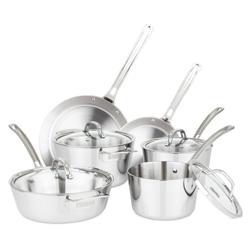
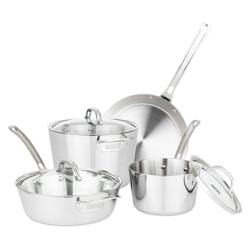
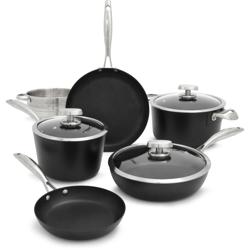
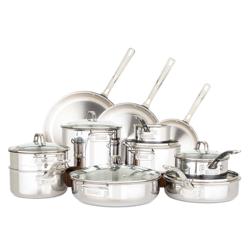
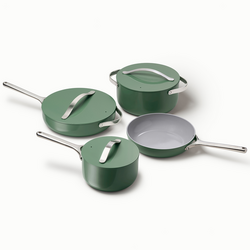
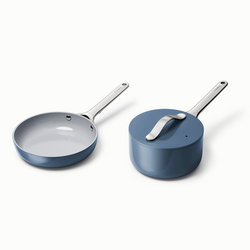
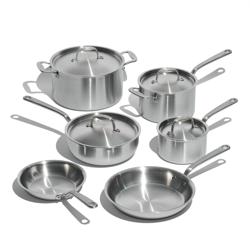
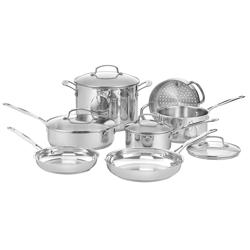
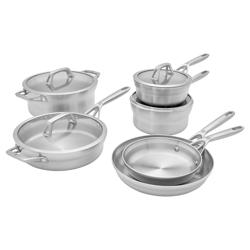
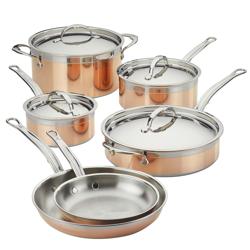
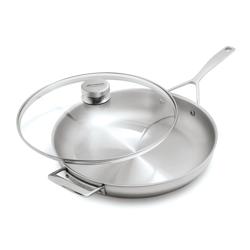
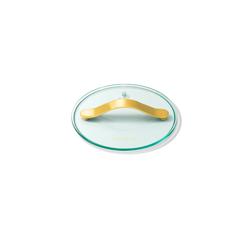
Cookware sets with vented lids pair pots and pans with covers that have a small opening to let steam escape during covered cooking. The vent can help reduce the chance of a boil-over without leaving the lid ajar, but it won’t make up for high heat or a pot filled too close to the rim. When a pot of lentils starts to foam or oatmeal bubbles up the sides of a saucepan, turning down the burner and leaving room above the food still make the biggest difference. A glass lid adds another way to keep an eye on things: You can see whether a broth is barely bubbling or boiling hard without lifting the cover, though condensation may briefly cloud the view. A vented lid still holds in some heat and moisture, so it makes sense for dishes that benefit from a gentle, covered simmer, like tomato sauce that would otherwise spatter across the stovetop. If the goal is to thicken that sauce, taking the lid off gives moisture a much faster way out than the small vent does. For rice or other grains that rely on a measured amount of liquid, follow the recipe’s directions for covered cooking rather than assuming every lid will retain steam the same way. It also helps to distinguish a steam vent from a strainer lid. A steam vent is an outlet for vapor, while a strainer lid has larger openings meant to drain liquid. Some strainer lids work with a pour spout, which can be handy for draining boiled potatoes without reaching for a colander. If draining is the feature that would make the most difference in your kitchen, look for a lid designed for that task rather than relying on a steam vent. Either way, keep hands clear of escaping steam and tilt the lid away from you when lifting it.
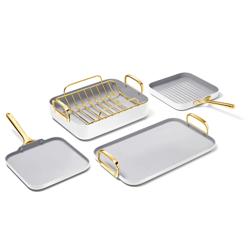
The materials and mix of pieces in a cookware set matter as much as the vent. Stainless steel is a durable choice for browning chicken or building a pan sauce, and many stainless steel pans use an aluminum core or base to help distribute heat. Nonstick cookware, including options with a ceramic nonstick coating, offers easier release for eggs or delicate fish and can simplify cleanup after a quick meal. The lid material is a separate consideration: Glass makes it easier to monitor food, while stainless steel is less susceptible to breakage if a lid slips off the counter. A lid should sit securely on the rim of the vessel it covers. The vent is there to give steam a path out, so the lid itself shouldn’t have to balance at an angle. A comfortable handle matters, too, especially when lifting a lid with an oven mitt. If a set includes a lid that fits more than one piece, that can save cabinet space, but it’s worth knowing whether you’ll want to cover both pans at the same time. A piece count may include the lids, so look at the actual mix of vessels. A smaller saucepan is useful for warming soup or cooking a modest portion of grains, while a roomy pot makes more sense for batches of beans or enough pasta for a group. For induction, confirm compatibility rather than assuming a stainless steel exterior is enough. On gas or electric, look for bases that sit steadily and suit the burner sizes you use most. If a dish often goes from the stovetop to the oven, check the oven-safe limits for both the pan and the lid, since they may differ. The broader
Cookware With Lids selection is also useful when a single covered pan would fill a gap without replacing pieces you already reach for.
A few simple care habits can keep vented lids fitting well and make cleanup easier. Let the cookware cool before washing, especially if a glass lid has just come off a hot pot. Putting hot glass under cold water can cause it to crack. Check the care directions for both the lids and the pans, since a dishwasher-safe lid doesn’t necessarily mean the matching pan should go in with it. Starchy residue from oats or pasta can collect around a vent or along the lid rim. A soak in warm, soapy water and a soft brush can usually loosen it without scratching the finish. If the pans have a nonstick coating, wood or silicone utensils and a soft sponge can help protect the cooking surface. When stacking pans, a soft divider can keep the underside of one piece from rubbing against the finish of another. For anyone setting up a first kitchen, a set with a few well-matched covered pieces can handle meals as different as a small batch of rice and a pot of soup for friends. A household that regularly cooks several dishes at once may get more use from multiple lids than from a shared lid that has to move between burners. A set can also make a practical housewarming or wedding gift, particularly when the sizes suit how the recipient cooks and the bases work on their cooktop. Someone who cooks mostly for one or two may appreciate a compact set that leaves room in the cabinet, while a cook who likes to portion out lunches for the week may reach more often for a deeper pot. The most useful mix is one that fits the meals already in rotation, with lids that make everyday tasks a little easier, from checking a simmer without lifting the cover to keeping splatters off the stovetop.