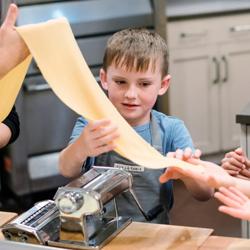
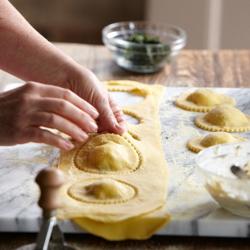
For a mother who has everything, a cooking class can be a thoughtful gift: it gives her something to look forward to, a chance to try something new, and nothing else to find room for at home. The personal part is choosing an experience that fits how she likes to spend her time. A mom who makes dinner from memory most nights might enjoy stepping away from her usual routine to learn a technique she’s never tried. Someone who loves a good meal but rarely cooks might be more interested in a hands-on class where the instructor demonstrates each step before she tries it. And for the mom who always hosts, part of the pleasure may be walking into a kitchen where someone else has already decided what’s for dinner. Think about the moments she already enjoys: comparing notes after a restaurant meal, asking how a friend got such a crisp crust, or lingering at the table long after everyone has finished eating. Those details can tell you more about the right gift than how often she cooks. A class can also be a way to spend time together when an ordinary visit tends to get taken up by errands or family logistics. There’s something easy about catching up while your hands are busy, and if the dough tears or the first batch comes out uneven, there’s usually a story to tell afterward. On the other hand, if she’s often the one coordinating everyone else’s plans, time to pursue an interest on her own can feel just as personal. A gift note can say why the class made you think of her, whether she’s been talking about learning to bake or you remember the two of you trying to recreate a favorite meal. That small detail makes the experience feel chosen for her rather than simply chosen because she’s hard to shop for.
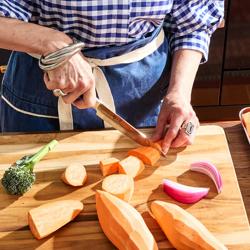
The appeal of learning in a kitchen with an instructor is being able to see, hear, and feel things that a recipe can only describe. “Cook until golden” makes more sense when you can see the difference between pale edges and a properly browned surface. When an instructor shows how soft dough should feel before it’s rested, a beginner doesn’t have to guess whether the stickiness means something has gone wrong. Depending on the focus, participants might practice shaping dough, learn to judge the heat of a pan by the sound of a sizzle, or taste a sauce before and after a splash of lemon to see what acidity does. Those little comparisons are often what stick. The next time dinner tastes flat or a batch of dough feels too soft, she has a reference point instead of a line of instructions to puzzle over. For a newer cook, a class that spends time on a few fundamentals can be more satisfying than one that moves quickly through a long menu. For someone who’s comfortable improvising, a class built around a particular technique or culinary tradition can give her a different way to approach familiar ingredients. Cooking experience also matters less when the main goal is time together. A parent and an adult child can work side by side even if one chops every day and the other mostly reheats leftovers. If there’s a skill they’ve both wanted to pick up, it can be fun to start on equal footing. Read the class description with her in mind: how much of the session involves cooking, what skills it covers, and whether the menu sounds like something she’d enjoy tasting. The right choice doesn’t have to be the most ambitious one. It might be the class that gives her enough time to practice a single technique and go home feeling confident that she can do it again.
Cooking classes work as gifts for birthdays, milestones, and simple thank-yous, but the occasion can help determine who goes along. For a birthday, an evening in the kitchen with a close friend might be more her style than a large dinner. A milestone may be a chance for adult siblings to spend time with Mom doing something other than posing for photos or making sure everyone gets fed. For a Mother’s Day outing that brings more than one generation together,
Mother's Day Gifts for Families can help you find an experience to share. When children are joining in, check the age guidelines and think about how long they’ll enjoy being part of the activity. For any group, take a look at the menu if someone has a food allergy or dietary restriction, and confirm any accommodations before making plans. Timing is worth just as much thought as the menu. A class that fits comfortably into her day will feel like more of a break than one that requires her to rearrange several commitments. If the gift is an outing together, taking care of the small details, from the ride there to figuring out who’s joining, can be part of what makes it feel special. If she’d rather pick the date or bring a friend, leave that decision to her. The experience can end when class does, or it can turn into something she looks forward to doing again. An adult child might get a photo a few weeks later of a Sunday dinner made with a technique they learned side by side. A mom who went on her own might come home with a small change to the way she makes a familiar meal. Either way, the gift fits into her life without taking up space in it.