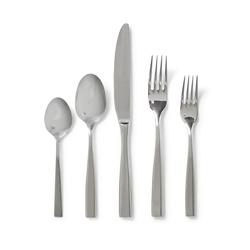
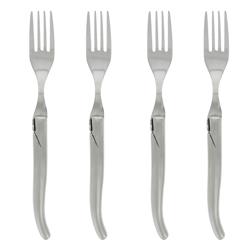
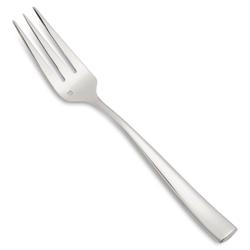
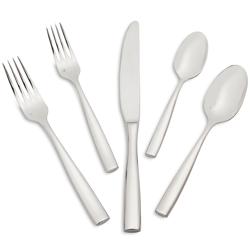
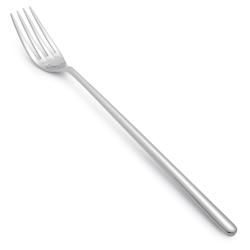
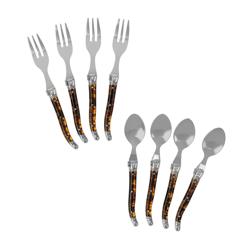
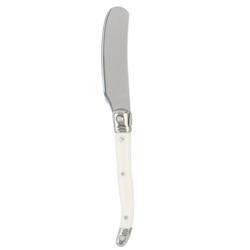
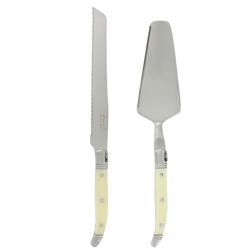
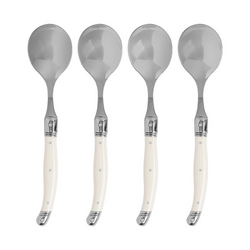
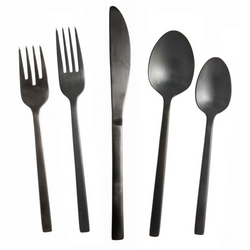
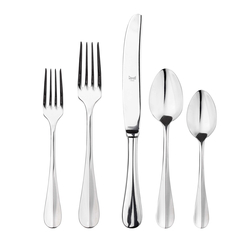
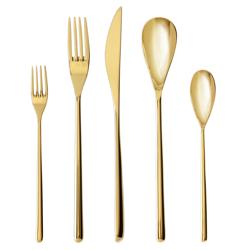
Curved-handle flatware is cutlery with arched or contoured handles that can follow the shape of the hand. A subtle curve might be most noticeable where a thumb rests on a fork, while a deeper sweep can cradle the fingers and give the place setting a more sculptural look. Some handles taper toward the neck and flare at the end, while others keep an even width and use rounded edges to soften the grip. The curve alone doesn’t determine comfort. A broad handle gives your fingers more room to rest, but a slim handle may be easier to turn if you tend to hold a fork between your fingertips. Weight matters, too. A substantial handle can feel steady when you’re cutting into a pork chop, while a lighter spoon may be more comfortable for everyday bowls of cereal or soup. Look at the shape from the side as well as from above: Two forks with similar outlines can sit quite differently in the hand if one has a raised handle and the other lies almost flat. It helps to picture how you hold a utensil when you’re actually eating, rather than judging the handle by how it looks at the place setting. Shape and surface are separate details. A handle can be both curved and smooth, and
Smooth Handle Flatware is a useful comparison if you prefer a grip without raised ornament or texture. On the table, a gentle curve can soften the straight edges of square dinnerware, while a sweeping handle can stand out against a plain linen napkin. Curved handles aren’t limited to modern table settings, either. A rounded, fuller handle can look just as natural next to a traditional rimmed plate as a slim arch does beside a simple coupe plate.
Stainless steel is a common choice for curved-handle flatware because it stands up to frequent use and resists corrosion. A designation such as 18/10 refers to the steel’s approximate chromium and nickel content: 18% chromium and 10% nickel. Chromium helps the steel resist corrosion, while nickel contributes to its sheen and corrosion resistance. A dinner knife blade may use a different grade of stainless steel from the matching fork or spoon because the blade needs to hold an edge. Finish makes a difference in daily use as well as at the table. A mirror-polished finish catches the light and can look crisp against white porcelain, but it may also show fingerprints and water spots more readily. A satin or brushed finish reflects less light and can make fine marks from everyday use less noticeable. Neither finish tells you how heavy the flatware will feel or whether it’s dishwasher safe. For a table that gets set and cleared several times a day, the care instructions can be as important as the finish. Check them for the whole utensil, especially if the handle has a coating, an inlay or a material other than stainless steel. Even corrosion-resistant steel benefits from a rinse if salty or acidic food will be sitting on it for a while. After a meal with tomato sauce or a lemony dressing, rinsing is preferable to leaving flatware to soak overnight. Drying with a soft cloth can help prevent water spots, and skipping abrasive pads helps preserve both polished and brushed finishes. A drawer organizer with enough depth is worth considering for more pronounced curves. Deeply arched handles may not nest as closely as flatter ones, and an extra bit of room keeps the drawer from catching when you’re putting away a full load.
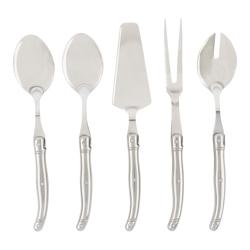
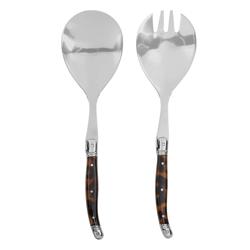
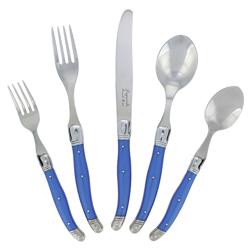
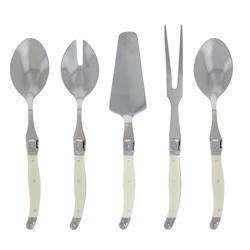
The right amount of curved-handle flatware depends on how the table gets used between meals, not just how many chairs are around it. A typical five-piece place setting includes a dinner fork, salad fork, dinner knife, dinner spoon and teaspoon. Service for four means four place settings, though the exact mix of utensils can vary. Check what’s counted in the total if you regularly use smaller forks for dessert or teaspoons for coffee and yogurt. A household of four may go through those pieces long before the dinner knives need washing, and extra place settings can make more sense than a set that covers only one meal at a time. Serving utensils serve a different purpose and aren’t always included in a set. If meals tend to come to the table in shared bowls and platters, it’s worth noting whether the set covers serving as well as individual place settings. For households that entertain often, a comfortable handle and a finish that works with more than one set of dishes can make the same flatware feel at home at a quick breakfast or a sit-down dinner with friends. Curved-handle flatware can also be a practical wedding or housewarming gift, especially for someone setting up a first kitchen or replacing a collection of mismatched utensils. A gently contoured stainless steel design can work alongside dinnerware the recipient already owns, while a more pronounced curve makes sense for someone who likes the flatware to be a visible part of the table. If the gift is for a household that runs the dishwasher every night, easy care may matter more than a highly polished finish. If it’s for someone who loves long dinners with friends, enough matching settings to serve everyone may be the detail they appreciate most. In either case, the best fit comes down to how the handles feel in use and how easily the flatware fits into the way meals are served, cleared and cleaned up.