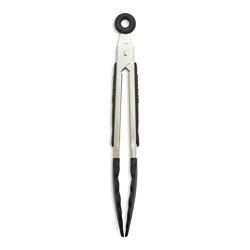
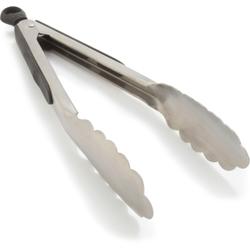
Kitchen tongs help with turning, lifting and serving food, from browned chicken in a skillet to tender greens at the table. For Cyber Monday tongs browsing, the most useful distinctions are the material at the tips, the length of the handles and the way the grip feels in your hand. Stainless steel tongs offer a firm hold for everyday cooking, while silicone-tipped tongs are generally a better match for nonstick cookware and other surfaces that need a gentler touch. The right fit depends less on how often a recipe mentions tongs than on what happens at your stove. A pair that can lift a thick pork chop may feel bulky when arranging roasted carrots, and long handles that provide welcome reach over a grill can be awkward inside a small saucepan. For many everyday tasks, tongs around 9 inches long offer close control, while a 12-inch length provides more distance from a hot cooking surface. Longer handles can be useful for outdoor cooking, although they do not replace heat protection or careful handling. During the cooler months, tongs earn their place beside simmering pots and roasting pans: lifting a piece of braised meat onto a platter, turning wedges of squash or gathering long strands of pasta into a shallow bowl. They also make quick work of tasks that do not involve heat, such as tossing a lunch salad or transferring bread rolls to a basket. New cooks can appreciate having one tool that handles several jobs, while experienced home cooks may prefer different lengths and tip shapes for different preparations. A thoughtful addition to a kitchen starts with those familiar routines. Someone who makes eggs in a nonstick skillet has different needs from someone who regularly sears steaks in stainless steel, and a household that serves meals family-style may want tongs that work as comfortably at the table as they do at the stove.
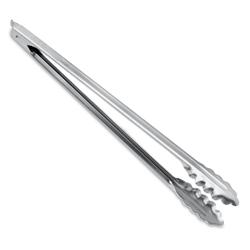
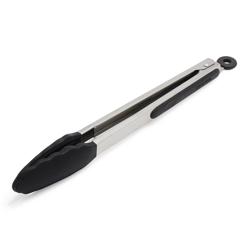
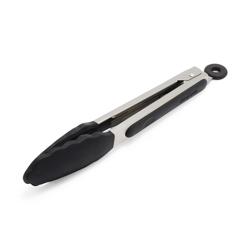
Materials and construction make a noticeable difference when food is hot, heavy or slippery. Stainless steel tips are well suited to gripping sturdy foods, including sausages, corn and thick-cut vegetables, particularly when used with cookware that tolerates metal utensils. Scalloped edges can help cradle curved or uneven pieces, while broader tips spread support beneath foods that might otherwise bend or break. A delicate fish fillet may still be better served by a wide turner; tongs work best when the food can withstand a little pressure at the sides. Silicone tips provide a softer contact surface for coated cookware, but their heat resistance varies, so the manufacturer’s stated temperature limit matters. Heat-resistant does not mean safe for direct flame, and neither silicone nor metal handles should be left resting against a hot burner or pan rim. Nylon-tipped tongs can also be intended for nonstick surfaces, though their temperature limits deserve particular attention during high-heat cooking. Beyond the tips, the hinge and spring determine how naturally a pair opens and closes. A comfortable spring offers enough resistance to reopen the arms without making every squeeze feel like work. That balance becomes especially noticeable when turning several batches of vegetables or serving a large salad. Handle shape matters, too: smooth edges, a manageable span between the arms and a secure grip can make repetitive tasks more comfortable. Nonslip inserts may help with handling, but hands and handles should still be kept clean and dry. When closed, the tips should meet evenly rather than slide past each other, and the arms should feel stable when holding food. A locking mechanism keeps the tongs compact in a drawer or utensil container. Pull-tab and sliding locks work differently, so an intuitive design is useful when moving between stirring, lifting and plating. These small details contribute to a tool that feels dependable through ordinary weeknight dinners and longer cooking sessions alike.
Care and storage help preserve that everyday usefulness. Dishwasher-safe construction can simplify cleanup, but care instructions should be checked rather than assumed, especially when tongs combine metal with soft grips, removable tips or wooden components. Hand-washing with warm, soapy water allows particular attention to the hinge, scalloped edges and any seams where sauce or cooking oil can collect. Drying thoroughly before storage helps keep moisture from lingering around the moving parts. Stainless steel is durable and resists corrosion, but it still benefits from prompt cleaning after contact with salty or acidic foods. Silicone tips should be checked for splitting, loosening or damage that could expose the metal beneath them to a coated pan. Wooden tongs have a warm, simple appearance for serving bread or salad, though they generally need hand-washing and should not be left soaking. Whatever the material, tongs used to handle raw meat should be cleaned before touching cooked food, or replaced with a separate clean pair for serving. At the table, a smaller pair can give guests more control over sliced vegetables, pastries or individual portions without making them reach across a platter with oversized handles. Think about the serving dish as well as the food: tongs should be easy to rest securely without disappearing into a deep bowl or tipping over the edge of a narrow tray. Coordinating serving pieces can help make that arrangement feel considered, and the
Cyber Monday Serveware Sale page offers a related place to explore the table-setting side of meal preparation. For a housewarming, a first apartment or a gift for someone who enjoys hosting, tongs are a practical choice when matched to the recipient’s cookware and habits. They are the kind of tool that becomes familiar through use: reaching for a roll at dinner, lifting the last roasted potato from a pan or serving a generous helping of salad. Comfortable handling, appropriate materials and straightforward care matter long after the first meal.