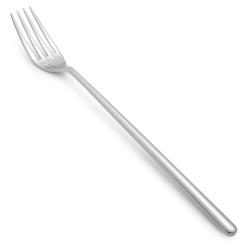
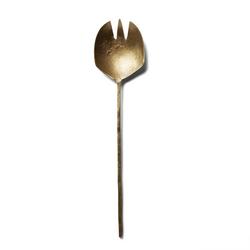
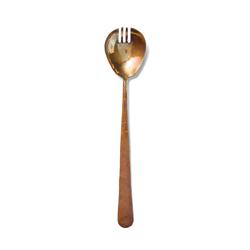
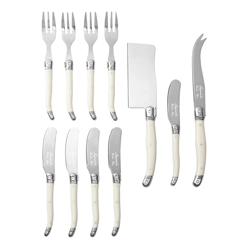
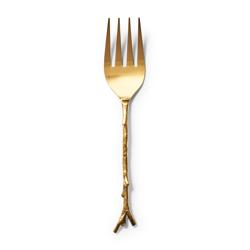
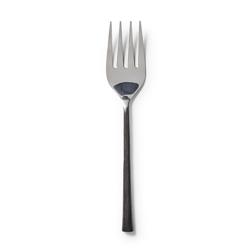
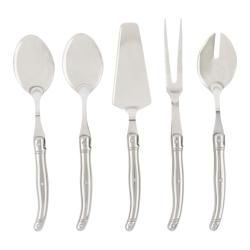
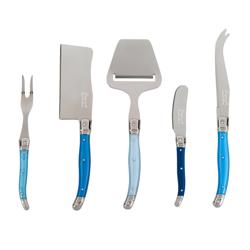
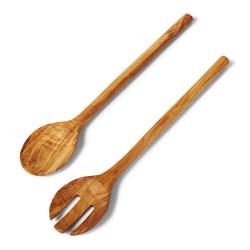
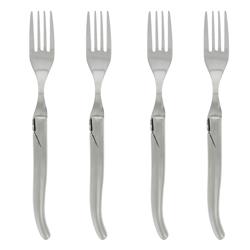
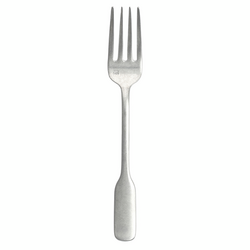
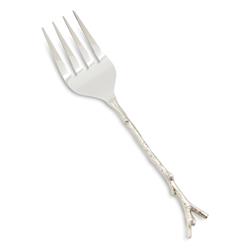
Decorative serving forks bring a finished look to shared dishes while helping guests serve themselves comfortably. Larger serving forks work well for sliced meats and substantial vegetables, while petite forks suit cheese cubes, cured meats and other small bites on appetizer boards. Their decorative details can be subtle or expressive: a softly curved handle, a floral motif or a nature-inspired shape gives a practical table tool a little personality. Unlike the forks placed at individual settings, these utensils stay with a communal platter or bowl, making their size and appearance part of the presentation. A silver-toned finish can sit comfortably beside white porcelain and clear glass, while a gold-toned finish adds warmth to stoneware, wood boards and richly colored linens. Matching every piece is not necessary. Repeating a finish or picking up a shape already present in the dinnerware can make the table feel considered without making it formal. A textured handle beside a smooth ceramic platter, for instance, adds interest without competing with the food. During the cooler months, that small detail feels especially at home beside roasted vegetables, sliced pork tenderloin or a board of cheeses set out before dinner. The same fork can feel just as appropriate at a casual weekend lunch when paired with simple napkins and everyday plates. For people who enjoy hosting, decorative serving utensils offer a useful middle ground between purely ornamental accents and basic kitchen tools. They contribute to the table while doing a job throughout the meal. The best fit depends on what is being served, the scale of the dish and how the utensil feels in the hand. A fork that looks lovely resting on an empty platter should also feel balanced when lifting a slice of roast or reaching across a generous arrangement of grilled vegetables. Decoration matters most when it complements that ease of use, leaving enough room for a comfortable grip and keeping the working end suited to the food.
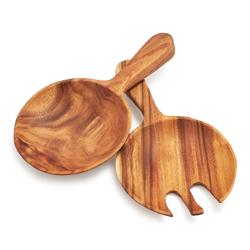
Material and construction influence both the character of a decorative serving fork and how well it fits into a household’s routine. Stainless steel is a practical choice for frequent use because it resists corrosion and generally holds up well to repeated serving and washing when cared for as directed. A polished surface gives it a brighter appearance, while a brushed or textured surface creates a softer look; visible fingerprints and fine scratches will vary with the finish. Metal handles with sculpted details can have a pleasing weight, though balance matters more than heaviness alone. A handle that outweighs the fork head may tip off the edge of a shallow dish, especially as the platter empties. Wood handles offer warmth and natural variation, but they typically need gentler care and should not be left soaking. Decorative coatings, plated finishes and mixed-material construction may also come with specific cleaning requirements. For any material, smooth edges, evenly formed tines and a secure connection between the handle and head are useful signs to assess. Size deserves equal attention. A serving fork around 8 to 9 inches long can suit many medium platters, but overall length is only part of the fit. The handle needs to reach comfortably beyond the food, and the head needs enough width to support a portion without overwhelming the dish. Smaller forks are easier to place alongside olives, firm cheeses or folded slices of salami, where a full-size utensil could feel cumbersome. Broad tines can help steady sliced meat, while narrower tines are useful for spearing individual bites. Tender fish, crumbly foods and vegetables served in sauce may need the support of a spoon or a wider serving utensil instead. Pairing a fork with
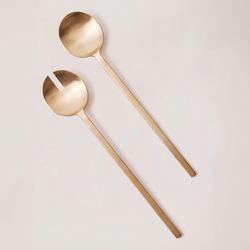
Decorative Serving Spoons brings coordinated style to the table and gives guests more control over mixed salads or slippery roasted vegetables. The two pieces do not have to be identical, but similar proportions and compatible handle shapes help them work comfortably together.
Everyday details often determine whether decorative serving forks become regular favorites or stay tucked away for special occasions. At a family-style dinner, a fork should rest securely on its platter without its handle disappearing into the food or extending so far that passing the dish becomes awkward. On a buffet, a small utensil rest or side plate gives guests somewhere clean to set it down. For a cheese and charcuterie board, placing separate forks near different foods helps keep flavors distinct and makes the arrangement easier to navigate. Separate utensils are particularly helpful when serving guests with dietary restrictions, though careful food preparation and separation are still essential for managing allergens. A comfortable handle also matters when several generations gather around the table. Deeply sculpted details may look appealing, but a grip that feels secure without sharp ridges is more welcoming to a range of hands. Cleanup should fit the host’s habits, too. Dishwasher-safe construction can simplify the end of a busy evening, but that designation should always be confirmed in the care instructions rather than assumed from a metallic appearance. Where hand-washing is recommended, mild dish soap, a soft sponge and prompt drying help protect the surface. Abrasive scrubbers can scratch polished metal or damage decorative finishes, and trapped moisture around handle joints can create problems over time. Storing forks with a little space between them, or using a soft divider for delicate finishes, helps prevent unnecessary rubbing. These practical considerations also make serving forks thoughtful gifts for someone setting up a home, celebrating a marriage or bringing friends together around the table. A versatile finish suits a recipient whose dinnerware may change, while a floral or woodland-inspired handle can reflect a familiar decorating preference without requiring an entire matching collection. For a frequent host, a well-proportioned serving fork adds something useful to the pieces already in rotation. For a newer cook, it can make the simple act of transferring dinner to a platter feel more inviting. Its appeal is in that combination: a little visual character, a comfortable feel and a clear purpose whenever food is shared.