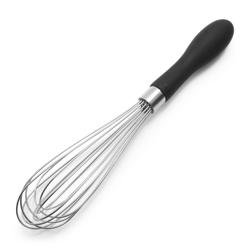
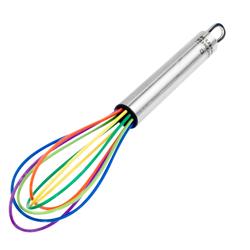
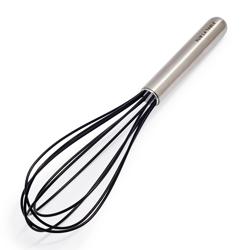
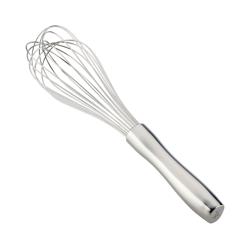
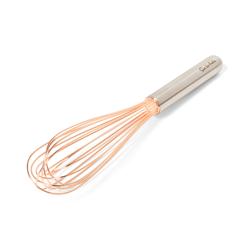
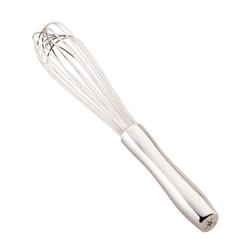
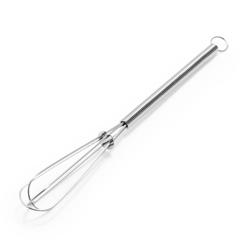
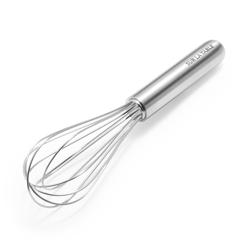
Dishwasher-safe balloon whisks are rounded, looped-wire mixing tools designed to blend ingredients, incorporate air and go into the dishwasher for cleanup. Common materials include stainless steel and silicone-coated wire, though the entire whisk, including its handle, must be labeled dishwasher safe. The balloon shape creates a broad mixing area, making these whisks especially useful for whipping cream, beating eggs and bringing together light batters. As the wires move through a mixture, they help distribute ingredients while introducing the air that gives whipped cream and egg whites their volume. That same shape is useful for less demanding tasks, such as blending cocoa into sugar, loosening yogurt for a dressing or stirring melted butter into beaten eggs. For everyday cooking, a balloon whisk fills the space between a fork and an electric mixer: more effective than a fork for many mixing jobs, yet easy to reach for when a small batch does not call for an appliance. A bowl of pancake batter, a few eggs for an omelet or cream for topping a dessert can all benefit from the rounded wire head. Results still depend on the mixture and technique; whipping egg whites requires a clean, grease-free bowl, while pancake batter needs only enough mixing to bring the ingredients together without overworking it. Size also matters. A compact whisk feels more manageable in a small prep bowl, while a larger head has room to move through cream in a generous mixing bowl. Overall length alone does not tell the whole story, since two whisks of similar length can have different head widths and handle proportions. The most comfortable fit leaves enough space for the wires to move without repeatedly catching the rim or splashing ingredients over the sides. Matching the whisk to the bowl and the batch helps make everyday mixing feel controlled rather than awkward.
Materials and construction shape how a dishwasher-safe balloon whisk feels in use and which cookware it suits. Stainless steel wires offer a smooth, uncoated mixing surface and a balance of flexibility and support. Fine wires can flex as they move through cream or eggs, while heavier wires generally feel firmer when blending a thicker mixture. Wire count, spacing and overall shape also affect performance, so a sturdy-looking whisk is not necessarily the best choice for every task. Closely spaced loops create more points of contact with ingredients, but the head still needs enough openness for the mixture to move through it. Silicone-coated wires provide a softer contact surface for nonstick cookware and other finishes that need protection from bare metal utensils. The coating should be intact, and compatibility with the cookware should be confirmed rather than assumed. Heat resistance is a separate consideration from dishwasher safety: a whisk that tolerates a wash cycle is not automatically suitable for every stovetop task or for resting against a hot pan. Handle design deserves equal attention, especially when whisking by hand for more than a few moments. A rounded or gently contoured handle should sit comfortably in the palm without requiring a tight grip. Textured or soft-grip surfaces may offer a more secure hold with damp hands, while smooth handles can be easier to wipe clean around the connection to the wires. A well-finished junction, secure wires and a handle without loose parts are useful signs to look for when considering durability. Shape matters beyond comfort, too. A broad balloon head works best when it has room to sweep through a bowl; for a slimmer profile suited to deeper vessels,
Dishwasher Safe French Whisks offer another shape to consider. Balloon whisks are not intended to knead bread dough or force their way through very stiff mixtures, which can strain the wires and handle connection.
Easy cleanup is a practical reason to choose dishwasher-safe balloon whisks, particularly when cooking involves several bowls, utensils and ingredients that cling to wire loops. Egg, cream and batter can dry around the points where the wires meet, so a prompt rinse helps keep residue from hardening before the wash cycle begins. Dishwasher-safe construction makes machine cleaning an option, not a substitute for following the manufacturer’s care directions. Placement matters: the head needs exposure to the spray, and the wires should not be wedged beneath heavy cookware or pressed against another utensil. Small whisks need a secure position so they cannot slip through the rack. After washing, check the wire junctions for trapped food and allow the tool to dry thoroughly before storing it. If residue remains, a soft brush can reach between the loops without the scraping that may damage a coating. Bent wires, peeling silicone or a loose handle can affect performance and deserve attention rather than another forceful round of mixing. Storage also plays a part in keeping the shape intact. A roomy utensil crock, a hanging position or an uncrowded drawer helps prevent the rounded head from being compressed beneath heavier tools. For frequent bakers, that combination of comfortable handling and straightforward care can make a balloon whisk an everyday essential. For newer cooks, it offers a useful way to feel how ingredients change as they mix, from streaky eggs to a uniform blend or loose cream to soft peaks. It also makes a thoughtful gift for someone setting up a kitchen, learning to bake or replacing tools that no longer feel comfortable. Paired with a mixing bowl or measuring tools, a dishwasher-safe balloon whisk suits a practical gift centered on cooking. The appeal is simple: a familiar tool, matched to the task, with cleanup that fits into an ordinary kitchen routine.