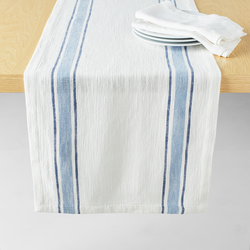
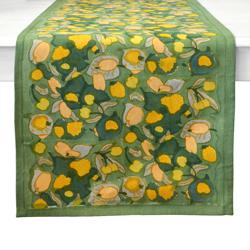
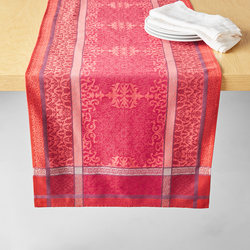
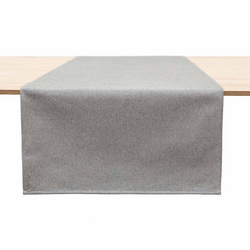
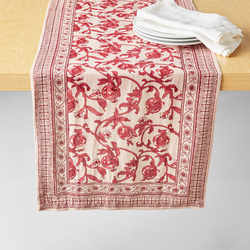
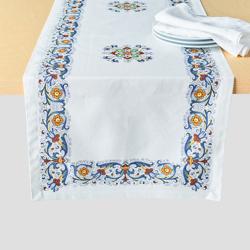
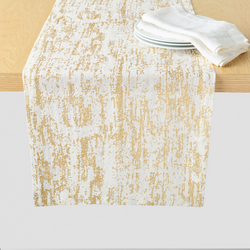
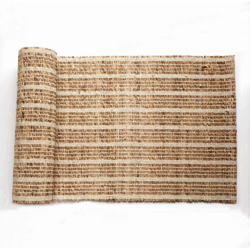
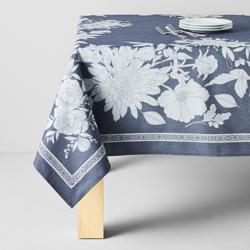
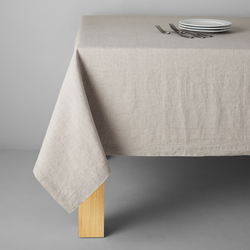
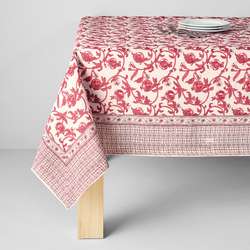
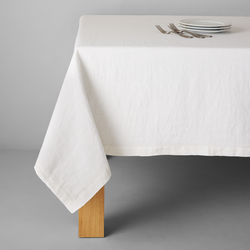
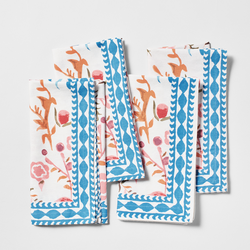
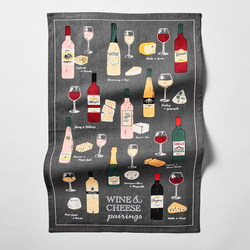
Durable cotton table runners combine a sturdy weave, secure hems and fabric that holds up well with appropriate care. They bring color and texture to a dining surface without covering the entire table, leaving room for the grain of a wood tabletop or the smooth finish of a painted one to show. Cotton is soft and absorbent, making it a practical material for a setting that moves between weekday meals and gatherings with friends. Tightly woven cotton, including canvas or duck cloth, can give a runner enough body to lie neatly beneath a centerpiece and resist bunching during use. A heavier fabric often feels substantial, but weight alone does not determine durability; the weave, stitching and finishing matter, too. Even seams and neatly secured edges help a runner withstand handling, while an open weave or decorative fringe may need more careful laundering. The best construction depends on how the table is used. A busy family dining area benefits from a runner that is easy to wash and simple to reset after breakfast, homework or dinner. A table reserved for entertaining may suit a more textured cotton fabric that adds interest beneath a low bowl of fruit or a cluster of candleholders. Smooth weaves provide a clean backdrop for patterned dishes, while a more pronounced weave adds depth to a setting built around plain plates and clear glasses. Cotton can also soften the sound of small objects being set down, although a runner is not a substitute for a protective table pad. Its absorbency may catch a small drip, but moisture can still reach the surface underneath and should be wiped up promptly. Hot serving dishes still need trivets. These practical distinctions make a cotton runner useful as a decorative layer rather than an all-purpose barrier, especially on a table whose finish needs protection from heat, water or scratches.
Proportion makes as much difference as pattern when choosing a runner for a dining table, breakfast nook or sideboard. A runner usually sits along the center of a rectangular table, creating a defined place for flowers, serving pieces or a few everyday essentials. Its width should leave enough exposed surface for place settings to feel comfortable, particularly when dinner plates, water glasses and shared dishes are all on the table at once. On a narrow surface, a slim runner leaves more usable room at either side; on a broad table, a wider one can keep a small centerpiece from looking lost. Length changes the effect as well. An overhang creates a more dressed setting, while a shorter runner contained within the tabletop can look relaxed and keep fabric clear of chairs or curious hands. For example, a 72-inch table with a 6-inch drop at each end calls for an 84-inch runner. That measurement describes the intended finished fit, so any shrinkage allowance should follow the maker’s guidance rather than a guess. An extension table also needs consideration in both its everyday and expanded configurations. Browsing
cotton table runners for dining tables with the table’s dimensions in mind helps connect the look of the fabric with the way the room actually works. Round tables can carry a runner across the center, with the ends arranged so they do not interfere with seating. A sideboard offers another useful setting, where cotton adds a soft layer beneath a serving tray without hiding the furniture. Color and pattern help establish the mood: a quiet neutral lets colorful ceramics stand out, a stripe brings definition to a long surface and a small repeating motif adds detail without demanding an elaborate centerpiece. Coordinating does not require matching every textile. A solid runner with patterned napkins, or a patterned runner with simple placemats, gives the table variety while keeping the overall setting easy to pull together.
Care requirements are central to how well a cotton table runner fits into everyday life. Many cotton runners are machine washable, but the label should determine water temperature, cycle and drying method, especially when the fabric includes embroidery, fringe, contrasting trim or a blend of fibers. Cotton can shrink, and strong heat may affect both fit and appearance. When permitted by the care instructions, washing in cold water and using a gentle cycle can help limit unnecessary wear. Prompt attention to spills also matters. Lifting away food and blotting liquid before treating a mark is generally gentler than scrubbing, which can roughen the surface or spread the stain. Any stain treatment should be compatible with the fabric and tested in an inconspicuous spot, particularly on saturated colors or printed patterns. A sauce spot noticed after dinner is easier to address before drying heat sets it, so inspecting the runner before it goes into the dryer is a useful habit. Line drying or tumble drying on low may be appropriate, depending on the label. Cotton’s natural tendency to wrinkle can be part of its relaxed appeal; for a crisper finish, ironing at the recommended setting while the fabric is slightly damp can help smooth creases. Neat folding and dry storage keep a clean runner ready for the next meal without adding much work to setting the table. For households that use the dining table daily, this balance of washable fabric, sound construction and manageable care is often more valuable than elaborate detailing. It also makes a cotton runner a thoughtful housewarming or wedding gift for someone who enjoys cooking and having people over. A versatile color and a length suited to the recipient’s table make the gift easier to use, whether it becomes the backdrop for shared pasta bowls, a birthday cake or a simple vase of flowers. Chosen with the household’s routines in mind, a durable cotton table runner adds a welcoming finishing touch without making every meal feel like an occasion that requires extra preparation.