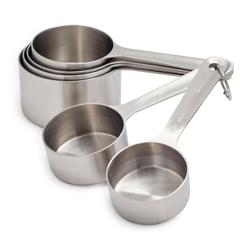
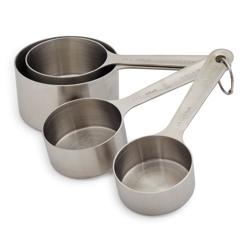
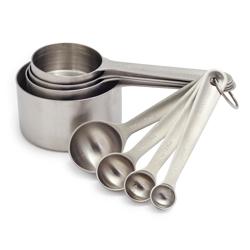
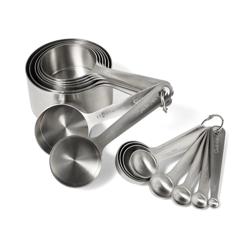
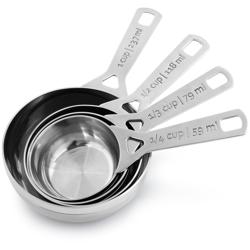
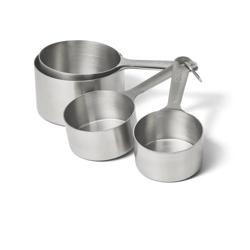
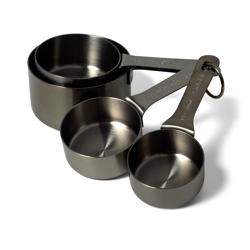
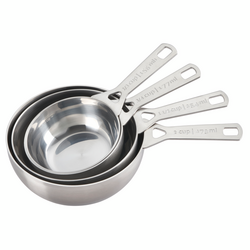
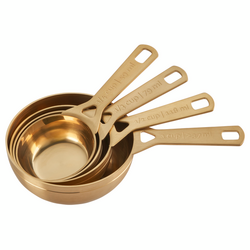
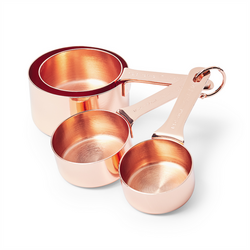
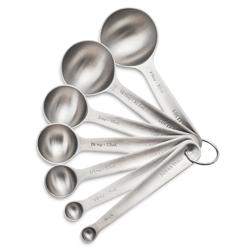
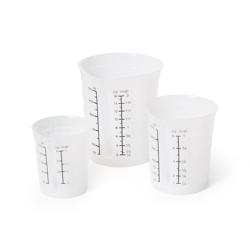
Durable metal measuring cups bring a reassuring sturdiness to everyday cooking and baking, from portioning oats for breakfast to measuring flour for a batch of bread dough. Heavy-gauge stainless steel, firm handles and clearly engraved or stamped measurements are useful features to look for because they support repeated use without relying on a delicate finish or printed markings. Stainless steel is a practical choice for its resistance to rust, its nonreactive surface and its ability to handle frequent washing. Grades such as 18/8 and 304 are commonly used in kitchen tools, though the thickness of the metal and the quality of construction matter alongside the material designation. A substantial cup should resist bending during normal use, while a securely attached handle helps keep it steady when filled. Single-piece construction eliminates a separate handle joint; well-made riveted or welded designs can also provide dependable service. A smooth, level rim gives the straight edge of a spatula or knife a clean path across the top, making it easier to level flour, sugar or cornmeal. Most traditional metal measuring cups are designed for dry ingredients and hold their stated volume when filled to the rim. That makes them different from liquid measuring cups, which typically leave room above the measurement line for carrying and pouring. Their usefulness extends beyond baking: they can portion rice before it goes into a saucepan, measure lentils for soup or scoop rolled oats into a mixing bowl. For a cook building a first collection of kitchen essentials, they provide a familiar tool that can stay useful as recipes become more ambitious. For someone who bakes often, the appeal is just as straightforward: sturdy construction, legible sizes and a shape that makes measuring feel easy rather than fussy. The best fit is not necessarily the heaviest cup, but one that balances strength with comfortable handling throughout a recipe.
The details become especially noticeable when several ingredients are lined up on the counter. A comfortable handle provides enough room for a secure grip without digging into the palm, and a balanced cup is less likely to tip when set down empty. Longer handles can offer more reach into a deep flour bin, while shorter handles may fit more neatly inside a shallow drawer. Neither shape suits every kitchen, so the dimensions of storage spaces and ingredient containers are worth considering together. A broad, round cup works well with an open canister; a narrower or oval shape may pass more easily through a smaller opening, depending on its width. Smooth interiors help ingredients release and leave fewer places for brown sugar or nut butter to collect. Peanut butter, shortening and other thick ingredients can be measured in dry measuring cups, although scraping them out thoroughly helps preserve the recipe’s proportions. For flour, spooning it into the cup and leveling it, when that is the recipe’s stated method, avoids the extra compaction that can happen when scooping directly from a bag. A sturdy cup supports consistent measuring, but the way it is filled still matters. Common capacities such as 1/4 cup, 1/3 cup, 1/2 cup and 1 cup cover many everyday recipes, while additional sizes can reduce repeated scooping when doubling pancake batter or preparing a larger batch of granola. Easy-to-read markings are particularly helpful when moving between similar-looking cups, and markings impressed into the metal do not depend on surface printing to remain readable. Nesting shapes keep the collection compact, while a removable ring can keep the cups together without requiring every size to come out for each task. For a coordinated collection,
Durable Kitchen Measuring Cup Sets offer another way to consider the capacities and storage features that suit a cooking routine. Enough clearance between nested handles also makes a difference when lifting out a single cup with damp hands.
Care is usually uncomplicated, but a few material-specific considerations help metal measuring cups stay pleasant to use. Many stainless steel designs are dishwasher safe; the manufacturer’s care directions should confirm whether that applies to the entire cup, including any attached grips or other components. Aluminum is lighter than stainless steel, but it can discolor with certain dishwasher detergents and may need hand-washing. Across materials, washing away residue promptly and drying before nesting helps prevent trapped moisture and keeps the next measuring task simple. A soft sponge and mild dish soap are generally enough for routine cleanup, while a short soak can loosen dried dough or sticky syrup without aggressive scrubbing. Steel wool and harsh cleaners can damage surfaces, and prolonged contact with salt or chlorine bleach can harm stainless steel despite its resistance to corrosion. If pale water spots appear, they are often mineral deposits rather than evidence that the cup has worn out. Durable does not mean indestructible: handles are intended for lifting and measuring, not prying open lids, and even a substantial cup can be damaged by force. Metal also conducts heat, so these cups should not be treated as small saucepans or placed in a microwave. Used for their intended purpose, they are dependable companions for the small, repeated tasks that make a kitchen work. An avid baker might appreciate a second set to keep dry ingredients separate from sticky ones during a long recipe. A new apartment dweller may value nesting cups that take up little drawer space, while someone cooking family meals can use them to scale rice, grains and baking mixes with less guesswork. They also make a thoughtful housewarming or wedding gift, particularly alongside a mixing bowl, measuring spoons or a favorite recipe written out by hand. Their appeal is practical rather than ornamental: a comfortable grip, a readable measurement and a cleanly leveled cup of flour, ready for whatever is going into the bowl next.