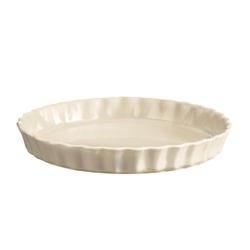
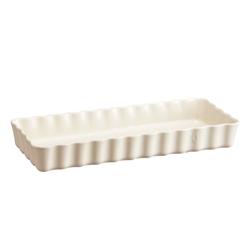
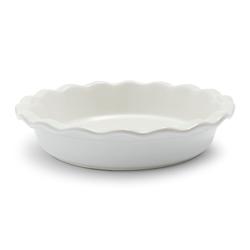
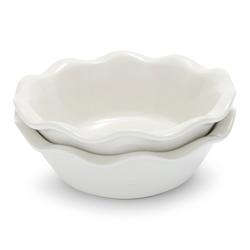
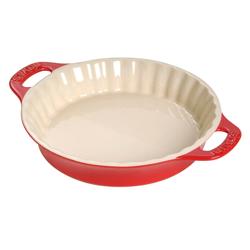
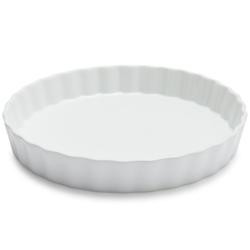
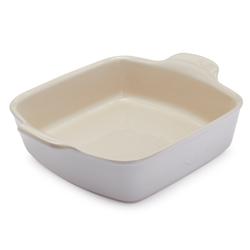
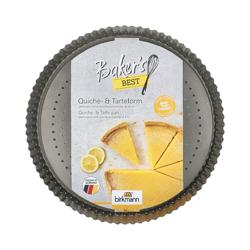
Durable white tart pans are typically made from heavy-duty ceramic, high-fired stoneware or sturdy porcelain, giving home bakers a reliable way to bake and serve sweet and savory tarts in the same dish. Their light, neutral finish brings a clean, classic look to the table, while the substantial construction helps distribute heat steadily for evenly baked pastry and tender fillings. A white tart pan can move from the oven to the dining table without needing a separate serving platter, which is especially useful when a tart has a delicate crust or a soft center that could be difficult to transfer. Look for a pan with a smooth, impermeable glaze that resists staining from fruit, chocolate and savory ingredients and makes cleanup easier after baking. A fluted rim is another practical detail: it gives pastry a traditional finished edge and helps create the shape associated with bakery-style tarts. Depending on the material and manufacturer’s instructions, some pans are also suitable for the microwave, freezer, broiler or dishwasher, so check the care and temperature guidance before use. High-fired ceramic and porcelain can tolerate substantial heat, but gradual temperature changes are still a smart habit. Let a chilled pan warm slightly before placing it in a hot oven and avoid setting a hot dish directly on a cold or wet surface. These simple precautions help protect the pan from thermal shock and preserve its finish over years of weekend baking, family dinners and special occasions.
When choosing among durable white tart pans, start with the kind of tart you prepare most often and how you plan to serve it. A fixed-bottom ceramic or porcelain dish is well suited to oven-to-table baking, particularly for fruit tarts, custard tarts, tomato galettes and other recipes that look attractive served directly from the pan. Its weight can help keep the dish steady while you slice, and its gently rounded sides may be more forgiving when working with a filling that needs to set in place. A metal tart pan, especially one with a removable bottom, is often preferred when the goal is a crisp, neatly released crust with clean sides. White ceramic and porcelain pans generally create a more relaxed presentation, while removable-bottom designs prioritize easy unmolding. Size matters, too. A pan around 9 to 11 inches is a versatile choice for a family-size dessert or a savory tart to share, while smaller pans are useful for individual servings, dinner parties or recipes with different fillings. Consider the depth as well as the diameter; shallow pans are traditional for many pastry tarts, while deeper dishes provide room for generous layers of fruit, vegetables, cheese or custard. Before buying, review the listed dimensions, maximum oven temperature and care instructions, then compare those details with the recipes you make. If you are building a dependable baking collection, exploring
Quality Tart Pans can also help you compare construction, shape and everyday performance in one place.
A durable white tart pan is a practical addition for experienced bakers and a welcoming starting point for someone learning to work with pastry. It can handle familiar favorites such as lemon tart, apple tart and chocolate ganache tart, yet it is just as useful for a weeknight quiche, roasted vegetable tart or caramelized onion filling. During the cooler months, a warm tart brought straight from the oven gives the table an inviting centerpiece, whether it is served as a simple family dessert or shared with guests after dinner. The white finish works with nearly any table setting and lets colorful ingredients stand out—ruby berries, golden pears, green herbs and deeply roasted vegetables all look especially appealing against a pale glazed surface. These pans also make thoughtful gifts for new homeowners, college graduates setting up a kitchen or bakers who appreciate tools that are both useful and presentable. Pairing one with a pastry brush, pie weights, a rolling pin or a favorite baking mix can create a considerate gift without requiring a large collection of specialty equipment. For everyday care, allow the pan to cool before washing, use nonabrasive tools on the glaze and dry it thoroughly before storing. If the pan is dishwasher safe, follow the manufacturer’s guidance; otherwise, warm water and mild dish soap are usually enough to loosen baked-on residue. Store it where the rim will not strike another heavy dish, and avoid stacking unprotected pieces if the glaze could rub. With thoughtful handling, a well-made white tart pan can become the dish you reach for when you want pastry that looks polished, bakes evenly and goes from kitchen to table with little fuss.