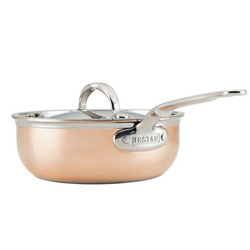
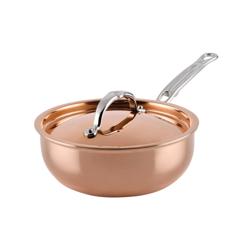
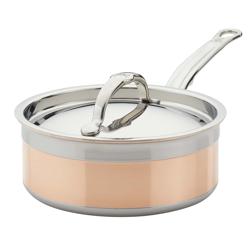
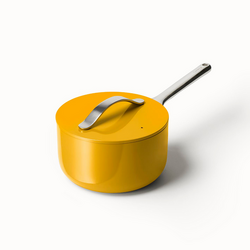
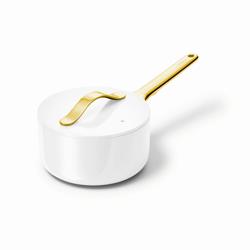
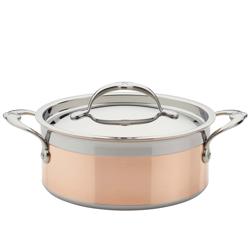
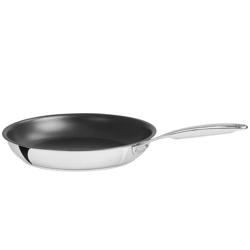
Ergonomic handle copper sauciers pair copper’s responsive heat conduction with rounded cooking surfaces and handles shaped for comfortable control. They are especially useful for sauces, custards, reductions and other foods that need frequent stirring and careful heat adjustment. Copper distributes heat efficiently and responds quickly when the burner setting changes, helping a cook move from melting butter to gently thickening a sauce without the lag associated with less responsive cookware. The finished pan’s performance also depends on its thickness, lining and overall construction. A saucier’s curved transition between the base and sides gives a whisk room to sweep through the mixture rather than leaving flour or egg yolk caught in a sharp corner. Its typically flared sides also allow moisture to escape as a sauce reduces, though the rate depends on the pan’s proportions and the cooking conditions. That combination makes this cookware useful for a silky béchamel, lemon curd or a glossy sauce spooned over roasted vegetables. An ergonomic handle complements the shape by giving the supporting hand a comfortable place to steady the pan while the other hand whisks. Handle contours, angle and balance matter as much as the word “ergonomic”: a grip that suits one cook may feel too narrow, too broad or awkwardly angled to another. A shaped handle can support more controlled lifting and pouring, but it does not necessarily mean the pan is lightweight or that the handle stays cool. Copper cookware can be substantial, especially when filled, and metal handles can become hot on the stovetop or in the oven. For everyday cooking, the appeal is a combination of responsive heat, accessible curves and a grip that feels manageable through repeated stirring. Those qualities make a copper saucier useful well beyond a single sauce recipe, from stirring a small batch of risotto to warming a purée without letting it catch around the edges.
Construction is an important distinction when choosing ergonomic handle copper sauciers. Some cookware has a substantial copper body bonded to a stainless steel cooking surface, while other designs incorporate copper within a layered construction. A copper-colored exterior alone does not establish that a pan contains copper or offers its heat-conducting benefits, so the material description deserves a close look. Stainless steel linings provide a durable, nonreactive surface for ingredients such as tomatoes, wine and citrus. Traditional tin linings are also suitable for many sauce-making tasks, but they are softer, require gentler utensils and have lower heat limits than stainless steel. Unlined copper is not a general-purpose choice for acidic sauces. Thickness and construction affect both responsiveness and heft, making the most substantial pan less practical if lifting it comfortably is a concern. Capacity should fit the way you cook, too. A smaller saucier can keep a modest quantity of custard deep enough for effective whisking, while a larger one offers room for stirring risotto or folding cheese into sauce for a family meal. Leave enough working space above the food to stir without splashing; a stated capacity is not the same as a comfortable working fill. The base should sit securely on the burner, and a long handle should have enough clearance that it does not extend into a busy walkway. For induction cooking, compatibility must be stated for the finished pan because copper itself is not magnetic; some designs add an induction-compatible base or exterior layer. Oven limits also vary with the lining, handle and lid, so they should be checked rather than assumed. Cooks comparing shapes may also consider
Ergonomic Handle Saucepans for tasks that favor taller, straighter sides, such as heating broth or cooking grains. A saucier is particularly appealing when easy whisk access and room to stir are priorities. Neither shape replaces every pot, but each can fill a clear role in a kitchen.
Comfort and durability become easier to judge when the whole cooking routine is considered, from reaching for the pan to washing it after dinner. A handle should offer a secure hold without requiring an awkward wrist position, and its connection to the body should feel solid. A helper handle, when present, can make a heavier saucier easier to move with two hands, although both handles still need appropriate heat protection. Interior rivets may require a little extra attention during cleaning, while a smooth handle attachment can leave fewer places for sauce to collect. These details matter most during familiar tasks: holding a pan steady as cold butter is whisked into a reduction, tilting it to gather the last spoonful of caramel or carrying a finished sauce from the range to the counter. Care should follow the maker’s instructions, with hand-washing generally the sensible approach for preserving copper finishes. Let the cookware cool before washing, use mild dish soap and a soft sponge, then dry it thoroughly to help reduce water spots. Avoid abrasive cleaners on cooking surfaces and use utensils appropriate to the lining, particularly silicone or wood with tin. Copper naturally darkens and develops a patina with use; that change in appearance does not by itself mean the pan has lost its usefulness. A suitable copper polish can restore exterior shine when desired, but it should be kept away from surfaces for which it is not intended. Avoid heating an empty pan unattended, and respect the limits of its lining rather than treating every copper saucier as high-heat cookware. With suitable care, a well-made pan can remain a dependable part of regular meal preparation, though a worn tin lining may eventually need professional retinning. Copper sauciers also make thoughtful gifts for cooks who enjoy pastry, sauce-making or hands-on meals that reward close attention. For a gift, matching the recipient’s cooktop, preferred pan weight and willingness to care for copper is more useful than choosing by appearance alone. The best fit is cookware that feels comfortable enough to reach for often and practical enough to earn its place beside the stove.