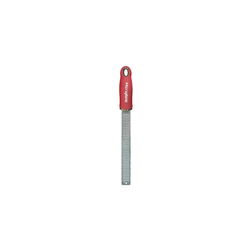
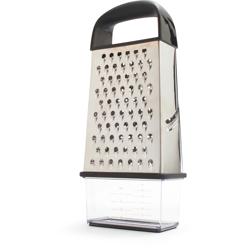
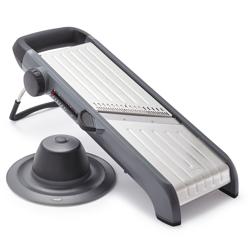
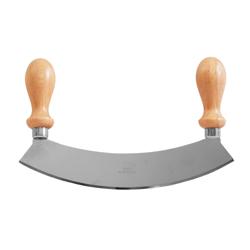
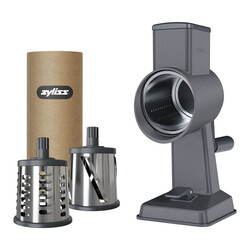
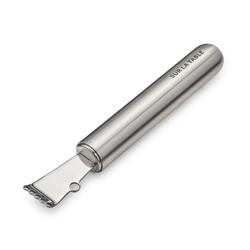
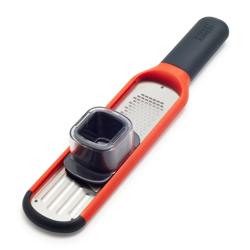
Ergonomic handle food graters pair a grating surface with a handle shaped to support a comfortable, controlled grip. The right fit depends on what you grate, how much you prepare and whether you prefer to work over a bowl, a cutting board or a finished dish. A handheld zester suits citrus, garlic and small amounts of hard cheese, while a flat grater offers a broader surface for everyday shredding. A box grater provides several grating textures in one tool and a base that rests on a work surface for larger batches. Across these styles, handle shape, balance and stability matter as much as the cutting surface. A gently rounded handle with enough room for your fingers may feel more comfortable than a narrow grip that presses into your palm. Soft-touch or rubberized materials can help cushion contact and improve traction, although hands and handles should still be kept clean and dry during use. A larger handle is not automatically a better one: it should fit your hand without requiring an overly tight grip or forcing your wrist into an awkward angle. For handheld designs, consider how the tool balances when extended over a mixing bowl. For flat and box graters, a nonslip foot or base can help limit movement on a clean, level surface. Bowl-resting notches can also provide support when they fit securely against the rim. These details become especially noticeable when shredding a mound of carrots for slaw or grating enough cheese for a family-size casserole. Cooks who prepare vegetables frequently, bake regularly or simply enjoy adding fresh Parmesan at the table may appreciate a handle that feels secure through repeated strokes. Ergonomic features can make a tool easier to hold, but they do not eliminate the need for light pressure, a stable setup and fingers kept clear of the blades.
The grating surface determines the texture of your ingredients, so match its openings to the food and the result you want. Fine teeth create delicate citrus zest for cake batter, fluffy hard cheese for pasta and finely grated ginger for dressings or marinades. Medium and coarse openings produce more distinct shreds for vegetables, potatoes and firm cheeses, giving you the texture needed for crisp fritters, tender quick breads or a bubbling baked pasta. A broad surface is useful when working with a large potato or a block of cheese, while a narrow rasp offers precision when adding lemon zest directly over a bowl of dough. Stainless steel is a common choice for grating blades because it resists corrosion and provides a durable cutting surface when properly maintained. Both etched and stamped blades have useful roles, and performance depends on the sharpness, tooth pattern and intended task rather than the manufacturing method alone. Etched teeth often excel at producing fine, delicate shavings with a light stroke; larger raised cutting openings are well suited to substantial shreds. A sharp surface should cut without requiring you to bear down heavily, which helps preserve control at the handle. If food repeatedly smears or catches, consider whether the grating texture and ingredient firmness are a good match. Firm cheese generally grates more cleanly when cold, while very soft cheese may need a different preparation method. For citrus, turn the fruit as you work and remove only the colorful outer layer, leaving the bitter white pith behind. Fibrous ginger may collect along the teeth, making easy access to the underside helpful for retrieving the grated pulp. During the cooler months, these small tasks bring fresh flavor to familiar dishes: orange zest brightens a loaf cake, grated garlic blends into a hearty soup and a light snowfall of cheese finishes roasted vegetables. Having the right grating texture makes these additions easier to incorporate without changing the character of the dish.
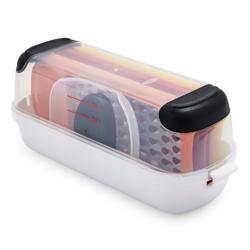
Care, construction and storage all contribute to how well an ergonomic grater fits into everyday cooking. Look for a firmly attached handle, a rigid frame and a grating surface that does not flex excessively under normal use. Where a soft grip meets a metal frame, a smooth, well-fitted connection can make food residue easier to remove. A broad box grater needs more cabinet space but may cover several preparation tasks, while a slim handheld or flat design can fit more easily into a compact kitchen. Allow room for the full length of the handle, and consider a protective cover to shield the sharp teeth during storage. A cover also helps keep your fingers away from the cutting surface when reaching into a drawer. Cleaning is usually easier before cheese, garlic or citrus pulp dries onto the blades. Follow the manufacturer's care instructions, since dishwasher suitability varies with handle materials and construction. Even when a grater is dishwasher safe, prompt rinsing can help release trapped food. When hand-washing, use a brush rather than running a sponge or your fingers across the sharp teeth, and work from the noncutting side where accessible. Dry thoroughly before putting the tool away, paying attention to handle joints and folded edges where water can collect. Replace a grater if its handle loosens, its frame becomes unstable or its teeth no longer cut effectively; extra force is not a good substitute for a sound tool. For a first apartment, a housewarming or a gift for someone who enjoys cooking from scratch, a comfortable grater is a practical addition that earns its place through frequent use. Choose the format around the recipient's habits, whether that means zesting citrus for weekend baking or shredding vegetables for everyday meals. For preparations that call for even slices rather than shreds,
Ergonomic Handle Slicers serve a complementary purpose. Thoughtfully chosen tools support the way someone already cooks, keeping familiar prep tasks comfortable, manageable and ready for the next meal.