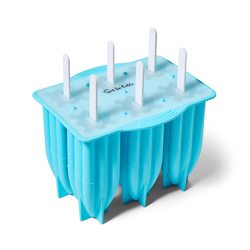
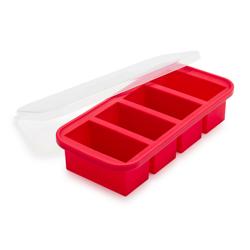
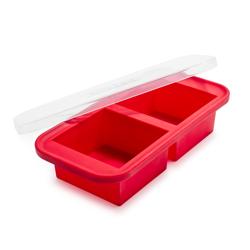
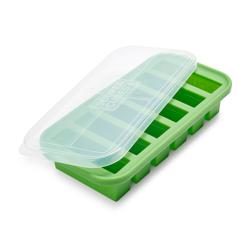
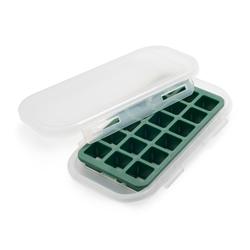
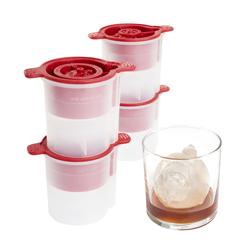
Freezer molds are reusable trays with individual compartments that portion soups, sauces, leftovers and meal-prep ingredients into easy-to-store frozen shapes. Unlike a single large container, a divided mold lets you freeze food in amounts that match how you cook and eat, then remove only what you need. A small portion of tomato paste can go into a simmering sauce, a measured block of broth can become the base for rice and a single serving of chili can make lunch easier to pull together. That flexibility makes freezer molds useful for batch cooks, smaller households, busy families and anyone who wants to put leftover ingredients to work rather than let them go unused. Compartments can range from small cavities for concentrated ingredients to larger portions suited to soup or a meal component. The most useful size depends less on how much food you prepare at once than on how much you expect to thaw at a time. For someone cooking for one, individually frozen servings offer variety without committing to the same dinner several nights in a row. For a household that cooks larger meals, several equal portions can be combined as needed. Uniform blocks also make it easier to organize food in labeled freezer-safe containers or bags after it has frozen solid, freeing the mold for another batch. Picture a row of neatly packed broth portions instead of several half-filled containers competing for space. Beyond leftovers, freezer portion trays can help preserve the effort that goes into a slowly simmered stock, a favorite pasta sauce or a batch of cooked beans. They are especially practical when a recipe calls for just part of an ingredient, leaving enough coconut milk, puréed fruit or sauce for another dish. Choosing a mold around those everyday habits can make it a regularly used kitchen tool rather than something reserved for an occasional ambitious meal-prep session.
Material, construction and compartment shape all affect how a freezer mold handles filling, freezing and releasing food. Food-grade silicone is flexible, allowing you to push from beneath a compartment or gently peel its sides away from a frozen portion. That give can be helpful with dense sauces and larger blocks that are difficult to remove from a rigid tray. Freezer-safe plastic offers a firmer structure, though its release method and resistance to cracking depend on the material and design. Neither material should be assumed suitable for every kitchen task; the manufacturer's stated uses and temperature limits matter, particularly if you hope to use the same mold beyond the freezer. Some silicone molds are designed for additional uses, but lids, reinforced rims and other components may have different restrictions. For projects that involve shaping foods outside the freezer,
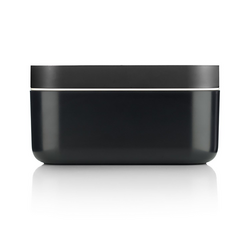
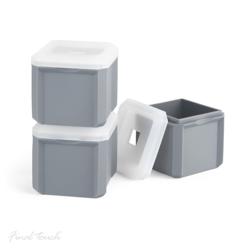
Cooking Molds offers a related category to consider according to the intended preparation method. Within freezer molds, a supported or reinforced rim can make a flexible tray easier to carry when it contains broth or another thin liquid. A compatible lid helps protect food from spills and exposure to freezer odors; a close-fitting cover can also limit air contact, although it does not eliminate freezer burn or replace appropriate longer-term storage. Where included, measurement markings help portion ingredients consistently without repeatedly reaching for a measuring cup. Leave the recommended headspace because liquids expand as they freeze, and avoid treating the top edge of a compartment as a fill line. Consider the exterior dimensions as carefully as the portion capacity. A tray needs a level place to sit while its contents freeze, clearance for its lid and enough room to lift it out without tipping. Rectangular compartments often produce blocks that pack efficiently together, while smaller cavities make it easier to divide ingredients used a little at a time. Stackable designs can help with organization, provided their lids and supports are intended to bear another filled tray.
The best freezer molds fit both a cooking routine and a cleanup routine. Dishwasher-safe designs can simplify washing after a batch of soup or sauce, but care instructions should confirm whether the tray and lid can go in together and where they should be placed. For hand-washing, pay attention to compartment corners, the underside of the rim and any grooves around the lid where food can collect. Thorough drying before storage helps keep the pieces clean and ready for their next use. Strongly colored ingredients may stain some materials, while lingering aromas call for cleaning methods recommended by the manufacturer rather than abrasive scrubbers or harsh treatments. Durability also depends on handling: avoid sharp utensils when loosening frozen portions, do not force a rigid tray to bend and inspect molds for cracks, tears or damaged lids. For everyday food preparation, freezer molds work especially well with ingredients that retain a useful texture after thawing, including stocks, many cooked sauces and bean-based dishes. Freezing does not make every recipe equally suited to reheating; some dairy-rich sauces may separate, and foods valued for their crispness may soften. Cool cooked food promptly using food-safe methods before portioning it for freezing, rather than leaving a large pot on the counter until it reaches room temperature. Once portions are frozen solid, transferring them to suitable airtight freezer storage can help protect quality and keep the tray in circulation. Labels with the contents, portion amount and freezing date save guesswork later, particularly when tomato soup and pasta sauce look nearly identical through a bag. Keep reheating separate from portioning unless the mold is expressly designed for that use, and follow safe thawing practices for the food inside. As a gift, reusable freezer molds suit a friend who loves making stock, a new parent preparing meals ahead or someone setting up a kitchen with limited storage. Paired with an understanding of the recipient's usual serving sizes, they offer a practical way to turn one cooking session into several useful meals, with less rummaging through the freezer and fewer forgotten leftovers.