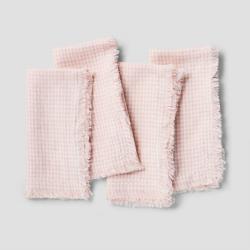
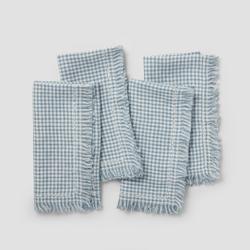
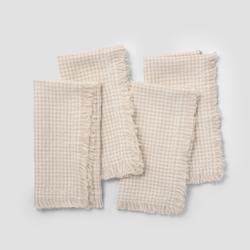
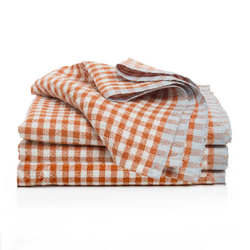
Gingham linen napkins bring a familiar check pattern and the easy texture of flax to the table, making a simple place setting feel considered without making it feel formal. The pattern has a pleasing rhythm: intersecting bands create squares of light and deeper color, giving the fabric enough detail to stand beside plain dinnerware without overwhelming it. A small check can read almost like a solid from across the room, while a larger check makes the napkin a more noticeable part of each setting. Linen adds its own character through a softly textured surface, a relaxed drape and the occasional variation in the yarn. Those subtle irregularities are part of the appeal, especially beside smooth porcelain, clear glass or a wooden tabletop. The fabric comes from the flax plant and is valued for its absorbency and strength, qualities that suit a napkin used throughout a meal rather than simply laid out for decoration. With appropriate laundering, linen generally becomes softer and more supple over time. Its natural creases also make sense with gingham’s informal character; a lightly rumpled napkin looks at home beside a bowl of pasta or a shared platter of roasted vegetables. For a crisper setting, pressing gives the same fabric a more tailored finish. Fiber content matters when comparing napkins, since all-linen fabric and linen blends can differ in weight, texture and care requirements. A blend may introduce a smoother hand or a different drape, depending on the other fibers and the construction. Checks can also be woven from colored yarns or printed onto the fabric, so the appearance of the reverse may vary. Neatly finished hems, secure stitching and a fabric weight that feels comfortable against the hands are useful details to consider for regular use. A substantial feel does not have to mean stiffness: the most comfortable table napkin has enough body to rest across the lap while remaining flexible enough to fold, gather or tuck beside a plate.
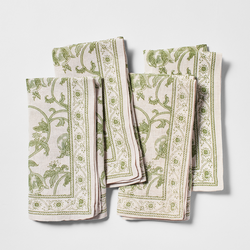
At the table, gingham works particularly well when its color connects with one or two other details rather than matching every element. A blue check might pick up the edge of a serving bowl, while a soft neutral check can sit quietly against stoneware and natural wood. Red checks bring a lively note to white dishes without requiring an elaborate centerpiece. The scale of the pattern matters as much as its color. Fine checks offer a little visual texture alongside patterned plates; broader checks have more presence against simple dinnerware. When several patterns share a table, a common color and a difference in scale help them feel comfortable together. Florals with open space around the design, narrow stripes or an understated border can all sit alongside gingham without competing for attention. For another pattern to pair with checks,
Printed Linen Napkins can provide a contrasting motif connected by a similar shade. There is no need for every place setting to be identical, particularly at a relaxed meal where the table already holds serving dishes, water glasses and bread to pass around. Napkin size influences both appearance and comfort, too. A smaller square suits a light lunch or a compact place setting, while a larger dinner napkin provides more coverage across the lap and more fabric for a loose fold. Dimensions are more useful than a photograph alone when judging how a napkin will sit beside the dishes already at home. A simple rectangle placed to the left of a plate keeps the check visible, while a loosely gathered napkin in a ring shows off linen’s drape. Beneath a shallow bowl, a folded napkin adds a soft layer without hiding the pattern entirely. These are linens for weekday suppers, leisurely breakfasts and meals with friends, not just tables arranged for an occasion. Their appeal lies in how easily they move between those settings.
Regular use also makes care an important part of choosing gingham linen napkins. The sewn-in label should determine washing, drying and ironing methods, particularly when a napkin includes blended fibers, decorative trim or a printed design. Where machine washing is permitted, a gentle cycle with a mild detergent can help protect the fabric and stitching. Separating light and dark colors is sensible, especially for the first few washes, and giving napkins room to move helps avoid a tightly twisted bundle. Linen can shrink, so the recommended water temperature and drying method deserve attention before the first wash. Food stains are easier to manage when addressed promptly: blotting lifts excess sauce or oil without grinding it farther into the weave. Any stain treatment should be suitable for the fabric and color, with testing on an inconspicuous area when recommended. Checking the napkin before applying dryer or iron heat helps prevent a lingering mark from becoming harder to remove. Fabric softener can leave a coating that affects absorbency, while bleach may damage fibers or alter colored checks unless the care instructions specifically allow it. For napkins that can be pressed, ironing while slightly damp often makes creases easier to smooth; the appropriate setting still depends on the fiber content. A relaxed finish is equally appealing, and careful smoothing before drying can reduce the need for pressing. Once completely dry, napkins store neatly in a drawer or linen cupboard, away from dampness and direct sunlight. Folding them consistently makes setting the table quicker, though changing the fold occasionally can help avoid a persistent crease along the same line. For someone furnishing a first dining space, replacing everyday table linens or enjoying more meals at home, gingham offers a pattern that feels welcoming rather than precious. It also makes a thoughtful housewarming or wedding gift when the color suits the recipient’s dishes and the care routine fits everyday life. The result is something useful, personal and ready to become part of many meals.