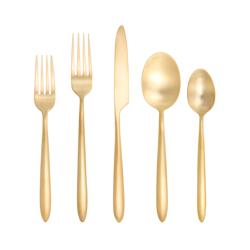
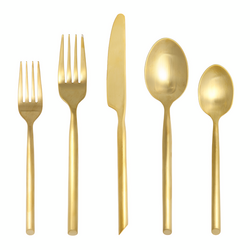
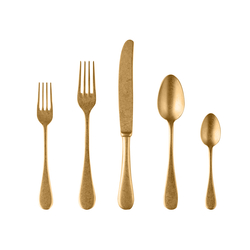
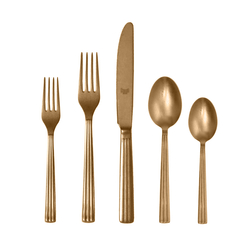
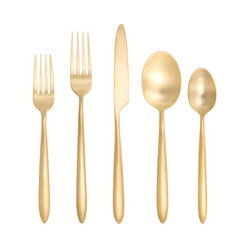
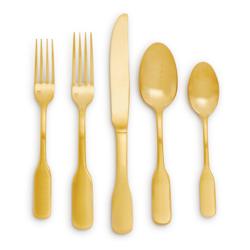
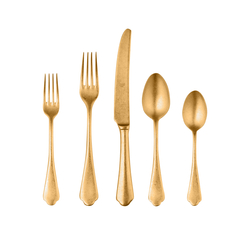
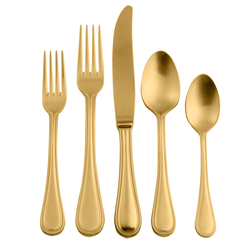
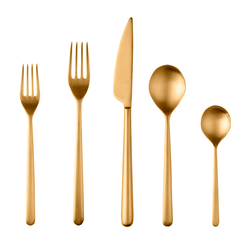
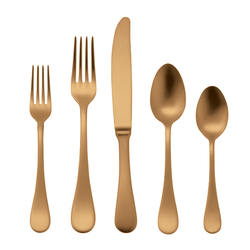
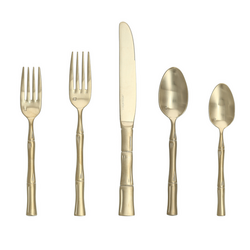
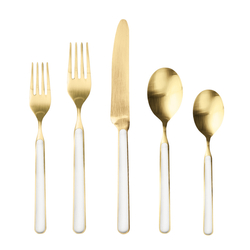
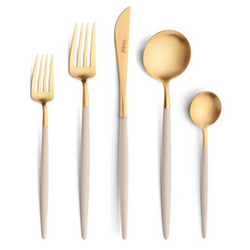
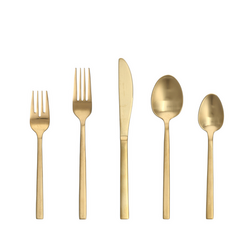
Gold stainless steel flatware pairs a stainless steel base with a gold-colored finish, giving everyday utensils a warm, decorative appearance without making them from solid gold. The color generally comes from a surface treatment or coating, not from the steel itself. Depending on the construction, that finish may be applied through plating or physical vapor deposition, commonly called PVD. The coating method and quality affect how well the color holds up, so the stated finish and care instructions deserve attention alongside the appearance. Stainless steel provides the underlying strength and corrosion resistance, while the outer finish gives each place setting its distinctive look. Common stainless steel designations include 18/10 and 18/0: 18/10 contains approximately 18% chromium and 10% nickel, while 18/0 contains approximately 18% chromium with no added nickel. Chromium helps steel resist corrosion, and nickel generally improves that resistance. Neither grade makes flatware completely immune to rust, staining or damage, particularly when food residue or moisture remains on the surface. For utensils you will handle every day, the feel and finish matter alongside the material designation. Polished gold flatware catches the light and brings a bright accent to a white plate, while brushed, satin and matte finishes create a softer effect. Gold tones can range from pale champagne to deeper yellow, so consider how the color will sit beside your dinnerware rather than assuming every gold finish will match. Against charcoal stoneware, a gold fork becomes a clear focal point; next to ivory porcelain and a woven placemat, the same color feels relaxed. Gold stainless steel silverware can complement a coordinated table or provide a warm contrast to clear glassware and simple linens. A thoughtful choice balances the look you enjoy with the comfort and upkeep that make sense for daily use.
A coordinated
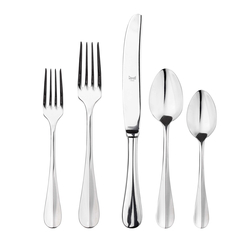
gold flatware set gives the table a consistent look, whether you are setting out breakfast for two or making room for friends at dinner. Before choosing a set size, consider the number of people you regularly serve and how often the dishwasher runs. Enough settings for a full table may still leave you reaching for an extra spoon when dessert comes around. A typical five-piece place setting includes a dinner fork, salad fork, dinner knife, soup spoon and teaspoon, although configurations vary. Total piece count does not always equal a particular number of complete settings, especially when serving utensils are included. Matching serving pieces can carry the gold finish from individual plates to shared bowls, but the pieces used most often should take priority. Handle shape, length and balance also influence how enjoyable flatware is to use. A substantial handle may feel reassuring in the hand, while a slimmer profile can feel lighter and less bulky. Rounded edges, smooth surfaces and comfortable transitions between the handle and working end matter more over a long meal than an elaborate decorative detail. Fork tines should feel smooth, spoon bowls should suit the foods you eat and dinner knives should feel controlled rather than awkwardly weighted. A broad, shallow spoon offers a different experience from a deeper bowl, just as an oversized fork can feel out of proportion beside a small dessert plate. These practical differences make gold flatware suitable for more than formal entertaining. Simple shapes work comfortably with weeknight pasta, grain bowls and morning yogurt, while a more sculpted silhouette can help define a dressed-up place setting. For wedding or housewarming gifts, gold stainless steel flatware offers a useful way to help someone establish a table that reflects their taste. Consider the recipient’s dinnerware, preferred utensil weight and willingness to hand-wash before choosing a finish. A beautiful gift earns its place through use, not just through how it looks in the drawer.
Caring for gold stainless steel flatware means protecting both the steel underneath and the decorative surface. Dishwasher safety depends on the complete utensil, including its coating, so stainless steel construction alone is not enough to establish the right cleaning method. Follow the manufacturer’s care instructions, even when another gold-colored set looks similar. Where hand-washing is recommended, mild dish soap, warm water and a soft sponge provide a gentle approach. Wash away food residue promptly, rinse thoroughly and dry with a soft cloth before putting the pieces away. Prolonged contact with salty or acidic foods can contribute to corrosion, and leaving utensils soaking for extended periods is not a substitute for cleaning them. Steel wool, scouring pads and abrasive cleaners can scratch or dull a decorative finish. Chlorine bleach and harsh cleaning products may also damage the surface, so use only products permitted by the care instructions. If dishwasher cleaning is approved, load utensils so they are not tightly nested or rubbing against neighboring pieces, and follow any directions about detergent and cycle selection. Removing and drying the flatware after the cycle can help limit water spots and lingering moisture. Storage matters, too: a clean, dry organizer with enough room for each utensil type helps reduce unnecessary contact between surfaces. Repeatedly tossing pieces into an overcrowded compartment can leave marks even when the flatware is carefully washed. Over time, any decorative finish may show wear, particularly along edges and areas that receive frequent contact. A matte surface is not automatically more durable than a polished one, and a heavier utensil does not necessarily have a more resilient coating. Construction, finish quality and everyday care all contribute to longevity. Choose gold stainless steel flatware with upkeep you can comfortably maintain, and its warm color can become a familiar part of everyday meals as well as the table you set for company.