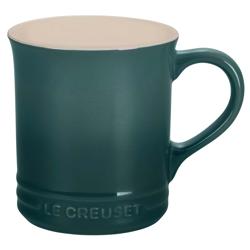
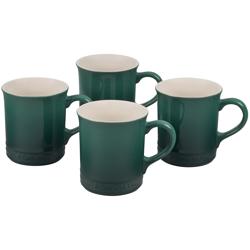
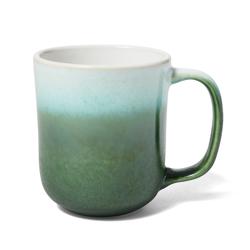
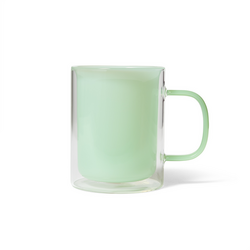
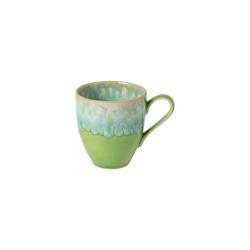
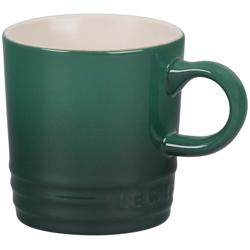
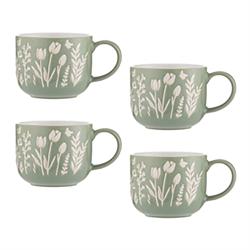
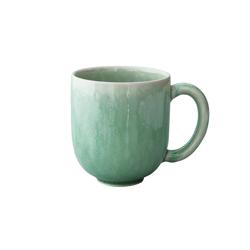
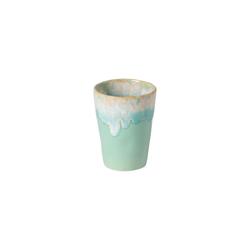
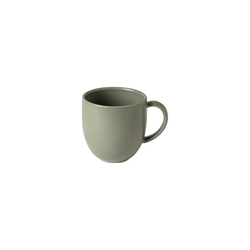
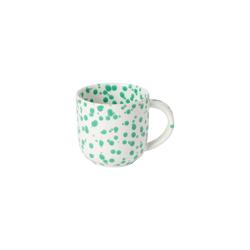
Green dishwasher-safe mugs bring a distinctive color to your coffee or tea routine with the convenience of machine washing after use. The defining features are a green finish and manufacturer-approved dishwasher care; material, capacity, handle shape and other care permissions vary by design. For everyday use, that combination makes sense at a breakfast table, beside a desk or wherever a favorite drink gets a little time and attention. Green also works with a wide range of dinnerware. A soft sage tone sits comfortably alongside cream plates, natural linen and wood, while a deeper forest or emerald shade creates a stronger contrast with white dishes. Olive green complements earthy browns and warm neutrals, and a brighter green can give a simple place setting a more playful feel. A matching group creates a consistent look on an open shelf, while a mix of green shades can feel collected without looking disconnected. Surface finish matters, too. A glossy glaze reflects light and emphasizes color, while a matte finish gives a more subdued appearance. Ribbing, curved sides and subtly varied glazes add texture, though a smooth interior and comfortable rim remain important for drinking and cleaning. For ceramic mugs, stoneware and porcelain are common materials worth comparing. Stoneware often has a substantial feel, while porcelain can have a finer profile, although the actual weight and thickness depend on the design. Ceramic is a broad category rather than a promise of a particular weight, strength or care requirement. The most useful details are the ones attached to the mug itself: its material, dimensions and approved uses. Green describes the color here, not an environmental certification, and a dishwasher-safe designation addresses cleaning rather than every aspect of performance. Keeping those distinctions in mind helps you choose a mug for how it will work in your kitchen, not just how it looks on a shelf.
Size and shape make a noticeable difference once a mug becomes part of your day. A smaller cup can suit a modest serving of brewed coffee or tea, while a larger one leaves room for milk, foam or a more generous pour. Listed capacity is a useful starting point, but a comfortable serving usually sits below the rim, with enough space to carry the drink without spilling. If your usual coffee is a shorter pour, an oversized mug may feel cumbersome rather than useful. For a more compact option,
Small Dishwasher Safe Coffee Mugs offer a related direction to explore. Whatever capacity you prefer, check both the height and width, including the handle. A mug needs to fit beneath a single-serve coffee maker’s spout, sit securely on the dishwasher rack and leave enough room in the cabinet to take it out easily. A wide opening makes room for spooning foam onto a latte or stirring cocoa, while a narrower profile takes up less space beside a laptop or breakfast plate. Handle clearance deserves just as much attention as capacity. Some people prefer a generous opening that accommodates several fingers; others like a smaller handle and a lighter cup. Consider the weight when full, especially when choosing for someone who finds heavy dishes uncomfortable to lift. A broad, stable base is helpful on a busy table, and a rim without pronounced ridges can feel more comfortable for sipping. For a shared household, similar shapes in different green tones can help distinguish drinks without introducing completely different styles. Matching mugs also make a thoughtful wedding or housewarming gift, particularly when their color complements dishes the recipient already uses. A single mug paired with coffee beans or loose-leaf tea suits a smaller gesture. The best choice reflects the recipient’s habits: the daily tea drinker, the careful espresso maker adding steamed milk or the person who likes a generous cup with breakfast.
Dishwasher-safe construction is especially useful for mugs that move through a regular cycle of brewing, sipping and washing. It reduces the need to set aside a cup for separate hand-washing, but it does not mean the mug is immune to wear or damage. Follow the manufacturer’s care directions, including any rack-placement or detergent recommendations, and arrange mugs so they cannot knock against neighboring dishes during the wash. Keep handles clear of other pieces rather than wedging them tightly between bowls or glasses. Position each mug with its opening downward and at an angle that allows water to drain, without forcing it onto a rack tine that puts pressure on the rim. Some bases have a recessed foot that collects water, so check for remaining droplets before returning a clean mug to a wood shelf. If you prefer stackable storage, choose shapes specifically intended to nest together; a flat-looking base alone does not guarantee a secure stack. Care also depends on details beyond the main material. Decorative accents, specialty finishes and other treatments may have different requirements, making the stated care instructions more reliable than appearance. Dishwasher safety does not establish microwave, oven or freezer safety. Check each permission separately before reheating coffee or using a mug for anything beyond serving drinks. Avoid abrupt temperature changes, such as pouring boiling water into a mug taken directly from a refrigerator, unless the manufacturer expressly permits that use. Coffee and tea can leave interior marks over time, and prompt rinsing helps keep residue from drying in place. For lingering stains, use a cleaning method approved for the finish rather than reaching immediately for an abrasive pad. Inspect frequently used mugs for cracks, chips or a loosening handle, and stop using damaged pieces for drinks. With the right fit and appropriate care, a green dishwasher-safe mug can be an easy, useful part of the table: comfortable to hold, pleasing beside your everyday dishes and straightforward to clean after the last sip.