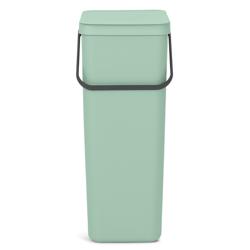
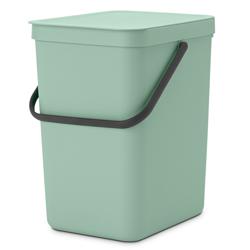
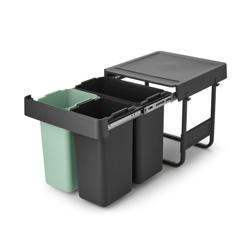
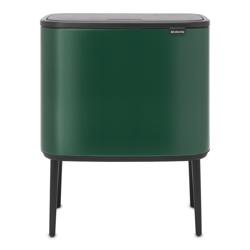
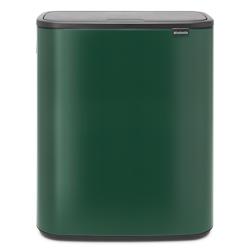
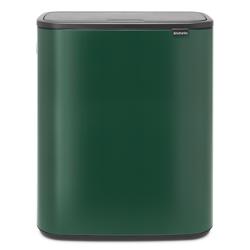
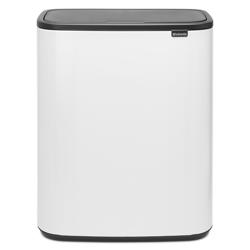
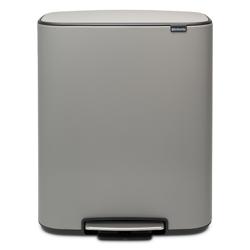
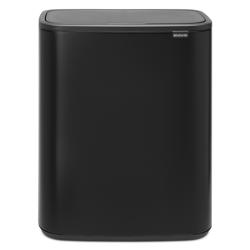
A green trash bin brings a useful touch of color to a part of the kitchen that often gets overlooked. Whether the finish is a soft sage, a muted olive or a deeper forest tone, green can sit comfortably alongside wood cabinetry, stone counters and simple tile. Lighter shades tend to blend into an airy space, while darker greens give a waste station more visual presence without the brightness of a primary color. The shape matters just as much as the shade: a slim rectangular profile follows the line of a cabinet, while a rounded container can soften a corner or fit beside a freestanding worktable. A
modern garbage bin with an uncomplicated silhouette lets the color feel intentional rather than decorative for its own sake. That balance is especially useful in an open kitchen, where everyday essentials remain visible from the dining area. Green also pairs naturally with the textures already found around food preparation, from wooden cutting boards to linen towels and ceramic crocks. A coordinated kitchen does not require every finish to match; a green bin can provide a quiet contrast to stainless steel appliances or connect with a few smaller accents elsewhere in the room. Beyond the kitchen, the same color can work in a laundry room, home office or bathroom, provided the container’s size and construction suit the space. A compact bin beside a desk handles different waste than a kitchen container used for food packaging and meal cleanup. The most satisfying choice feels at home in its surroundings while remaining easy to reach, open and empty. Color gives the bin its character, but proportion and everyday function are what make it a lasting part of the room.
The right fit depends on both the available floor space and the way the household cooks. A generous kitchen trash bin can accommodate the packaging and scraps that come with preparing meals for several people, while a smaller container may be more practical for a single cook who empties the trash frequently. Capacity alone does not tell the whole story. A tall, narrow bin may occupy less floor space but need more clearance above it, and a wider opening can make it easier to discard a paper towel or an awkward piece of packaging without brushing the rim. Under a counter overhang, beside an island or near a pantry door, the lid’s full range of motion matters. So does the path past it when someone is carrying groceries or moving between the sink and stove. A foot pedal can be useful when hands are occupied with vegetable trimmings or messy prep work, while a manual lid keeps operation straightforward. Sensor-operated designs offer another way to open the container without touching it, though they may require batteries or access to power. Features such as a stay-open lid can help during a longer prep session, and a soft-close mechanism can make repeated use less disruptive in a shared space. These details are most valuable when they match actual habits rather than adding complexity. Inside the bin, a removable bucket or a secure liner holder can make bag changes more manageable and keep loose liner edges from hanging over the exterior. Standard liner compatibility is worth considering, especially for a container that will be emptied often. A bag that is too small may slip below the rim, while an oversized liner can bunch around the opening or lid. For households that separate trash from recycling, distinct containers or compartments can make sorting more intuitive. A green exterior can help identify a particular waste stream, but the color itself does not determine whether the contents are recyclable or suitable for composting.
Materials and construction influence how well a green trash bin holds up to daily use. A coated metal exterior can offer a substantial feel, with the colored finish covering the underlying surface. Stainless steel components may appear around the pedal, rim or lid mechanism, while molded plastic can keep the overall container lighter and easier to move. Plastic is also resistant to rust, although its appearance and rigidity vary with the material and construction. Neither metal nor plastic is automatically the better choice for every room. A busy kitchen benefits from a stable base and a lid mechanism that feels secure through repeated opening, while a small office may need little more than a lightweight container that is easy to empty. Smooth interior surfaces and accessible corners make routine cleaning less awkward, particularly when a liner leaks or coffee grounds find their way beneath the bag. For many finishes, a soft cloth with mild soap and water is a sensible starting point, followed by drying; the manufacturer’s care instructions should always take precedence. Abrasive scrubbers and harsh cleaners can damage some colored coatings, and removable buckets should only go in the dishwasher when their care directions specifically allow it. Keeping the rim, underside of the lid and pedal area clean helps maintain the parts touched most often. A lid can help contain everyday waste, but regular emptying and cleaning remain important when food scraps are involved. Durability also shows up in less visible details, including the hinge connection, the liner’s support and how securely the bin stays in place when the pedal is pressed. For a first apartment, a shared household or a newly arranged kitchen, a thoughtfully chosen green trash bin can be a practical finishing touch. It can also make a useful housewarming gift when the recipient’s preferred color, available space and waste-sorting habits are known. A finish that suits the room, a comfortable opening and uncomplicated upkeep make this everyday essential easier to live with long after the kitchen has been tidied.