Grills & Griddles

Find grills and griddles for searing burgers, cooking pancakes and preparing meals on a broad cooking surface. Choose a ridged surface for grill marks or a flat surface for foods that need even contact, then compare cooking area and compatibility with your heat source to find the right fit for your kitchen.

Read More
Sort by:
Grills and griddles offer two distinct cooking surfaces: grills use open grates or raised ridges to sear food, while griddles provide a broad, flat surface for even contact with ingredients. A grill-and-griddle combination brings both surfaces into one setup through separate cooking areas, interchangeable plates or a compatible griddle insert. That flexibility makes room for everything from burgers with deeply browned edges to pancakes with golden, evenly cooked undersides. Open-grate grills allow fat to drip away from food, while ridged grill pans lift ingredients above the channels where juices collect. A flat griddle keeps smaller ingredients on the cooking surface, making it especially useful for chopped vegetables, shrimp, eggs and thinly sliced meat. Neither surface is limited to its most familiar meals. A griddle can toast sandwich bread, brown quesadillas and sear a burger, while a grill can add charred edges to zucchini, peaches and thick slices of bread. For cooks who enjoy preparing several parts of a meal together, a combination with independently controlled cooking zones can accommodate different tasks at once. On a suitable setup, onions can soften on the flat surface while burgers cook over the grates. Reversible stovetop designs offer similar versatility in a different format, with a ridged side for grilling and a smooth side for breakfast or sandwiches, used one side at a time. A compatible insert can also add flat-top cooking to an existing outdoor grill, provided its size, placement and heat requirements match the grill manufacturer’s directions. The most useful format depends on the meals it will handle. A compact cooking surface may suit a couple of grilled sandwiches, while a larger griddle gives pancakes enough room to spread and leaves space to slide a spatula underneath. Usable surface area matters more than the outside dimensions alone, especially when raised edges, handles or grease channels take up part of the footprint.

Materials shape how grills and griddles heat, how much they weigh and how they fit into an everyday cooking routine. Cast iron retains heat well once thoroughly preheated, making it useful for a steady sear and for cooking successive batches without such a sharp drop in surface temperature. That substantial construction also means more weight to lift, wash and store. Bare cast iron needs seasoning and thorough drying to help protect it from rust; enameled cast iron has a different care routine and should be treated according to its finish. Carbon steel offers strong heat performance and is often lighter than comparably sized cast iron, though it also needs seasoning and protection from prolonged moisture. Aluminum heats quickly and is commonly used beneath nonstick cooking surfaces, while stainless steel designs may use layered construction to distribute heat. Nonstick surfaces can make delicate eggs and soft pancakes easier to release, but their longevity depends on respecting heat limits and using utensils approved for the coating. A metal spatula that works well on an uncoated flat top may damage a coated plate. For stovetop grills and griddles, compatibility deserves as much attention as material. Induction requires a suitable magnetic base, and a long griddle spanning two burners needs appropriate support and burner coverage. A bridge element can be helpful where both the cookware and cooktop are designed for that arrangement. Handles should leave enough clearance for neighboring pans, and the cooking surface should sit securely without extending into an unsafe position. Oven use, broiler use and placement over an outdoor grill are separate capabilities, not interchangeable assumptions. The manufacturer’s stated limits are the right reference for each. Care is similarly specific: some removable plates are dishwasher safe, while others need hand-washing. Letting cookware cool before cleaning helps avoid thermal shock, and removing grease after each use keeps residue from building up in ridges and drainage channels. Durable construction matters, but manageable weight, accessible corners and a surface that is easy to maintain often determine how frequently a grill or griddle gets used.

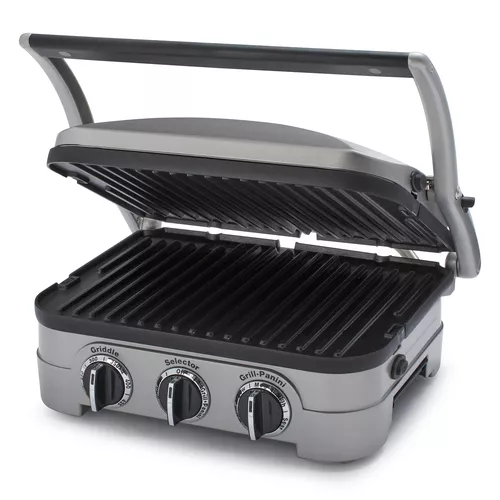
For countertop cooking, electric grills and griddles offer a cooking surface with its own heat source, leaving stovetop burners free for a saucepan or skillet. Depending on the design, features such as adjustable temperature controls, removable plates and grease trays can make breakfast preparation or a quick dinner more convenient. Contact-style grills cook between heated plates, while open electric griddles leave the surface accessible for turning pancakes, folding omelets and checking the browning on a grilled cheese sandwich. A floating hinge can help a contact grill accommodate thicker foods, though capacity and performance vary by design. Counter space, cord placement and clearance around the appliance are practical considerations, along with whether the plates and drip tray fit comfortably in the sink. Electric does not mean smoke-free, and indoor cooking still calls for appropriate ventilation and attention to the appliance’s instructions. For households that regularly cook together, a broad flat surface gives one person room to turn French toast while another prepares toppings nearby. For someone making dinner after work, a smaller grill or griddle can handle a sandwich or a portion of vegetables without bringing out a larger cooking setup. Frequent hosts may appreciate enough cooking area to serve several people in fewer batches, while a cook with limited storage may value a reversible surface or removable plates more than extra capacity. These distinctions also make grills and griddles thoughtful gifts when matched to the recipient’s kitchen and habits. A breakfast enthusiast may get more use from a roomy flat surface than from deep grill ridges; someone who enjoys seared vegetables and toasted sandwiches may prefer the opposite. Familiarity with the recipient’s cooktop, storage space and preferred cleanup routine helps make the choice personal and practical. The lasting appeal is straightforward: a well-suited grill or griddle earns its place through meals that are enjoyable to cook, easy to serve and worth making again.
Read More

FAQ