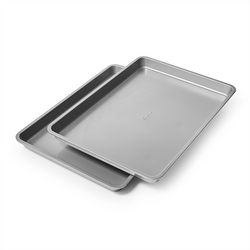
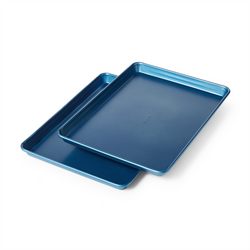
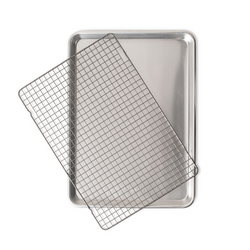
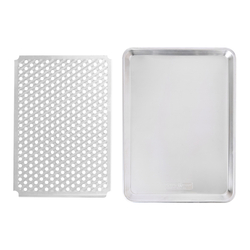
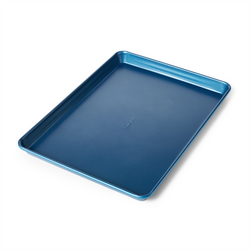
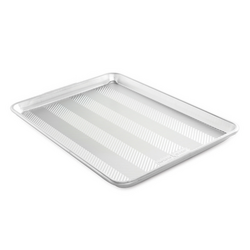
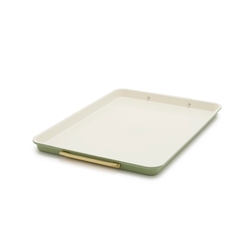
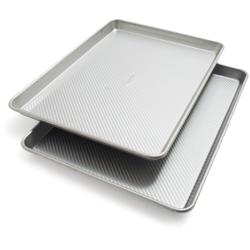
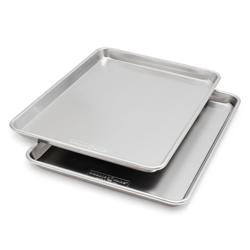
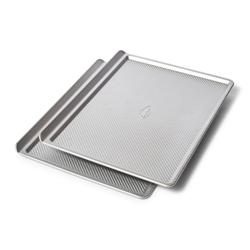
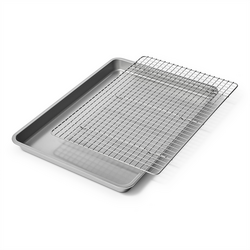
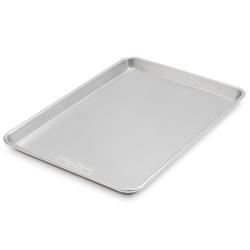
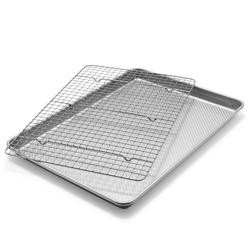
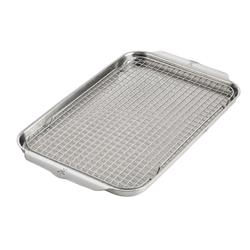
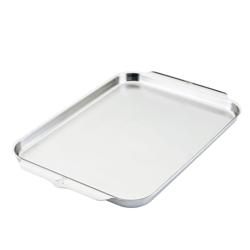
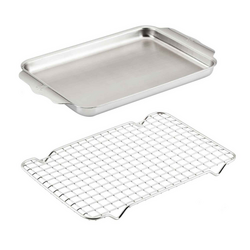
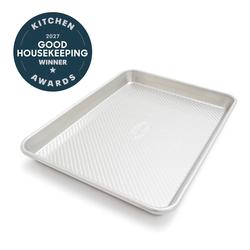
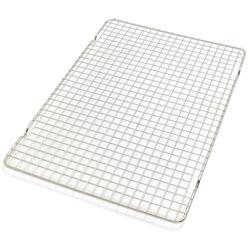
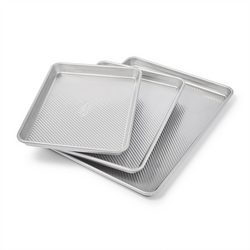
A standard half sheet pan measures approximately 18 by 13 inches, usually with a rim about 1 inch high, making it a versatile choice for baking, roasting and everyday meal prep. Its broad, shallow surface gives ingredients room to spread out, while the raised edges help contain juices, crumbs and small spills. For a kitchen upgrade, that combination matters more than a pan’s appearance: a sturdy half sheet pan can move from a batch of chocolate chip cookies to roasted broccoli, baked fish or a tray of crisp chickpeas. The open surface allows moisture to escape more readily than a deep baking dish, encouraging browning when ingredients have enough space around them. Crowding vegetables together can leave them steaming in their own moisture, so having a second pan can be useful when cooking larger portions. Half sheet pans also make practical staging areas outside the oven. Use one to gather ingredients before cooking, hold shaped rolls as they rise or catch stray flour beneath a cooling rack. For anyone who bakes regularly, matching pans make it easier to portion dough consistently and rotate batches through the oven without putting fresh dough onto a hot surface. For everyday cooks, the appeal may be a complete dinner with fewer dishes to wash. Ingredients with different cooking times can be added in stages, giving potatoes a head start before quicker-cooking vegetables join them. Keep raw meat and its juices separate from foods that will not receive further cooking, and check each component for doneness rather than relying on appearance alone. A half sheet pan is especially useful when the goal is a generous cooking surface without the bulk of a commercial full sheet pan, which generally will not fit a standard home oven. It is a familiar format that supports both straightforward meals and more involved baking projects without requiring a different piece of bakeware for every task.
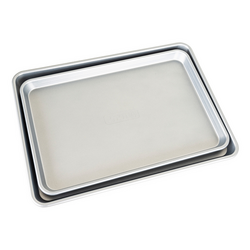
Materials and construction determine how a half sheet pan feels in use and how much attention it needs afterward. Aluminum conducts heat well and is relatively lightweight, making it a common choice for cookies, pastries and roasted vegetables. Uncoated aluminum also lets a spatula slide directly beneath food without concern about scratching a nonstick finish, though sharp tools and abrasive cleaning can still mark the surface. Aluminized steel combines a steel base with an aluminum-based surface coating and is often chosen for its sturdy feel and baking performance. Stainless steel offers a nonreactive cooking surface and resistance to corrosion, although it conducts heat less efficiently than aluminum unless the construction includes additional heat-conducting materials. Nonstick finishes can make delicate foods easier to release and simplify cleanup, but they call for utensils, cleaning methods and oven temperatures suited to the coating. A dark finish may brown the bottoms of cookies faster than a light-colored surface, so familiar recipes may need closer attention when changing pans. Thickness and rim construction matter, too. A substantial pan with a reinforced rim generally feels more stable when carrying a full batch, while thin metal may flex more noticeably. No metal pan is completely immune to warping, particularly with abrupt temperature changes or intense, uneven heat. Before choosing a size, measure the usable space inside the oven rather than assuming that every half sheet pan will fit the same way. Exterior dimensions can vary slightly, and handles or wide rims may add to the footprint. Leave clearance for air to circulate and enough room to grasp the pan securely with oven mitts. If a cooling rack or baking mat will be used with it, compare the interior measurements as well. A rack should sit securely inside the rim, and a liner should lie flat instead of curling up the sides. These small fit details make a noticeable difference when lifting a roast, sliding cookies onto a rack or pulling a full tray from the oven.
Care is part of choosing bakeware that will stay useful over time. Follow the manufacturer’s instructions for oven limits, broiler use and dishwasher compatibility, since those details vary by material and finish. Allow a hot pan to cool before washing it; plunging heated metal into cold water can encourage distortion. For many half sheet pans, warm water, dish soap and a nonabrasive sponge are enough for routine cleanup. A brief soak can loosen baked-on residue when the care instructions permit it, while thoroughly drying the rim and underside helps prevent lingering moisture. Dishwasher detergent may discolor bare aluminum, and repeated dishwasher cleaning can be hard on some nonstick coatings, even when the pan initially looks unchanged. Parchment can help with sticky cookie dough and reduce scrubbing, but it must stay within its stated temperature limit and should not go under a broiler. Silicone baking mats offer another reusable lining option, though they can affect how much browning develops beneath baked goods. Neither liner replaces checking the pan’s own heat restrictions. Avoid prolonged contact between acidic foods and bare aluminum, especially when storing leftovers; transfer tomato-based dishes or lemony roasted vegetables to a suitable storage container after cooking. Some discoloration and surface marks are normal signs of use rather than reasons to replace an otherwise sound pan. More important are a stable shape, an intact cooking surface and a rim that remains comfortable to grip. For storage, nest pans only when they are clean and dry, protecting coated surfaces from scraping against other bakeware. A half sheet pan can be a thoughtful gift for a first apartment, a housewarming or someone who enjoys baking but has been working with undersized trays. Consider the recipient’s oven space, preferred foods and willingness to hand-wash before choosing the construction. To compare this format with other options, explore the
Best Sheet Pans collection. The most useful kitchen upgrade is a pan that fits the oven, handles everyday recipes comfortably and is easy enough to care for that it gets used often.