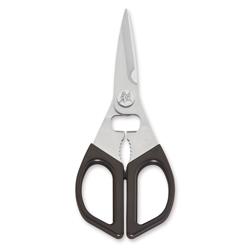
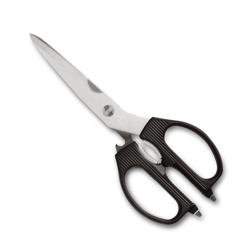
High-quality shears bring sharp blades, a stable pivot and comfortable handles together in a tool that makes everyday kitchen prep easier to control. Kitchen shears are designed for food preparation and related tasks, with blade shapes and handle proportions that differ from hair-cutting shears or household scissors. They earn their place beside a chef’s knife by handling jobs that are awkward on a cutting board: snipping chives directly over baked potatoes, trimming excess dough around a pie plate or cutting kitchen twine before tying a roast. A clean cut matters whether the task is delicate or demanding. Tender herbs should be cut rather than crushed, and food should not slide repeatedly toward the tips before the blades catch it. Stainless steel is a common choice for kitchen shears because it offers useful resistance to corrosion in a setting where moisture, food acids and frequent washing are part of daily use. Some blades use high-carbon stainless steel, which can support good edge retention, though the steel’s heat treatment, blade geometry and care also influence performance. No steel designation alone guarantees a better pair. The way the blades meet is just as important: they should move smoothly, stay aligned and cut without noticeable wobbling at the pivot. A finely serrated edge can help grip slippery ingredients, while a smooth edge can suit clean, precise snipping. Neither style is universally better; the right choice depends on the food and the work involved. For a cook who regularly prepares vegetables, trims proteins and finishes dishes with fresh herbs, well-made kitchen shears offer a practical complement to knives rather than a replacement for them. Their appeal is straightforward: a familiar hand motion, controlled cutting and less fuss when a few quick snips are all a recipe needs. From a first apartment kitchen to a well-used home workspace, that usefulness makes quality shears a dependable part of daily cooking.
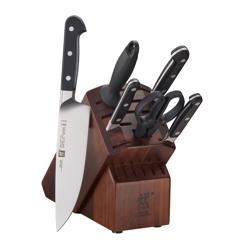
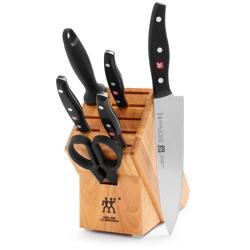
Intended use helps distinguish general-purpose kitchen shears from more specialized designs. Everyday styles are suited to tasks such as trimming scallions, cutting parchment to fit a baking pan and dividing thin flatbread into manageable portions. Poultry shears are built for tougher preparation, with sturdier construction and blade shapes intended to work through joints and smaller bones as specified by the manufacturer. A pair meant for herbs or light prep should not be expected to cut through dense bone, frozen food or hard packaging. Matching the tool to the task protects both the edge and the cook’s control. Handle fit deserves equal attention because even sharp blades can feel awkward when the finger openings are too small or the grip requires an uncomfortable reach. Generous loops can accommodate larger hands, while shaped handles or cushioned surfaces may feel more comfortable during repeated cuts. Added cushioning is not a substitute for a secure fit, particularly when hands are damp. Right- and left-handed cooks may also experience the same shears differently; a handle that looks symmetrical does not necessarily mean the blade arrangement is equally comfortable in either hand. Weight and opening resistance contribute to that fit. A substantial pair can feel reassuring for heavier prep, but extra weight is not, by itself, a sign of quality. Spring-assisted designs can reduce the effort of reopening the blades between cuts, and a closing lock is an important storage consideration for that construction. Blade length also changes the experience: longer blades cover more distance when cutting parchment, while shorter blades can feel easier to maneuver around a small ingredient. Some kitchen shears include secondary features for opening bottles or gripping certain lids, but cutting performance and comfort remain the priorities. For a coordinated kitchen toolkit,
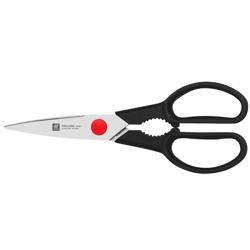
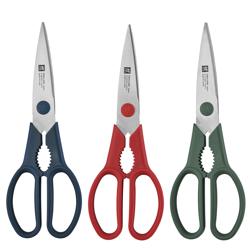
Durable Black Shears offer another direction to explore. Color is a matter of preference; blade construction, handle fit and suitability for food preparation are what make a pair useful beyond its appearance.
Durability becomes most apparent through repeated use and cleanup. Food residue can collect where the blades overlap, so shears with a take-apart design can make that area easier to reach during washing. This feature is especially useful after trimming raw poultry or meat, when thorough cleaning matters before the tool touches ready-to-eat ingredients. Detachable blades should be separated and reassembled according to the manufacturer’s directions, with the connection secure before cutting begins. Fixed-pivot shears can also serve well, provided their design allows careful cleaning around the joint. Although some kitchen shears are dishwasher safe, others require hand-washing, and the care instructions should determine the routine. Washing promptly with mild dish soap, rinsing thoroughly and drying the blades and pivot before storage helps limit residue and corrosion. Stainless steel resists rust but is not immune to it, especially when left wet or exposed to salty or acidic food for extended periods. A protected drawer compartment, suitable blade cover or designated storage space also helps prevent the edges from knocking against other utensils. Over time, slipping, folding ingredients between the blades or needing noticeably more force can indicate that cleaning, adjustment or edge maintenance is needed. Serrated edges and specialized blade shapes may require professional servicing rather than a standard knife sharpener; manufacturer guidance is the best reference. These practical details make high-quality kitchen shears a thoughtful gift for someone setting up a kitchen, replacing an uncomfortable tool or expanding a well-used collection of prep essentials. An enthusiastic baker may appreciate precise control for parchment and pastry work, while a cook who breaks down whole chickens will have different requirements for strength and leverage. For someone whose preferences are less familiar, straightforward construction, manageable weight and easy-to-clean surfaces are useful qualities to consider. The lasting value is in the ordinary moments: neatly snipped parsley scattered over soup, a length of twine cut without a struggle and a tool that feels comfortable each time it comes out of the drawer.