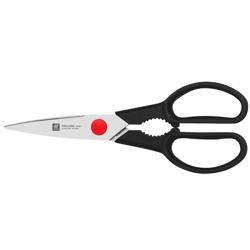
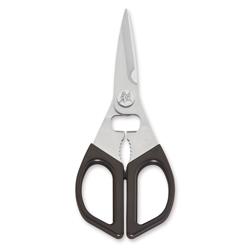
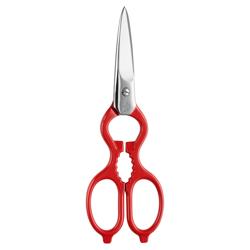
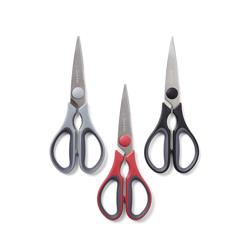
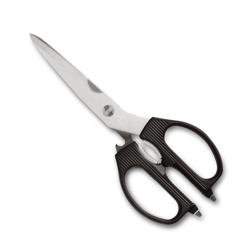
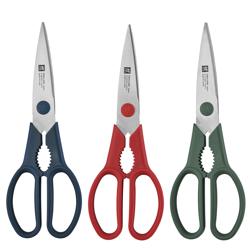
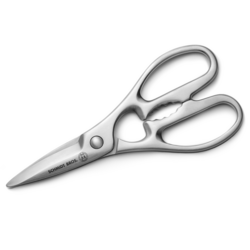
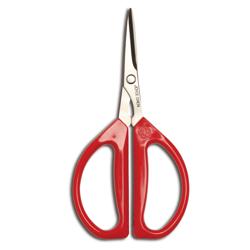
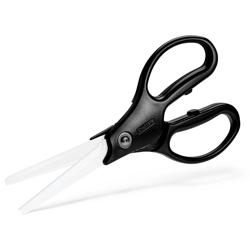
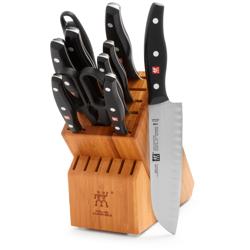
Household scissors are versatile cutting tools for everyday tasks such as opening packages, cutting paper, trimming string and light crafting. A dependable pair makes those small jobs easier, whether you’re snipping a tag from a new dish towel, cutting parchment for a baking sheet or wrapping a gift at the dining table. Unlike specialized cutting tools, general-purpose scissors are designed to handle a range of lighter materials, making them useful in a kitchen drawer, home office or craft basket. The best fit depends on what you cut most often and how the scissors feel in your hand. Longer blades can make smooth, continuous cuts through wrapping paper, while shorter blades offer more control for small shapes and close trimming. Fine tips help with detailed work, though they need careful handling and protected storage. Rounded tips may suit some shared household spaces, but they do not make scissors appropriate for every age or task. For everyday convenience, a clean cut matters more than an impressive list of extra features: paper should separate without folding between the blades, and string should cut without repeated squeezing. Household scissors and kitchen shears have overlapping uses, but they are not always interchangeable. Food preparation calls for tools intended for food contact, with construction that allows thorough cleaning; tougher jobs, such as cutting through poultry joints, require shears specifically designed for that work. Keeping food scissors separate from a pair used for shipping tape, craft supplies or garden twine also helps prevent unwanted residue from reaching ingredients. During the cooler months, when baking projects and indoor activities often share counter space, that separation is especially useful. A pair reserved for gift wrapping can stay with the paper and ribbon, while another handles everyday packaging. Giving each pair a clear purpose makes scissors easier to find and helps preserve the cutting performance needed for the task.
Blade material and construction affect how household scissors cut, feel and hold up to regular use. Stainless steel is a common choice because it offers corrosion resistance and straightforward care, though it still benefits from prompt cleaning and drying. Shoppers comparing
Steel Scissors will find that the type of steel is only part of the picture: blade alignment, edge quality and the connection at the pivot also influence performance. The blades should meet consistently along the cutting edge rather than wobble or leave thin materials caught between them. A smooth opening and closing motion makes repeated cuts feel more controlled, particularly when preparing several lengths of ribbon or trimming paper for a group activity. Some scissors have finely serrated edges that help grip slippery materials; others have smooth edges suited to clean, continuous cuts. Coated blades may help reduce adhesive buildup, depending on the coating, but they still need cleaning after sticky jobs. A coating alone does not establish how long an edge will stay sharp or which materials the scissors can safely cut. Handle design deserves just as much attention. Generous finger openings can accommodate larger hands, while cushioned grips may ease pressure during longer sessions. Smaller hands may feel more secure with a compact handle rather than an oversized loop that allows too much movement. Neither size nor padding guarantees comfort, so consider the overall shape, weight and reach as well. Scissors that feel heavy or require force to open may become tiring during repetitive work. Handedness matters, too: a handle described as ambidextrous does not necessarily provide the reversed blade arrangement of true left-handed scissors. That arrangement can affect both the view of the cutting line and how naturally the blades press together. For a household where several people share tools, choosing for the primary user’s grip and most frequent tasks is often more useful than choosing by appearance alone.
Durability comes from matching the scissors to the material as much as from the scissors themselves. Paper, lightweight packaging and kitchen string place different demands on an edge than thick cardboard, wire or rigid plastic. General-purpose household scissors should not have to be forced through a material; resistance, twisting or blades spreading apart are signs that a more suitable cutting tool is needed. Even familiar jobs benefit from a little care. When opening a taped parcel, avoid pushing exposed blades deep into the box, where they could damage what is inside. When trimming ribbon, keep the material steady and use a controlled cut rather than pulling it against the edge. Fabric projects are another reason to separate tools by purpose, since a pair reserved for fabric is more likely to retain the clean cutting performance that delicate cloth needs. After use, remove scraps and residue according to the manufacturer’s instructions. Adhesive left near the pivot can make the action stiff, while moisture trapped between blades can contribute to corrosion, even on stainless steel. For washable scissors, gentle hand-washing and thorough drying are often appropriate, but care directions should determine whether soaking or dishwasher cleaning is suitable. Designs that separate for cleaning can offer easier access to hidden surfaces; they should come apart only as directed and be securely reassembled before use. Store scissors closed, ideally with a blade cover or in a designated compartment, rather than loose among utensils where hands and edges can meet unexpectedly. Keep sharp tools out of children’s reach, and use age-appropriate scissors with supervision for younger crafters. If cutting becomes uneven, cleaning may help, but worn or damaged blades may need professional attention or replacement; serrated and coated edges can require different care from plain blades. These practical details make household scissors a thoughtful addition to a housewarming gift, a first-apartment kitchen or a collection of gift-wrapping supplies. Home cooks, frequent crafters and anyone managing the daily flow of mail and packages can appreciate a comfortable pair that cuts reliably and has a place to belong. The appeal is simple: less struggling with a stubborn seam and more ease in the small tasks that keep a home running.