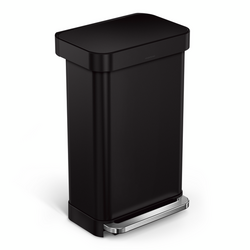
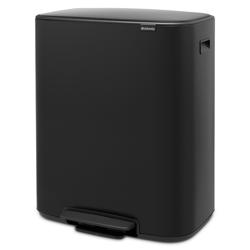
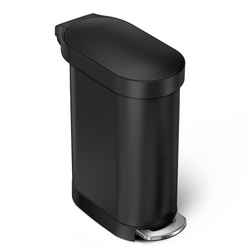
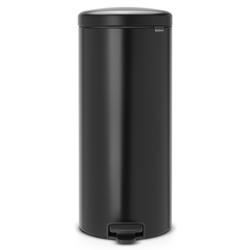
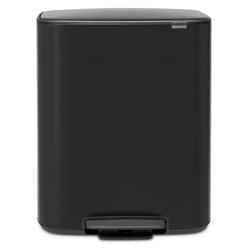
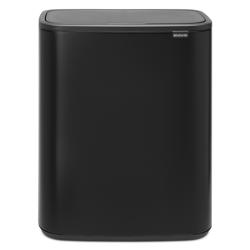
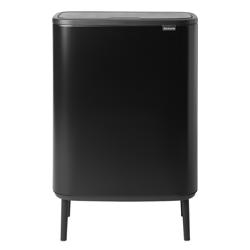
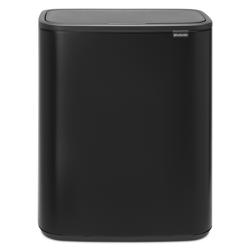
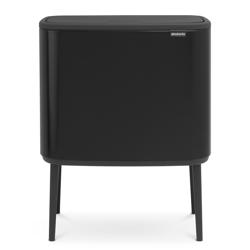
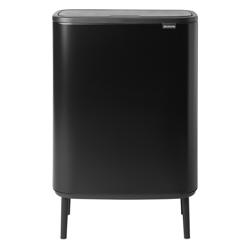
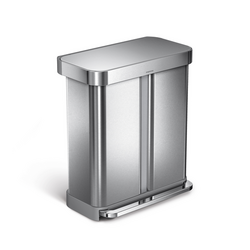
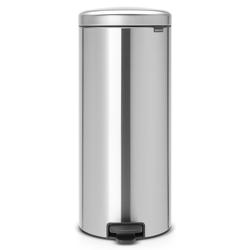
Matte black step garbage bins are foot-pedal trash cans with a low-sheen black finish, designed to open without lifting the lid by hand. Compact sizes work well in bathrooms and home offices, while larger capacities suit kitchens, utility rooms and shared spaces. The appeal is practical as much as visual: a pedal lets you discard a damp paper towel while holding a mixing bowl, and a covered opening keeps everyday waste out of sight. The matte finish brings a quieter look than polished metal, pairing naturally with black cabinet hardware, stainless steel appliances, wood cabinetry and stone countertops. Against lighter cabinets, it creates a defined accent; beside darker cabinetry, it can blend into the room rather than draw attention. Materials matter beneath that finish. Stainless steel bodies offer a sturdy structure, although the care requirements depend on the coating as well as the underlying metal. Powder-coated steel is another construction to consider, with a painted surface that should be protected from chips and abrasive cleaning. Plastic bodies are generally lighter and easy to move, making them useful where a bin needs to be carried between rooms or lifted for cleaning. Neither a dark color nor a matte surface automatically makes a bin fingerprint-resistant, so look for that feature when visible marks are a concern. Some designs combine a metal outer shell with a removable plastic bucket, separating the decorative exterior from the part that holds the liner and needs more frequent washing. Rounded corners, straight sides and the shape of the lid also influence how the bin looks and functions in a room. A simple silhouette can sit comfortably near a breakfast nook or vanity without making a necessary household tool feel like an afterthought.
The best fit starts with where the bin will stand and how much waste that space produces. A narrow gap beside a vanity calls for different proportions than an open stretch at the end of a kitchen counter. Measure the floor space, then allow room for the pedal at the front and the lid when fully raised. A bin that fits neatly beneath a counter with its lid closed may not have enough clearance to open, and a hinged lid may need space behind it to avoid touching the wall. Rectangular shapes can make efficient use of space along a cabinet run, while round bins may fit comfortably in open corners where their curved sides are less likely to project into a walkway. For kitchen-focused options, explore the
Matte Black Kitchen Garbage Bins collection with those measurements in mind. Capacity should reflect both household size and everyday habits. Someone who cooks most meals at home may need more room than someone who mainly discards coffee filters and snack wrappers, even in an equally sized kitchen. Separating recycling and compost can also reduce the capacity needed for general trash. A larger bin means fewer bag changes, but it can become heavy to empty and may hold food waste longer than is desirable. A smaller bin encourages more frequent removal without taking up as much floor space. Check liner dimensions rather than relying on gallon capacity alone, since the shape of the opening and the height of the container affect how a bag fits. A secure liner should stay in place as waste is added without stretching so tightly that removal becomes difficult. For a bathroom, a discreet footprint and easy bag changes may matter most; near a busy prep area, access and sufficient capacity usually deserve more attention.
Daily ease of use comes down to the details you notice after repeated openings, bag changes and cleanups. A pedal should be easy to reach from a natural standing position, with a base that stays steady when pressed. Consider how the lid moves as well as how it looks: controlled closing can reduce the abrupt sound of a lid dropping shut, which is useful in an open kitchen or a bathroom beside a bedroom. Where provided, a stay-open setting can help during meal prep or a liner change, though the lid should return to normal pedal operation afterward according to the manufacturer’s directions. A removable bucket can make spills easier to contain and clean, while a liner-retaining rim can help keep excess bag material from hanging over the outside. These features vary by design, so focus on the ones that address your routine rather than assuming every step bin works the same way. Durability depends on the pedal mechanism, hinges, base and finish together, not simply on the weight of the outer shell. Avoid overfilling the liner, forcing the lid closed or packing down waste inside the bin, all of which can strain components or make a full bag harder to remove. For routine care, follow the manufacturer’s instructions and start with a soft cloth and a mild cleaner approved for the surface. Abrasive pads, harsh chemicals and vigorous scrubbing can damage some matte coatings or leave uneven-looking patches. Wipe away splashes promptly and dry the exterior to help prevent water marks. Wash removable interior parts as directed and let them dry fully before adding a fresh liner. A covered lid helps contain the view of everyday waste, but regular emptying and cleaning still matter for odor control. For a first apartment, a shared family kitchen or a compact guest bathroom, a well-proportioned matte black step bin earns its place by making an ordinary task easier while fitting comfortably into the room.