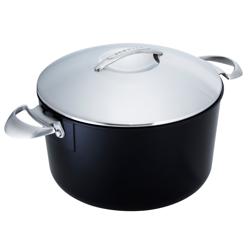
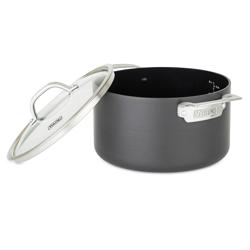
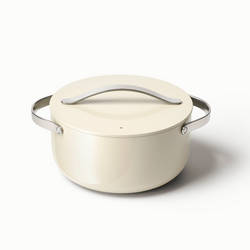
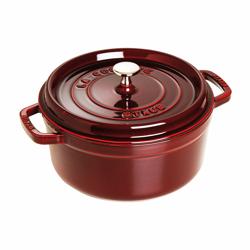
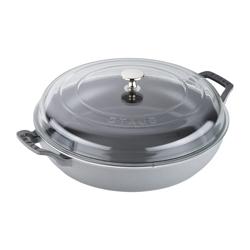
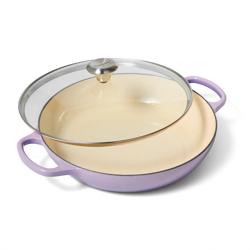
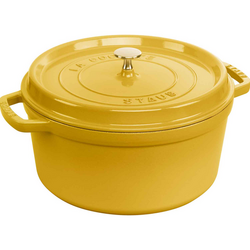
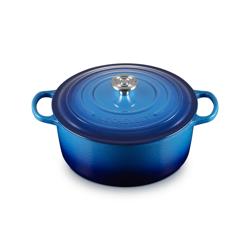
Nonstick Dutch oven cookware makes a thoughtful Valentine’s Day gift for someone who enjoys home-cooked meals and appreciates easier cleanup. A deep pot with a fitted lid is useful for simmering soup, braising vegetables, cooking beans and bringing a generous batch of tomato sauce to the table. Its appeal extends beyond a special dinner: the same piece can help with Sunday meal prep, a quick weeknight curry or a favorite recipe shared by two people. Nonstick cooking surfaces help food release more readily, particularly with recipes that might otherwise leave a stubborn layer behind. That convenience can be especially welcome for a busy home cook or someone building a practical cookware collection. Construction still matters, because the cooking surface and the body of the pot perform different jobs. Aluminum bodies conduct heat efficiently and can be easier to lift than heavier alternatives, while thicker construction can help distribute heat more evenly. Ceramic and other nonstick coatings have their own cooking and care requirements, so the manufacturer’s directions are more useful than assuming every coated pot behaves alike. Enameled cast iron is a separate category and should not automatically be considered equivalent to nonstick cookware; its smooth enamel surface can still need added fat and careful heat control to release food. A well-fitting lid helps limit moisture loss during gentle cooking, giving onions time to soften and braised ingredients time to become tender. For a Valentine’s Day gift, these everyday details give the gesture substance. The recipient gets something suited to meals they already love, whether that means a comforting lentil stew, chicken with herbs or a vegetable ragù spooned over polenta. The most meaningful fit is not necessarily the largest or most decorative pot, but one that makes their usual cooking feel a little more manageable and enjoyable. It can suit an enthusiastic beginner as readily as an experienced cook who wants a lighter, easier-cleaning option alongside heavier cookware.
Size, shape and kitchen compatibility determine how comfortably a nonstick Dutch oven becomes part of a routine. A capacity of 3 to 4 quarts can suit smaller meals, side dishes and cooking for two, while 5 to 6 quarts gives more room for family portions or planned leftovers. Those ranges are starting points rather than strict serving rules: a bulky bunch of greens needs space before it wilts, and a large cut of meat needs enough room to sit comfortably beneath the lid. Usable cooking area matters, too. A wider base provides more contact with the heat for softening aromatics or cooking ingredients in a single layer, while a narrower, deeper pot may fit more easily into a compact cabinet. Round shapes work naturally with many burners and encourage easy stirring around the sides. For a comparison focused on that silhouette, explore
round Dutch oven cookware gifts for Valentine’s Day. Beyond shape, a gift should work with the recipient’s range. Induction cooking requires a compatible magnetic base; an aluminum body alone does not establish compatibility. For recipes that move from the stovetop to the oven, the temperature limits of the pot, lid, handles and knob all matter, and the lowest applicable limit governs use. Nonstick construction is not a guarantee of broiler suitability or compatibility with high-temperature bread baking. A covered braise at an approved temperature is a different task from preheating an empty pot in a very hot oven. Handling deserves equal attention. A Dutch oven that feels manageable when empty becomes considerably heavier with soup inside. Secure handles with room for oven mitts make that movement more comfortable, especially when carrying dinner from the stove to a trivet. Storage space, lid height and clearance beneath an oven rack are practical details that help a thoughtful gift feel right at home rather than becoming a piece that is admired but rarely used.
A Valentine’s Day cookware gift can feel personal without depending entirely on a holiday motif. A heart-shaped silhouette or a red or pink finish can add a celebratory touch, while a quieter color may better suit someone who leaves cookware on the stove between meals. Shape also has practical implications: curves, corners and the width of the base affect how a spoon reaches the edges and how larger ingredients fit. Familiar cooking habits are often the best clues to a lasting match. Someone who regularly prepares soup may appreciate comfortable handling and a generous capacity; a cook making smaller dinners may value a lighter pot that is easy to wash and put away. For couples who enjoy cooking together, a Dutch oven can be the centerpiece of an unhurried dinner, with one person chopping vegetables while the other tends the pot. Its usefulness continues after Valentine’s Day, which is part of its appeal as a gift. Keeping that usefulness depends on care appropriate to the coating. Gentle to moderate heat is generally better suited to nonstick cooking than aggressive preheating, and a little cooking fat may still improve flavor and food release when the manufacturer recommends it. Wooden or silicone utensils help protect the surface from scratches. Allowing the pot to cool before washing helps avoid sudden temperature changes, while a soft sponge and suitable dish soap are usually a gentler approach than abrasive scrubbers. Dishwasher-safe labeling does not necessarily mean machine washing is the best way to preserve a finish over time; the care instructions should settle that question. A protective layer between stacked pieces can also reduce rubbing during storage. No nonstick coating is immune to wear, and its service life depends on its construction, frequency of use and treatment. Matching the cookware to the recipient’s habits makes the gift more considerate: an appealing pot, a favorite shared recipe and the possibility of many good meals together.