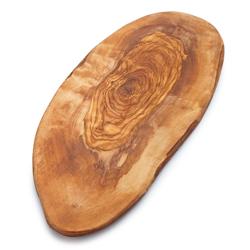
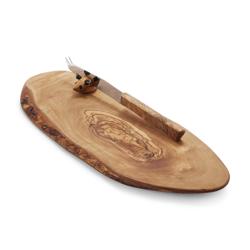
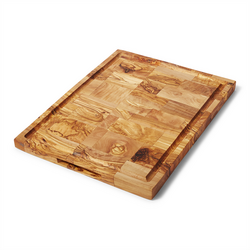
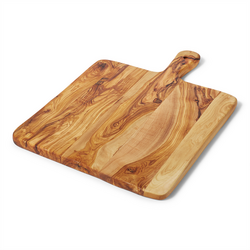
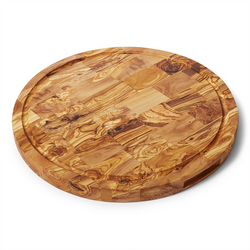
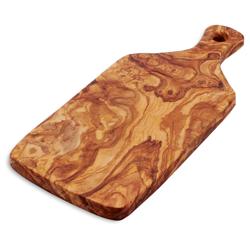
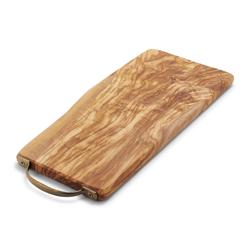
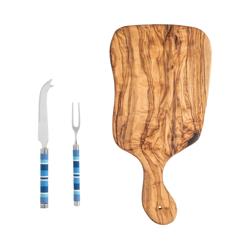
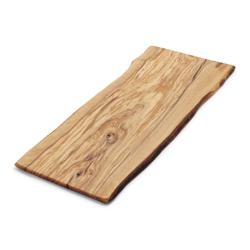
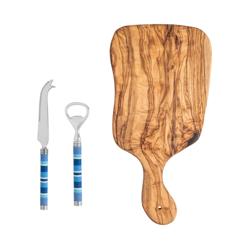
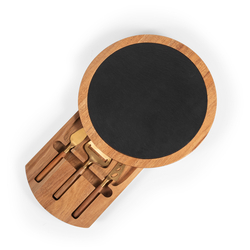
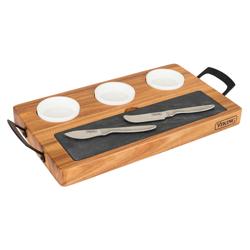
Olivewood cheese boards for garden parties combine a practical serving surface with the warm color and distinctive grain of natural wood. Their golden tones and darker, winding markings complement a garden table without needing much decoration, whether the setting includes linen napkins, simple glassware or a few flowers clipped from the yard. Olivewood is a dense hardwood with a fine texture, making it well suited to serving cheese, charcuterie, bread and other ready-to-eat foods. Its grain varies from board to board, so even similarly shaped pieces can have noticeably different patterns. That variation is part of the appeal: a pale wedge of aged cheddar, a cluster of purple grapes and a handful of crackers stand out against the wood rather than competing with an elaborate serving pattern. Shape affects both the presentation and how comfortably a board fits the table. A long, narrow board can sit down the center of a rectangular table, while a round board works well as a shared focal point on a smaller surface. Rectangular designs make efficient use of a buffet, and irregular edges lend a less formal feel to a gathering among flower beds or beneath a pergola. With a natural-edge shape, the usable flat area matters more than the outermost dimensions alone. A generous outline may still leave limited room for cutting and serving. Thickness and weight also deserve attention, particularly when food will travel from the kitchen to a patio or lawn. A thicker board may feel substantial, but it becomes heavier once filled. A handle can make carrying easier, although a loaded board is best supported underneath with both hands. Smoothly finished edges, a stable base and enough space for guests to take a portion are useful considerations for anyone choosing a board for relaxed outdoor entertaining. The most suitable size is one that works with the table, the menu and the way guests will gather around it.
For a garden party, an olivewood cheese board should make serving feel easy rather than turn the table into a display that guests hesitate to touch. A compact board can hold a few cheeses for a small gathering, while several boards placed around a larger table give people more than one place to help themselves. This approach can be especially useful when guests are standing with a plate in one hand or chatting in separate seating areas. Leave room beside each cheese for a knife and a few cut portions; a board filled edge to edge may look abundant but can be awkward to use. A firm cheese, a soft cheese and something with a stronger flavor offer variety without requiring a crowded arrangement. Crackers and sliced baguette can sit nearby when the wood surface needs to stay clear for serving. Small bowls help contain olives, preserves and other moist accompaniments, keeping their liquids from spreading across the board or softening crisp foods. They also make it easier to refresh one part of the spread without rearranging everything. When comparing sizes, consider the complete footprint, including any handle, and leave space on the table for plates, glasses and serving utensils. A board meant for passing between seated guests needs to be manageable as well as attractive; one intended to stay on a buffet can be more substantial. Olivewood pairs naturally with ceramic bowls and clear glass, and its varied grain works with both casual picnic-style linens and more dressed-up place settings. Outside, choose a level spot away from direct sunlight and keep a food cover handy to discourage insects. Wood does not keep cheese chilled, so set out modest portions and replenish from the refrigerator as needed. Follow food-safety guidance for perishable foods: generally, refrigerate them within two hours, or within one hour when outdoor temperatures exceed 90 degrees Fahrenheit. Those practical details help the board do its job while keeping the focus on good food and comfortable conversation.
With thoughtful care, an olivewood cheese board can serve well beyond a single garden gathering, moving easily from outdoor appetizers to an indoor lunch or a small dessert spread. The material is durable, but it is not maintenance-free, and its hardness does not make it immune to knife marks, staining or changes caused by moisture. A board used mainly for presenting cheese generally needs less demanding use than a work surface for repeated chopping. Expect some signs of use over time, and follow the maker’s directions for any limits on cutting or serving. Hand-wash olivewood with mild soap and warm water, then dry it promptly with a soft cloth and allow it to finish air-drying before storage. Do not soak it or put it in the dishwasher, where prolonged moisture and heat can damage the wood. Avoid leaving it against a wet sink or putting it away while the underside is still damp. Periodic conditioning with food-grade mineral oil or a conditioner recommended by the maker helps maintain the surface and reduce drying. The right interval depends on use and storage conditions; a dry-looking surface is a useful reminder to check the care instructions rather than rely on a fixed monthly schedule. Ordinary cooking oils are not a good substitute because they can become rancid. Store the board in a dry place away from direct sunlight and heat, with enough room to prevent pressure on a handle or irregular edge. These straightforward habits make olivewood a practical choice for people who enjoy hosting and appreciate natural materials. It can also be a thoughtful gift for a friend who loves arranging appetizers, a neighbor who opens the garden for casual gatherings or someone settling into a new home. For a gift chosen around that kind of hospitality,
olivewood cheese boards for hostess gifts offer a useful starting point. Consider the recipient’s table size, storage space and willingness to hand-wash wood so the board feels as easy to use as it is lovely to set out.