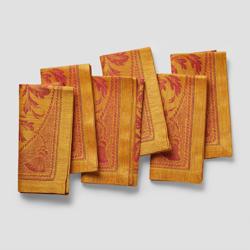
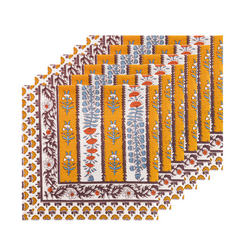
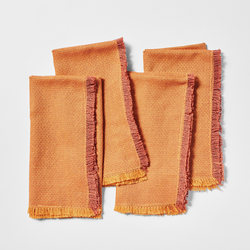
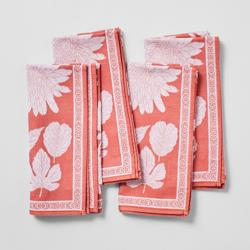
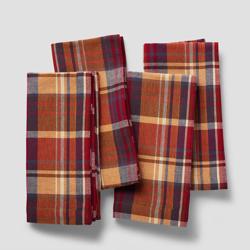
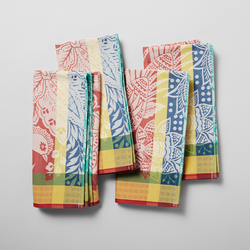
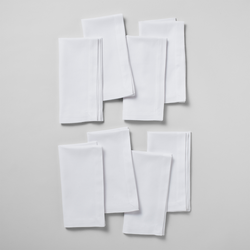
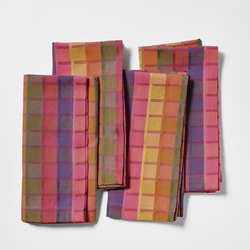
Orange linen napkin sets are reusable cloth napkins that bring color, texture and a coordinated finish to the table. Linen is made from flax fibers and is valued for its absorbency, strength and distinctive feel, which generally softens with repeated washing. Orange gives that texture a different character depending on the shade: clear tangerine creates a lively accent, muted apricot feels understated and deeper rust or terracotta tones sit comfortably alongside wood, stoneware and woven placemats. Against white dinnerware, orange napkins can be the main source of color; beside patterned plates, they can pick up a small detail in the design and make the whole setting feel connected. The fabric matters as much as the color. Pure linen has a recognizable drape and natural creasing, while linen blends may have a smoother surface or different care requirements depending on the other fibers used. A loosely woven fabric can look airy and informal, while a tighter weave generally provides more coverage and a more structured fold. Small variations in yarn thickness can add character to linen, though the overall feel ranges from crisp and substantial to soft and relaxed. Finishing details also change the impression. A simple stitched hem keeps the focus on the fabric, hemstitching adds a decorative openwork border and mitered corners create a neat finish where the edges meet. These details are worth considering alongside the rest of the table rather than treating every orange napkin as interchangeable. A richly textured napkin might complement handmade pottery, while a finely woven version with a tailored border can suit porcelain and polished flatware. For a table that gets used every day, the most useful choice is often a shade and texture that work with the dishes already in the cupboard. That makes it easy to bring out the napkins for a quick lunch, a family dinner or a gathering that calls for a little more attention to the setting.
Size and set count help determine how comfortably orange linen napkins fit into a household’s routine. Dinner napkins around 20 inches square offer generous lap coverage and enough fabric for a rectangular fold, a loose knot or a napkin ring. Smaller cocktail napkins around 12 inches square are better suited to drinks and small bites than a full meal. These are common size references, not a substitute for checking the listed dimensions, since dinner, luncheon and cocktail labels can vary. Think about the place setting, too: a substantial folded napkin can balance a large dinner plate, while a smaller fold leaves more room on a compact table. For everyday meals, a simple rectangle beside the fork is practical and lets the linen’s texture show. For guests, placing a folded napkin across the plate creates a clear focal point without adding another decorative piece. Set count is easiest to judge against both regular household use and the number of people usually invited to dinner. Enough napkins for the seats at the table, plus a few extras for spills or laundry, can be more useful than a set matched only to the household size. Coordinating colors also gives a table flexibility. Orange with ivory and natural wood feels easygoing; orange against charcoal or deep blue creates stronger contrast. For a mixed-color setting,
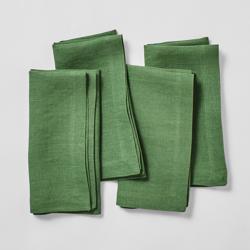
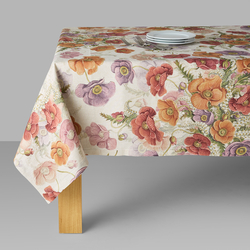
green linen napkin sets can complement orange, especially when both colors share a similarly muted or saturated finish. Keeping the napkins close in size and fabric weight helps an intentionally mixed table feel cohesive. The colors do not need to appear in equal amounts: orange at each place setting with green elsewhere on the table can be enough. When patterned table linens are part of the setting, solid napkins give the eye somewhere to rest and keep dishes, glasses and serving pieces from competing with one another.
Care is an important part of choosing linen napkins for regular use, particularly when the color is a defining feature. Always follow the care label, since fiber blends, dyes and decorative finishes can require different treatment. Many linen napkins can be machine washed, but the recommended water temperature and drying method should guide the routine. Washing with similar colors, avoiding an overloaded drum and using a detergent appropriate for colored fabrics can help maintain their appearance. Attend to food marks promptly using a treatment suited to the fabric, and avoid rubbing aggressively at one spot. Heat can make some stains harder to remove, so check the napkin before drying it. If tumble drying is permitted, removing linen while it is still slightly damp can make smoothing and folding easier. For a crisp place setting, press according to the label while the fabric retains a little moisture; for a more relaxed table, smooth the napkins by hand and let the natural creases remain. Neither finish needs to feel like a compromise. Part of linen’s appeal is that it can look considered without being perfectly flat. Durability depends on the fabric and construction as well as how it is cared for. Even stitching, secure hems and well-finished corners are useful details for napkins that will be washed frequently, while careful stain treatment helps keep them ready for the next meal. Store them clean and fully dry, folded where they are easy to reach rather than reserved out of sight. Orange linen napkin sets can also make thoughtful housewarming, wedding or host gifts, especially for someone who enjoys cooking, collecting pottery or setting a welcoming table. The most personal choice takes the recipient’s home into account: a clear orange for someone who enjoys bold color, or a softer clay shade for someone drawn to natural materials. A useful size and manageable care requirements help turn an attractive gift into something that becomes part of everyday meals.