-
(14)
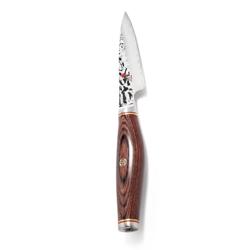
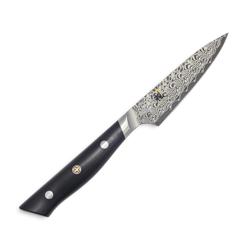
A stunning black paring knife with a 49-layer Damascus pattern and ergonomic handle for precise cuts.
Pros: sharpness, balance, durability
-
(34)
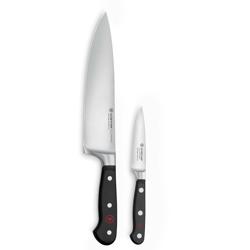
A starter set of two essential knives, including an 8" chef's knife and a 3½" paring knife.
Pros: sharpness, quality, durability
-
(30)
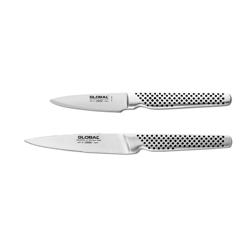
A versatile 2-piece knife set with a precision paring knife and a utility knife for daily use.
Pros: sharpness, quality, reasonable price
-
(73)
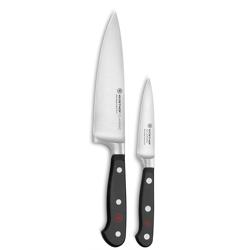
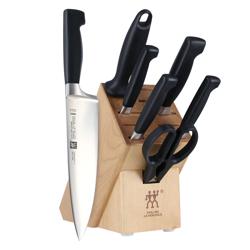
A versatile chef's knife set with a paring knife, featuring razor-sharp blades and comfortable handles.
Pros: balance, sharpness, quality
-
(90)
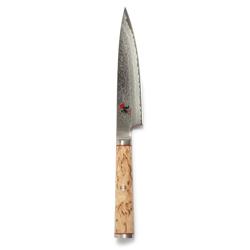
A 5" utility knife with a 101-layer steel construction, D-shaped birch handle, and razor-sharp blade.
Pros: sharpness, comfortable handle, balance
-
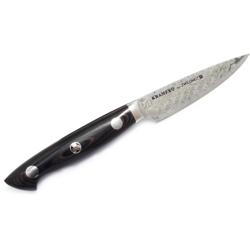
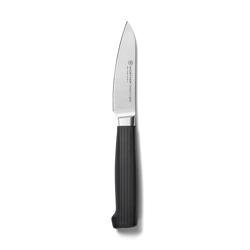
A fully forged high-carbon stainless steel paring knife with a black ergonomic handle for precise prep tasks.
-
(16)
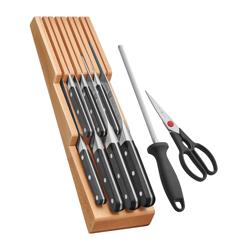
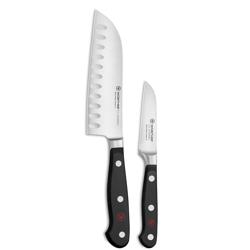
A versatile set of high-carbon stainless steel knives, including a santoku and paring knife.
Pros: sharpness, balance, durability
Paring Knife
A paring knife is a small, sharp knife that's perfect for peeling, trimming, and slicing vegetables. Its small size makes it ideal for intricate tasks such as cutting small fruits, removing seeds from vegetables, and shaping garnishes. Here are some great options.
Paring Knife
FAQ List
A paring knife is a small, sharp knife that is used for intricate tasks such as peeling, trimming, and slicing fruits and vegetables.
When shopping for a paring knife, look for a knife with a comfortable handle that fits well in your hand, high-quality steel blade that stays sharp longer, and a blade shape that suits your needs.
While paring knives are primarily designed for fruits and vegetables, they can also be used for other tasks such as trimming fat from meat or cutting small pieces of cheese.
To ensure that your paring knife stays sharp and in good condition, hand wash it with warm water and mild soap, dry it thoroughly after use, and store it in a knife block or sheath to protect the blade.
No, paring knives come in different sizes and shapes. Some have a curved blade while others have a straight blade. It's important to choose a paring knife that suits your needs and feels comfortable in your hand.
-
"I love my new knives. My block looks great on the countertop and they perform wonderfully"
-
"Best knives I have ever had. Love the in-drawer block"
-
"s light and is great for slicing delicate items such as strawberries and tomatoes. It"
-
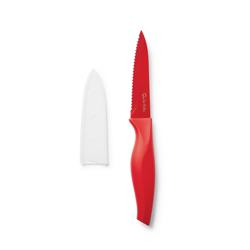
"What great little knife with serrated teeth which are very efficient in slicing mushrooms and other veggies"
-
"We love it so much we got a second one! It?s definitely our most used knife"