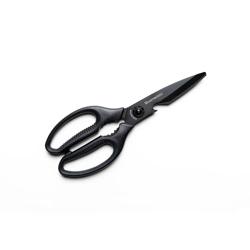
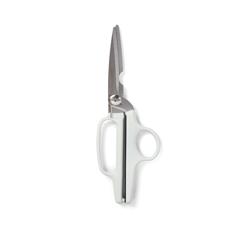
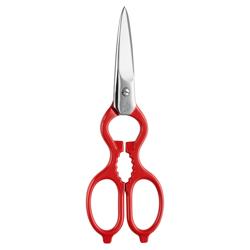
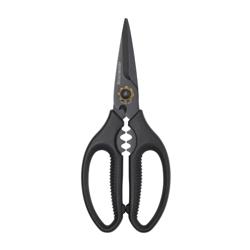
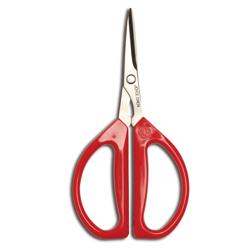
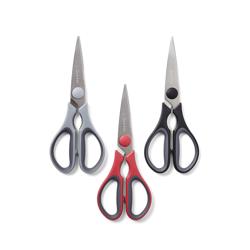
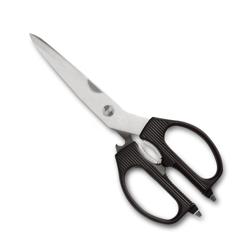
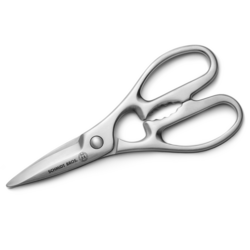
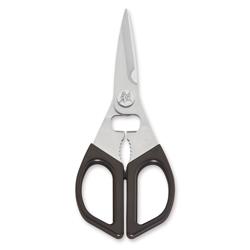
Poultry shears for chicken are heavy-duty kitchen scissors designed to trim skin, cut cartilage and cut through smaller chicken bones when preparing a whole bird or individual portions. They are especially useful for removing the backbone for spatchcocking, separating sections at the joints and trimming excess skin before cooking. A spatchcocked chicken lies flat for more even cooking, whether it is headed for a roasting pan or the grill. For cooks who prefer to start with a whole bird, dedicated shears make it easier to prepare portions for different dishes, from roasted chicken breasts to thighs destined for a slow braise. Their usefulness comes from a combination of sturdy blades, controlled cutting action and handles that allow a secure grip. Stainless steel is a common blade material because it resists corrosion and stands up well to regular food preparation, although its condition still depends on proper cleaning and drying. Curved blades can help follow the contours of a chicken, while tapered tips allow more precise access around joints. Some designs have a serrated or micro-serrated edge to help hold slippery skin in place rather than pushing it ahead of the blades. A bone notch, when included, helps position a smaller bone during a cut. These features vary, so the right choice depends on the work the shears are intended to do rather than the number of extras they include. For chicken preparation, a solid pivot and blades that meet cleanly matter more than unrelated accessories. Well-built poultry shears should feel stable as they open and close, without excessive sideways movement at the joint. They complement a sharp kitchen knife rather than replace it: shears are useful for controlled snipping around a bird, while a knife remains better suited to slicing boneless meat. Neither tool should have to struggle through a task beyond its intended use, especially thick bones or frozen poultry.
Comfort matters when a task involves several cuts through firm cartilage or a slippery piece of chicken. Handle shape, opening width and overall weight all affect how poultry shears feel in the hand. Loop handles can offer a familiar scissors-like grip, while other designs use shaped handles that rest against the palm. Spring-loaded shears reopen after each squeeze, reducing the effort needed to separate the handles between cuts. That assistance can be welcome when breaking down more than one bird, though spring tension should still feel manageable. Large handles are not automatically more comfortable, and a longer tool is not necessarily easier to control. The fit should allow the fingers to settle naturally without pinching, stretching or forcing the wrist into an awkward angle. Cooks who use their left hand should check whether the handle and blade design accommodates them rather than assuming every pair works equally well in either hand. Textured or nonslip grips can improve purchase, but they do not remove the need for clean, dry hands and a stable work surface. A storage lock is another useful consideration, particularly with spring-loaded designs that remain open unless secured. It should be straightforward to engage without bringing fingers near the cutting edges. Intended use also helps narrow the choice. Someone who occasionally trims chicken for a sheet-pan dinner may prioritize easy handling and simple cleanup, while a cook who regularly spatchcocks whole birds may place more emphasis on leverage, blade strength and comfort over repeated cuts. Shears rated for chicken should not automatically be treated as suitable for the thicker bones of larger poultry. Multipurpose kitchen scissors can handle many lighter tasks, but dedicated poultry shears are designed around the demands of jointing and bone cutting. For kitchens that also need a tool for herbs, twine and everyday food preparation, explore
Best Cooking Shears for a broader range of uses.
Easy cleaning is an important part of choosing poultry shears, particularly because raw chicken can leave residue around the pivot, beneath the handles and between overlapping blades. Designs with blades that separate can make those areas easier to reach, provided disassembly and reassembly are done according to the manufacturer's directions. A fixed-blade design can also serve well, but its joints and recesses deserve attention during washing. Dishwasher compatibility varies by construction, so stainless steel blades alone do not establish that the whole tool is dishwasher safe. Handle materials, springs and other components may have different care requirements. When hand-washing is recommended, thorough cleaning with warm, soapy water followed by careful drying helps protect the cutting edges and moving parts. Stainless steel resists rust, but prolonged moisture and trapped food residue can still cause problems. Clean shears belong in a dry storage space, secured with their lock or protected by a suitable cover when one is provided. Keeping them loose among other utensils can expose hands to sharp edges and allow the blades to knock against hard objects. Long-term durability also depends on using the tool within its limits. Twisting the blades, forcing an unusually thick bone or using kitchen shears for household materials can damage alignment and reduce cutting performance. Serrated edges may need specialized attention, so sharpening advice should come from the manufacturer rather than a method intended for a straight-edged knife. For someone who enjoys roasting whole chickens, preparing homemade stock or dividing a bird into portions for several meals, poultry shears can become a practical part of regular cooking. They also make a thoughtful gift for a home cook building a collection of useful preparation tools. The most useful pair is one that suits the recipient's hands, cooking habits and willingness to maintain it. Reliable cutting, comfortable handling and accessible cleaning are the qualities that help poultry shears earn a lasting place in the kitchen.