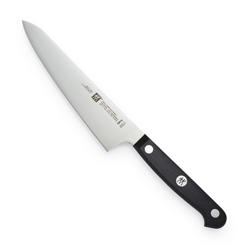
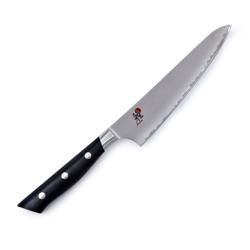
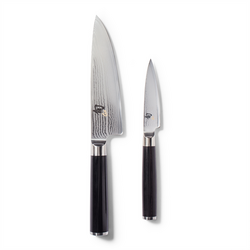
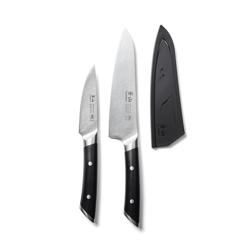
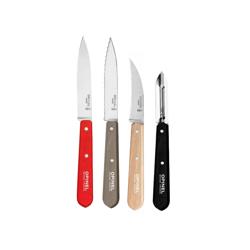
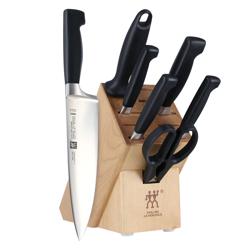
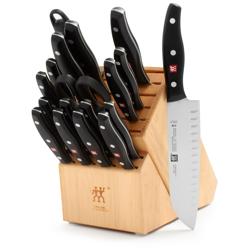
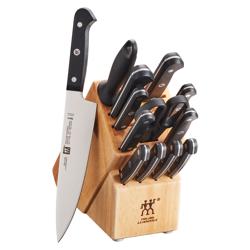
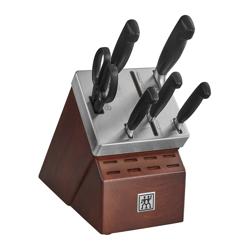
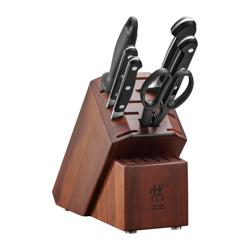
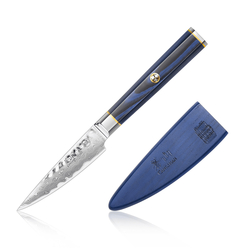
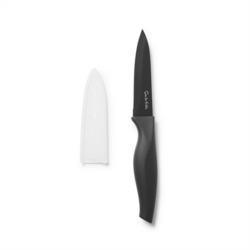
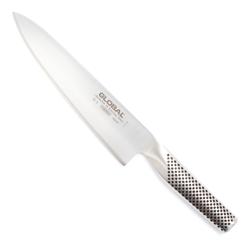
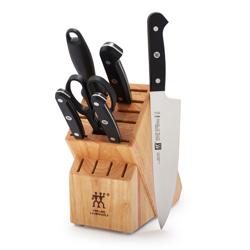
Prep knives are compact kitchen knives, typically with blades 4 to 7 inches long, designed for everyday slicing, trimming and chopping. They bridge the gap between a small paring knife and a full-size chef’s knife, offering a manageable blade for small-to-medium ingredients and detailed cutting tasks. Many utility and petty knives fall into this category, although blade shapes and dimensions vary. A prep knife is especially useful when dinner starts with a shallot, a few mushrooms and a handful of green beans rather than a cutting board full of large vegetables. Its smaller profile can feel less cumbersome when trimming a chicken breast, slicing a cucumber for lunch or cutting an apple into neat wedges. For cooks who find a larger knife tiring or awkward, that compact size may make everyday prep more comfortable. Experienced cooks also appreciate having a nimble blade nearby for jobs that do not call for a chef’s knife. The blade’s shape helps determine where it works best. A gently curved edge supports a modest rocking motion, while a straighter edge suits controlled slicing and short downward cuts. A pointed tip can help with precise trimming, and a wider blade provides more room beneath the handle for fingers when cutting against a board. Narrower blades are useful for working around small ingredients, though they may offer less knuckle clearance. A smooth edge is a versatile choice for clean cuts through produce and boneless proteins. Serrated utility-style blades are particularly useful for foods with a resistant exterior and a soft center, such as ripe tomatoes or small sandwich rolls. These compact knives are not intended for splitting dense squash, cutting through bones or working with frozen food. Their strength is control: enough blade to handle familiar kitchen tasks without bringing more length or weight than the job needs.
Materials and construction influence how a prep knife feels in use and how much attention it needs afterward. Stainless steel is a practical choice for everyday cooking because it resists corrosion, though it still benefits from prompt washing and drying. High-carbon stainless steel combines stain resistance with the potential for good edge performance, but the exact alloy and heat treatment matter more than the label alone. Carbon steel can take a fine edge and is often straightforward to sharpen, but it requires more attention around moisture and acidic ingredients. Its surface may develop a patina over time; active rust, by contrast, needs to be addressed. Harder blades may retain an edge longer under suitable use, while tougher, less brittle steels can be more forgiving of incidental contact. No steel eliminates the need for sharpening or careful handling. Blade thickness matters, too. A thin blade can move through a firm apple or crisp radish with less resistance, while a thicker blade may feel sturdier but push ingredients apart more noticeably. Forged and stamped construction describe different manufacturing methods, not a simple ranking of quality. Both can produce capable prep knives when the blade geometry, heat treatment and finishing are well executed. Handle fit deserves just as much attention as the steel. A comfortable handle supports a secure grip without forcing fingers into an awkward position, and a smooth transition between blade and handle can make extended prep more pleasant. Wood handles offer natural texture and character but need protection from prolonged moisture. Synthetic handles generally require less upkeep, though they should still be cleaned according to the manufacturer’s directions. Balance is personal rather than universal: some cooks prefer a little weight toward the blade, while others favor a lighter feel. The most useful choice is one that feels steady during the cuts made most often, whether that means thin shallot slices or a quick pile of chopped herbs.
Good care helps a prep knife remain a dependable part of the daily routine. A wood or suitable plastic cutting board gives the edge a more forgiving surface than glass, stone or a dinner plate. Even a durable blade can dull or chip when used against a surface that is too hard, and twisting the edge sideways through an ingredient adds stress it was not designed to handle. Hand-wash the knife with mild dish soap, rinse it and dry it promptly, paying attention to the area where the blade meets the handle. Dishwashers expose knives to heat, detergent and movement that can damage handles or bring sharp edges into contact with other utensils. Leaving a knife soaking in the sink also makes it harder to see and handle safely. Between uses, a fitted blade guard, an appropriate knife block or secure knife storage helps protect both the edge and anyone reaching into a drawer. Edge maintenance should match the knife’s construction. Some blades benefit from honing between sharpenings, but honing does not replace sharpening, and not every blade is suited to the same tool or technique. Manufacturer recommendations or a qualified sharpening service can help preserve the intended edge. A well-maintained prep knife should cut cleanly without requiring excessive pressure, making familiar tasks feel more controlled. When choosing one as a gift, consider the recipient’s cooking habits rather than assuming a larger blade is better. Someone furnishing a first kitchen may appreciate a versatile knife for sandwiches, fruit and simple dinners, while a frequent home cook may value a compact companion to a chef’s knife. A cook who regularly prepares small portions may reach for it every day. For a shorter blade focused on peeling, hulling and intricate trimming, explore
Paring Knives For Culinary Professionals as a complementary option. The distinction comes down to the task: a prep knife generally offers more useful cutting length at the board, while a smaller paring knife provides close control for finer work. Matching the blade to those everyday habits makes it a thoughtful, practical addition to a kitchen.