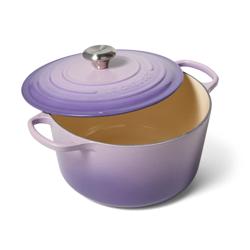
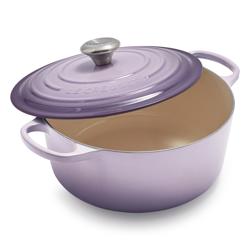
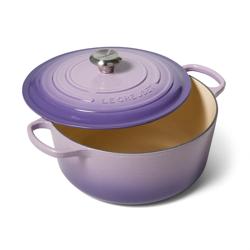
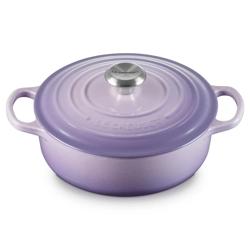
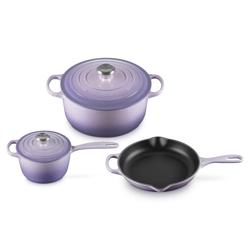
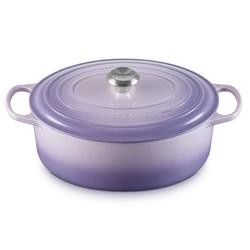
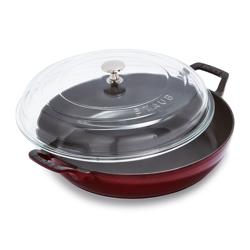
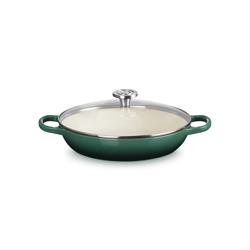
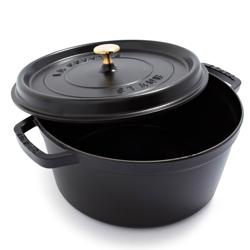
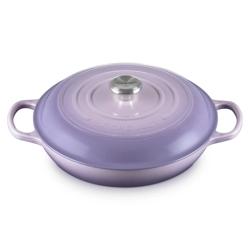
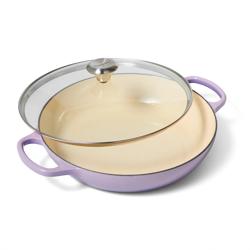
Provence Dutch ovens bring together the dependable performance of enameled cast iron and the soft, lavender-inspired color associated with the French countryside. In practical terms, a Provence Dutch oven is designed to move comfortably from stovetop to oven, retain heat for steady cooking and keep food warm at the table. The enameled interior helps make these versatile pots suitable for browning, braising, simmering and baking without requiring the seasoning routine associated with raw cast iron. Their substantial construction distributes heat gradually, which is especially helpful for dishes that need time to develop flavor—think onions softening in butter, a roast becoming tender in its own juices or beans gently bubbling through the afternoon. The Provence color adds an inviting note to an otherwise hardworking piece of cookware, making it easy to serve directly from the pot when the weather turns cool and meals become more comforting. Most Dutch ovens in this style are available in round or oval shapes and in several capacities, commonly ranging from roughly 4 to 7 quarts. A smaller size suits everyday soups, grains, sauces and meals for a few people, while a larger pot gives a family more room for stew, braised chicken or a generous batch of pulled meat. Round cookware is often the most versatile choice for use on a standard burner, while an oval shape provides extra length for whole poultry, roasts and long vegetables. For a broader selection of round cookware in complementary finishes and sizes, explore
Provence Round Cookware.
When choosing a Provence Dutch oven, start with capacity, shape and the type of cooking you do most often. A 4- to 5-quart pot is a comfortable everyday option for smaller households, couples and cooks who prefer making dinner with enough left over for lunch. A 5.5- to 6-quart Dutch oven is a useful all-purpose size for family meals, no-knead bread, stock and entertaining, without becoming difficult to lift or store. Larger capacities are well suited to holiday gatherings, batch cooking and recipes that need plenty of space for stirring. Keep in mind that cast iron is naturally heavy, and the weight increases once the pot is filled, so sturdy side handles and a secure lid are important details. Look for a tightly fitting lid that helps hold in moisture, particularly if you enjoy slow braises or stews. A light-colored enameled interior can make it easier to monitor browning and see fond developing on the bottom of the pot, while a smooth cooking surface is simple to wipe clean after dinner. Check the stated oven-safe temperature before using the pot for high-heat baking and confirm whether the lid knob has its own temperature limit. Most enameled Dutch ovens work on gas, electric and induction cooktops, but compatibility is worth verifying if you use a specialized range. Allow the pot to cool before washing it, avoid sudden temperature changes and use nonabrasive tools to protect the enamel. Although many are dishwasher safe, hand-washing is often the gentlest choice for preserving the finish and keeping the exterior looking polished. With ordinary care, a well-made Dutch oven can become the pot you reach for instinctively—the one that stays on the stovetop while carrots, garlic and herbs fill the kitchen with a savory aroma.
Provence Dutch ovens are particularly appealing to cooks who value cookware that works hard but still feels special enough to display. They make a thoughtful gift for a new homeowner, an enthusiastic home cook, a couple setting up a kitchen or anyone building a collection of dependable pieces one at a time. The soft purple finish suits both traditional and modern kitchens, and it can add color to an open shelf or dining table without looking overly formal. As the weather cools, a Dutch oven earns its place with slow-cooked meals that make the home feel welcoming: beef or vegetable stew with tender potatoes, tomato-rich pasta sauce, chicken braised until it nearly falls from the bone or a crusty loaf baked under a heavy lid. It is just as useful during the rest of the year for cooking grains, frying small batches, preparing soup or keeping a side dish warm while the rest of dinner comes together. A Dutch oven also helps simplify entertaining because many recipes can be prepared in a single pot and served without transferring food to another dish. When selecting one as a gift, consider the recipient’s kitchen size, cooking habits and comfort with lifting heavier cookware. A medium round capacity is a safe, flexible choice for many households, while an oval pot or larger size may be better for someone who regularly cooks whole cuts of meat or hosts a crowd. Whether chosen for its gentle Provence hue, its versatility or its ability to turn simple ingredients into deeply satisfying meals, this style of Dutch oven is made to become part of a kitchen’s daily rhythm.