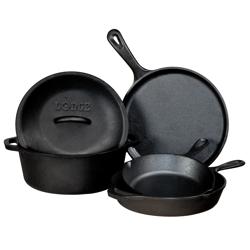
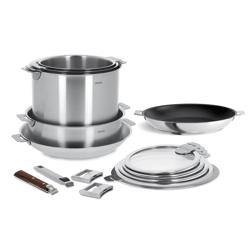
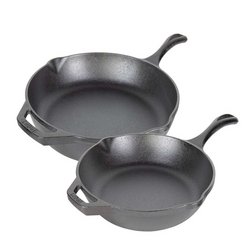
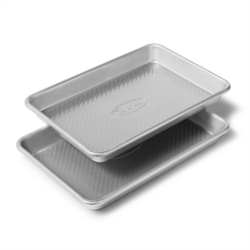
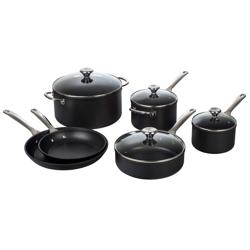
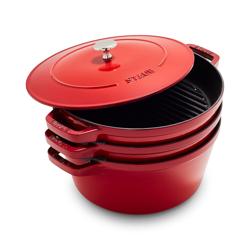
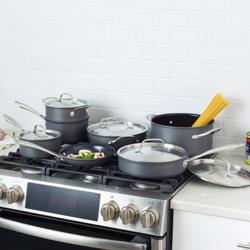
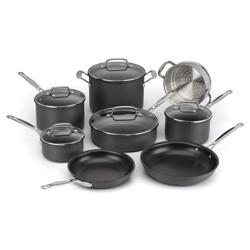
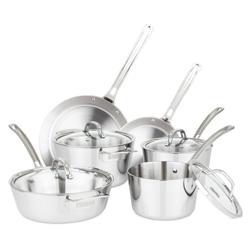
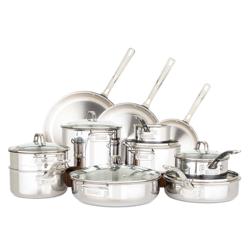
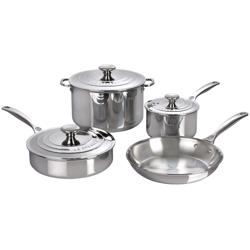
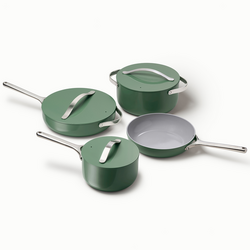
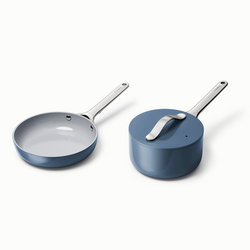
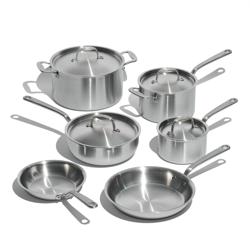
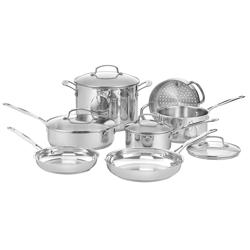
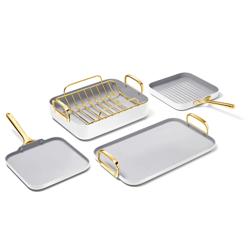
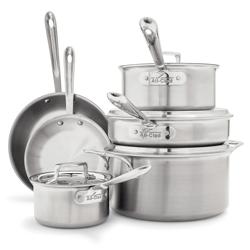
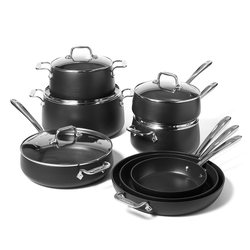
RV cookware sets bring everyday cooking essentials into a kitchen where cabinet space, burner room and travel weight all matter. A well-suited set balances compact storage with enough cooking capacity for the meals you actually make, whether that means eggs and coffee before a hike or a pot of chili after a cool afternoon outdoors. Nesting or stackable cookware can help keep a small cabinet organized, while removable handles, when included, reduce the space pans occupy between meals. These features are especially useful in travel trailers, camper vans and motorhomes where cookware shares a cupboard with mixing bowls, food containers and pantry staples. The most useful assortment is not necessarily the one with the most pieces; it is the one with pan shapes and capacities that work together without crowding the stove. For a couple traveling on weekends, a skillet, a saucepan and a deeper pot may cover most meals. Families or travelers who cook every day may appreciate more capacity for pasta, soup and one-pan dinners, along with lids that fit more than one vessel. A wide skillet gives vegetables and chicken room to brown, while a deeper saucepan helps contain bubbling oatmeal or tomato sauce. The balance changes with your routine: reheating prepared meals calls for different cookware than making breakfast, lunch and dinner from scratch. During the cooler months, a covered pot earns its cabinet space with simmered beans, hearty stews and warm lunches that leave fewer dishes behind. RV cookware also makes a thoughtful gift for a new camper owner, a frequent road-tripper or someone settling into full-time travel, particularly when the set suits their cooking habits and kitchen layout. For cooks comparing a compact travel setup with a broader kitchen assortment, a
chef cookware set offers another way to consider which cookware shapes belong in their routine. The goal is a collection that feels useful at breakfast and dinner, then fits neatly out of the way when the dishes are done.
Materials influence how RV cookware feels to lift, how it cooks and how much attention it needs afterward. Stainless steel is a durable option for frequent use, especially for cooks who enjoy browning meat, sautéing vegetables and using the flavorful bits left in the pan to build a sauce. Since stainless steel alone does not distribute heat particularly well, construction matters: an aluminum core or heat-distributing base can help spread heat across the cooking surface. Aluminum cookware is generally lighter and responds readily to temperature changes, making it practical when you regularly lift pans from a low cabinet or carry them to an approved outdoor cooking area. Hard anodized aluminum has a hardened surface, though any nonstick coating still requires care appropriate to that coating. Nonstick interiors can be convenient for scrambled eggs, pancakes and delicate fish, with easier food release that helps simplify cleanup in a small sink. Ceramic nonstick and other nonstick finishes are not interchangeable with uncoated cookware; their heat limits, utensil recommendations and care instructions deserve attention. Cast iron retains heat well and can suit cooks who value steady cooking temperatures, but its weight and seasoning needs may make it less practical for an entire travel set. Cooktop compatibility is just as important as material. Induction burners require cookware with an induction-compatible magnetic base; aluminum cookware needs a suitable base layer to work on induction. Propane and electric cooktops have their own size and use requirements, so compatibility should be confirmed for both the cookware and the appliance. A flat, stable base helps a pan sit securely, and its diameter should suit the burner rather than extend awkwardly over neighboring controls. On a propane stove, flames should stay beneath the base instead of climbing the sides. Oven use also depends on the complete vessel, including its coating, handles and lid. Removable handles do not automatically make a pan oven safe, and stovetop cookware should not be assumed suitable for a campfire or grill. Manufacturer instructions provide the limits for each intended use.
Fit goes beyond whether a stack of pans can squeeze through a cupboard door. RV kitchens often have shallow drawers, narrow sinks and closely spaced burners, making the full dimensions of the cookware worth considering. The longest handle, the tallest lid knob and the width of the largest pot can determine whether a set stores comfortably or becomes a daily frustration. Two pans that fit the cooktop separately may not fit side by side, and a large pot that handles dinner easily can still be cumbersome to wash in a compact sink. Nesting cookware is particularly helpful when the pieces fit securely within a shared footprint, but lids and detachable handles need a storage spot too. Removable handles should feel comfortable in use and lock securely according to the manufacturer's directions; fixed handles should leave enough clearance for nearby pans and safe movement around the stove. For travel, secured storage and suitable pan protectors can help reduce rattling and prevent cooking surfaces from rubbing together. Lightweight cookware may be easier to manage, while heavier construction can offer steadier heat retention, so the right balance depends on your lifting comfort, storage arrangement and vehicle's cargo limits. Care habits also affect how well a set holds up across repeated trips. Letting pans cool before washing helps avoid thermal shock, and soft sponges or nonabrasive cleaning tools protect finishes from unnecessary wear. Silicone or wooden utensils are often appropriate for nonstick surfaces, subject to the manufacturer's recommendations. Even when cookware is dishwasher safe, hand-washing may be more practical on the road and can help preserve certain finishes. Easy-release surfaces can reduce scrubbing, but every set still needs thorough cleaning and drying before it is packed away. Dry storage is especially important for seasoned cookware, which can rust when moisture remains on the surface. With the right combination of usable capacity, manageable weight and straightforward care, an RV cookware set supports the pleasures of cooking away from home: crisp-edged potatoes in the morning, a simple skillet supper at dusk and a kitchen that is ready to pack up for the next stop.