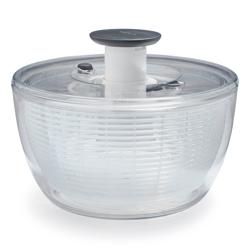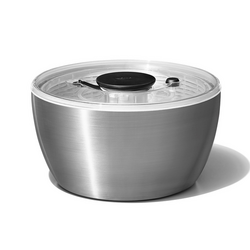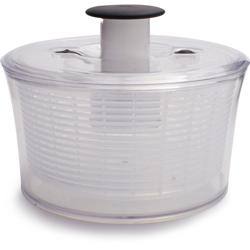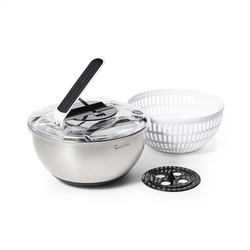
Salad spinners help create crisp greens by washing and drying lettuce, herbs and other produce in the same bowl. The inner basket holds the food while the outer bowl catches water, and a pump, crank or similar hand-operated mechanism rotates the basket to remove moisture through centrifugal force. Dry leaves make a noticeable difference at the table: vinaigrette clings to the surface instead of sliding to the bottom of the bowl and delicate greens stay fresh rather than turning limp and waterlogged. To use one, place the greens in the basket, set it inside the bowl and fill the bowl with cool water. Swish the leaves gently to loosen soil, sand and grit, then lift out the basket and pour away the dirty water. Return the basket to the bowl, secure the lid and spin until the leaves are dry, stopping to drain collected water if the greens are especially wet. A final spin or two often produces the best results. For tender lettuce, baby spinach and herbs, use a gentle touch; sturdier kale, chard and other hearty greens can handle more vigorous spinning. Once dry, greens can be used immediately or stored in the refrigerator with a clean kitchen towel or paper towel to absorb any remaining moisture.
When choosing a salad spinner, start with capacity and consider how much produce you usually prepare at once. A compact size suits a smaller kitchen, one or two servings and limited cabinet space, while a larger bowl is useful for family meals, dinner parties or washing a full head of lettuce without crowding the basket. The bowl should leave enough room for the leaves to move freely so water can reach every surface during washing and the spinning motion can do its work. A stable base is another helpful feature, especially when the basket is moving quickly. Non-slip feet or a gripping ring can help keep the bowl steady on a wet countertop, and
Non Slip Salad Spinners are designed with that concern in mind. Look for a lid that feels secure and a mechanism that is comfortable to operate, whether you prefer the controlled rhythm of a manual crank or the easy downward motion of a pump. A built-in brake can bring the basket to a quick stop, which is useful when you want to remove the lid, drain the bowl or check the texture of the greens. A pour spout, drain opening or bowl that doubles as a serving piece can make the process more convenient, while a nesting design helps simplify storage. Check care instructions before purchasing, since some components may be dishwasher safe while others are best washed by hand. Smooth surfaces and a lid that comes apart easily are practical advantages, allowing water and bits of leaf to be rinsed away thoroughly after each use.
A salad spinner is useful well beyond a single bowl of lettuce. Wash and dry parsley, cilantro, mint, dill and other leafy herbs before chopping them for soups, sauces or grain salads. It can also help with spinach, arugula, kale, leeks and delicate berries, provided the basket is handled gently and the produce is not packed too tightly. Some cooks use the basket to dry freshly washed potatoes before roasting or cutting them into fries, since removing surface moisture can encourage better browning. The bowl can hold ingredients while you rinse them, drain the basket and transfer everything to a cutting board, reducing the number of dishes used during meal preparation. During the cooler months, a spinner is especially handy for making bright salads to serve alongside roasted vegetables, soups, braises and baked dishes—meals that benefit from a fresh, crisp contrast. It is also a thoughtful gift for a new homeowner, a college student building a first kitchen, a health-conscious cook or anyone who brings lunch to work and wants better salads throughout the week. For everyday use, wash only as much produce as you can dry and store properly, then keep the spinner where it is easy to reach. With a roomy bowl, a steady base, a comfortable turning mechanism and simple cleanup, this kitchen essential makes fresh greens easier to prepare and more enjoyable to eat.