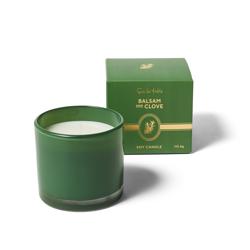
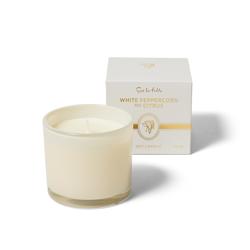
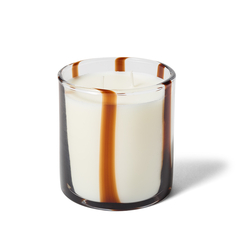
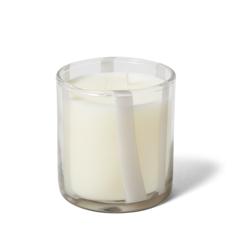
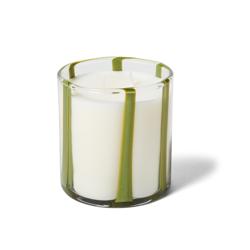
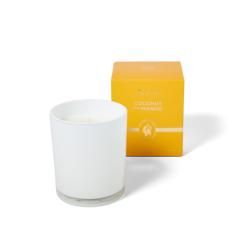
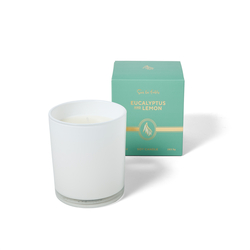
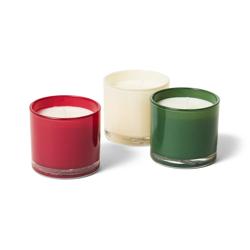
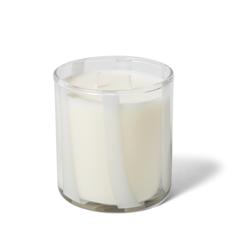
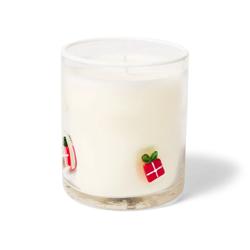
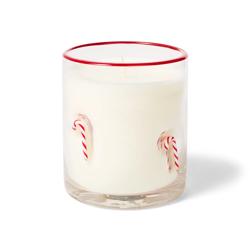
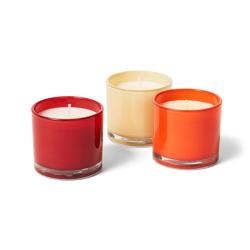
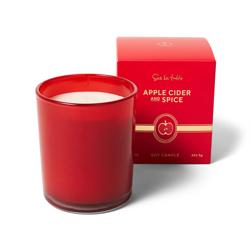
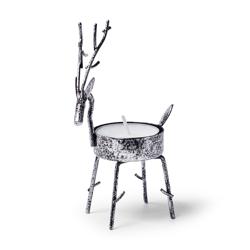
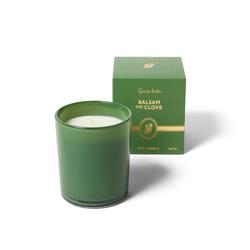
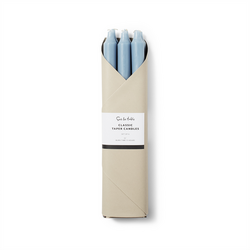
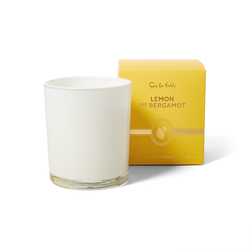
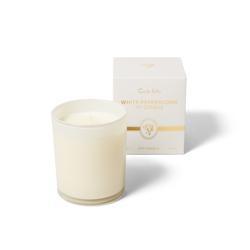
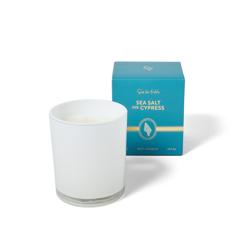
Scented kitchen candles add fragrance and a welcoming glow to the room where meals begin and people gather. Citrus and herbal scents, including lemon, grapefruit, basil and rosemary, are natural choices for a kitchen because their bright, crisp aromas feel at home alongside food. They can help a space smell more inviting after cooking, but fragrance alone does not remove airborne particles or neutralize odors. Unless a candle is specifically formulated and labeled for odor neutralization, think of it as a finishing touch rather than a replacement for cleanup and ventilation. After sautéing garlic or frying fish, washing the pan, taking out food scraps and running an externally vented range hood address lingering smells at their source. A candle can then bring a different fragrance into the room. The best kitchen candle scent depends on personal preference, the size of the space and how close the candle will be to food or dining areas. Lemon and other citrus notes have a familiar freshness without suggesting another dish on the menu. Green, leafy fragrances can recall freshly cut herbs, while softer botanical blends offer a gentler background for a breakfast nook or an adjoining sitting area. Rich vanilla, bakery and spice fragrances have their place, too, particularly for someone who enjoys sweeter aromas, though they may compete with savory cooking smells. There is no need to rule out a favorite scent simply because the candle belongs in a kitchen; timing and fragrance strength matter as much as the scent family. Keeping the candle unlit during a meal lets the aroma of the food take the lead. For a similar fragrance direction in nearby living spaces,
Fresh Scent Candles offer another way to explore bright, airy aromas. A lightly scented room often feels more comfortable than one filled with several competing fragrances, especially when the kitchen opens directly onto the dining room.
Materials and construction influence how a scented kitchen candle looks, burns and fits into everyday use. Candle wax may be soy, beeswax, paraffin or a blend that includes coconut wax or other ingredients. Each formula can carry fragrance differently, and the wax name alone does not establish how strongly a candle will smell or how evenly it will burn. Wick construction, fragrance formulation, drafts and proper care all play a part. No burning candle is emission-free, and plant-based wax does not automatically mean a soot-free burn. If ingredients matter to the household, check the label for the wax blend, fragrance information and any specific use instructions rather than relying on broad descriptions such as “natural.” Essential oil fragrance is not automatically suitable for everyone, either; people sensitive to scent may prefer a lower-intensity candle or no added fragrance in shared spaces. Cotton and wood wicks can provide different burning experiences, with some wood wicks producing a soft crackle. Vessel design deserves equal attention. Clear glass allows the flame to show through, while opaque glass or ceramic can introduce color and texture without taking much visual space. A simple vessel can sit comfortably near stoneware and wood accents, while a more decorative container may suit a kitchen where functional pieces are also part of the décor. Look beyond appearance to the footprint and the surface underneath. A candle needs a stable, heat-resistant location with the clearance required by its manufacturer, not a narrow ledge or a crowded corner beneath cabinetry. Larger vessels and multiple wicks may suit a more open room, but greater size does not guarantee the right fragrance intensity. Listed burn times are estimates rather than promises; the number of wicks, length of each session and maintenance affect longevity. A lid can help keep dust off cooled wax between uses, provided it is used as directed and never assumed to be a safe way to extinguish the flame.
Everyday care helps scented kitchen candles remain enjoyable from the first lighting through their final use. Follow the candle’s instructions for wick trimming, initial burn time and maximum session length, since these details vary by design. A properly maintained wick helps control the flame, while keeping the wax free of matches, wick trimmings and other debris supports safer burning. On the first use, allow enough time for the wax to melt across the surface as directed, without exceeding the recommended burn limit; repeatedly extinguishing a candle too soon can contribute to a deep well around the wick. Keep a lit candle away from dish towels, paper packaging, curtains and anything else that can catch fire. Leave it out of reach of children and pets, and avoid positions where someone might reach across the flame for a serving bowl or utensil. A stove is not a suitable candle stand, even when the burners are off, and airflow from a vent or open window can make a flame flicker excessively. Stay in the room while the candle burns, extinguish it before leaving and let the vessel cool before moving it. Stop using it when the remaining wax reaches the manufacturer’s stated limit, and retire any container that becomes chipped or cracked. Once cool, the exterior can be wiped according to its care instructions to remove kitchen dust or splashes; decorative candle vessels should not be treated as food-safe storage unless expressly identified for that purpose. With those practical details in place, a kitchen candle can mark a pleasant pause after the dishes are done or add a little atmosphere while friends settle in for conversation. It can also make a thoughtful housewarming, host or thank-you gift for someone who enjoys home fragrance. Choose a scent close to the recipient’s known preferences and a vessel that suits their space, with care information included. The most useful choice is one that fits naturally into the household, both in fragrance and in the way it will be used.