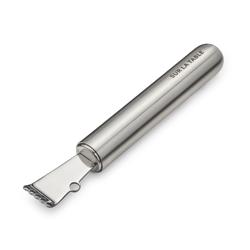
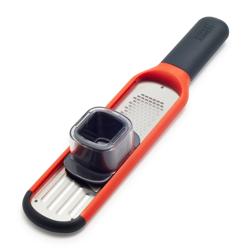
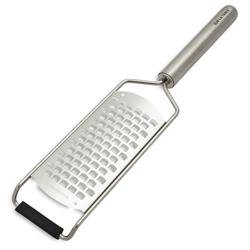
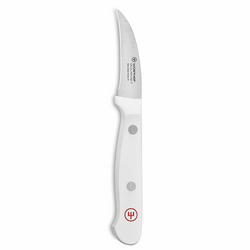
Serrated peelers for delicate vegetables use finely toothed blades to grip thin, slippery skins on produce such as tomatoes and bell peppers, helping remove the peel with less pressure on the flesh beneath. Those tiny teeth give the blade a starting point where a smooth edge may slide, making this style useful when texture and presentation matter. A ripe tomato destined for a silky sauce, a pepper sliced into a delicate salad or a small batch of peeled tomatoes for a fresh salsa can all call for more control than a broad knife blade allows. With suitable produce, a serrated peeler can remove the skin without the blanching and cooling often used to loosen tomato peels. The result depends on ripeness, blade sharpness and the contours of the vegetable, but the goal is the same: remove the outer layer while leaving as much usable flesh as possible. Firm-ripe produce generally offers better support than vegetables that have become very soft, bruised or wrinkled. A serrated edge is helpful, not a substitute for that underlying structure. It can also leave faint lines on the peeled surface, a reasonable trade-off for its grip when the vegetable will be diced, blended or cooked. Although delicate vegetables are the focus, the same blade style can be useful for thin-skinned fruits such as peaches, plums and kiwis. That versatility makes it a practical addition for cooks who prepare both savory dishes and fruit desserts. Within the broader
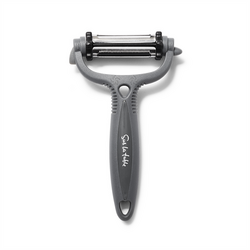
Vegetable Peeler category, serrated blades have a distinct purpose: they catch smooth skins rather than simply sliding beneath a firm outer layer. Straight blades remain useful for everyday potatoes and carrots, while julienne blades create narrow strips instead of removing a continuous peel. Matching the edge to the ingredient keeps the choice grounded in the food you actually prepare, whether that means a few peeled tomatoes for dinner or several peppers for a blended soup.
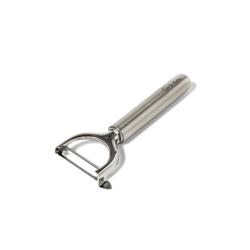
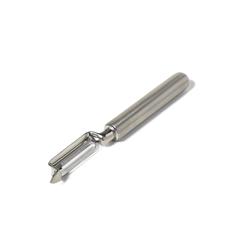
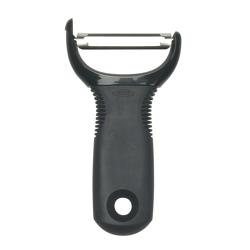
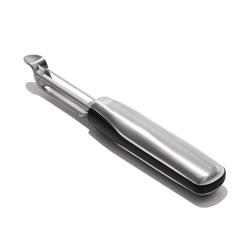
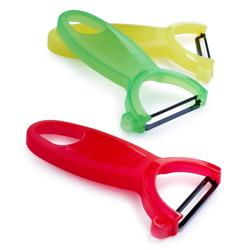
Handle shape, blade movement and overall balance deserve as much attention as the serrations themselves. A Y-shaped peeler positions the blade across the top of the handle, while an inline design places the working head along the handle’s length. Neither layout is automatically the better choice for delicate produce; comfort depends on hand size, wrist position and the motion that feels easiest to control. A pivoting blade can adjust to changing contours, although a swivel mechanism is separate from the handle layout and may appear in different designs. On a rounded tomato or a lobed bell pepper, that movement can help maintain contact without requiring the whole tool to follow every curve at exactly the same angle. Blade width matters, too. A wider cutting span can cover a broad surface efficiently, while a narrower head may feel easier to position around irregular shapes. Look for a comfortable fit rather than simply the largest grip: an oversized handle can be awkward in a smaller hand, and a very slim one may require more squeezing. Textured or soft-touch surfaces may improve purchase, but no grip makes a slippery vegetable or wet hand risk-free. Left-handed cooks should check the stated hand compatibility because blade orientation and cutting direction vary by design. Stainless steel is a common blade material because it offers corrosion resistance and can support a fine cutting edge. It still benefits from prompt cleaning and drying, particularly around the teeth and blade supports. Handles may use stainless steel, rigid plastic or a combination of materials, each with a different weight and feel. A heavier tool is not necessarily more durable, just as a lighter one is not necessarily less capable. Secure construction, a well-supported blade and a handle that stays comfortable through repeated strokes are more useful considerations than weight alone. For anyone who tires during repetitive prep, a balanced tool that works without a tight grip can make a small but meaningful difference.
Good care helps preserve the qualities that make a serrated peeler useful: a clean edge, free blade movement and a secure hold. Small pieces of tomato skin or pepper can lodge between the teeth or near a pivot, so cleanup is easiest before residue dries. A gentle brush can reach those spaces without bringing fingertips against the cutting edge. Dishwasher suitability depends on the individual tool and its handle materials; the manufacturer’s care directions should take priority over assumptions based on a stainless steel blade. Even when dishwasher cleaning is permitted, hand-washing and thorough drying can be a sensible way to limit prolonged exposure to moisture and harsh detergent. Storage matters as well. A blade guard or a separate compartment helps protect the fine teeth from knocks against other utensils and reduces accidental contact when reaching into a drawer. Serrated peeler blades are not generally suited to routine sharpening with a household knife sharpener, so lasting performance depends in part on avoiding misuse. Prying, twisting against hard obstacles or forcing the blade through tough stems can damage an edge intended for thin skins. During prep, stable produce and controlled strokes matter more than speed; a sharp peeler still needs fingers kept clear of its path. For everyday cooking, this is a specialized tool with a useful place beside a dependable straight-blade peeler and a paring knife. It suits the home cook who enjoys smooth vegetable purées, carefully prepared salads or sauces without pieces of peel. It can also make a thoughtful, practical gift for someone who likes small tools that solve a specific kitchen frustration, especially when the handle style matches their preferences. The best fit is not the most complicated design, but one that feels natural in the hand, cleans without fuss and handles the delicate produce that regularly finds its way onto the cutting board.