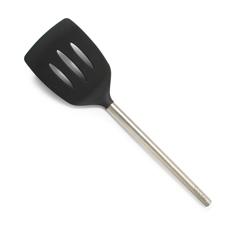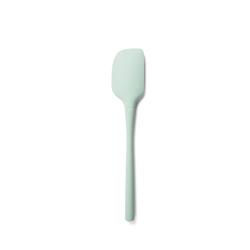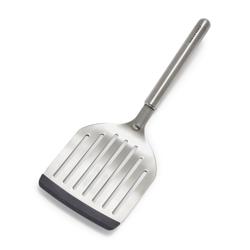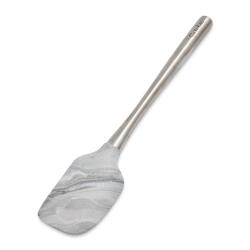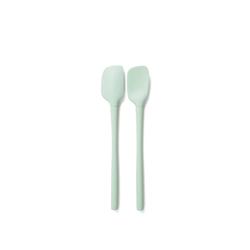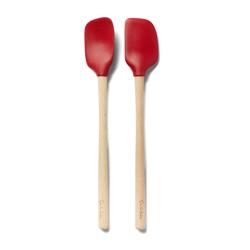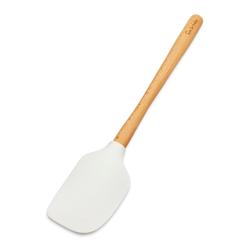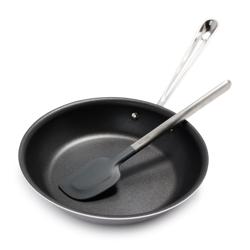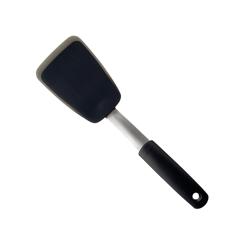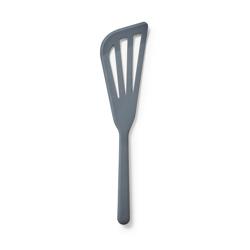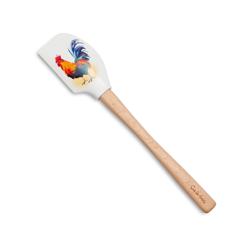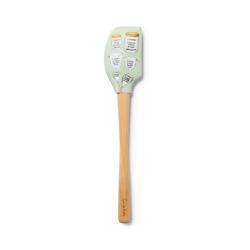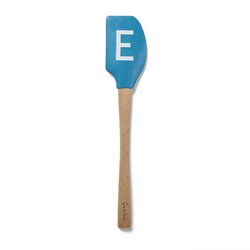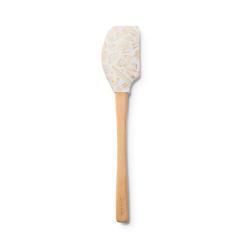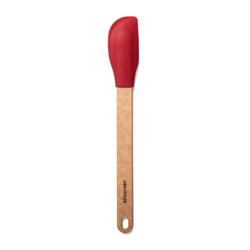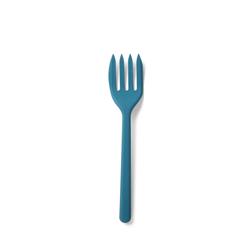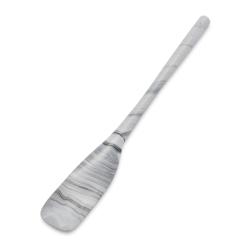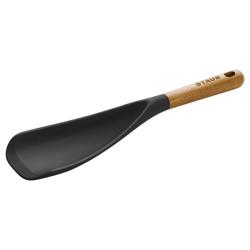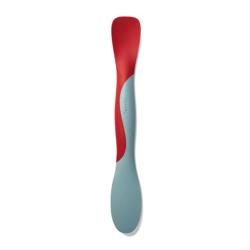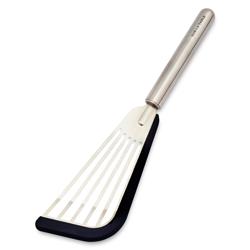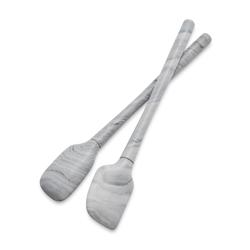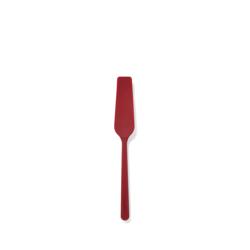
Silicone edge spatulas for eggs pair a soft, flexible working edge with enough support to lift, turn or fold delicate eggs. A thin, tapered edge helps ease beneath set egg whites, while a broader head supports a fried egg or folded omelet on the way from skillet to plate. For scrambled eggs, a flexible edge can follow the curve of the pan and gather tender curds without leaving as much behind. The appeal is as much about protecting cookware as handling breakfast: food-contact silicone is generally suitable for nonstick surfaces when used as directed, offering a gentler alternative to exposed metal utensils. Shape makes a noticeable difference, though, and the word “spatula” covers several tools with different strengths. A flat turner is suited to getting underneath an over-easy egg; a rounded scraper-style spatula is better suited to stirring and sweeping along the bottom of a skillet. A wide, gently flexible head can help fold an omelet over its filling without concentrating all the pressure in one spot. Think about the eggs you cook most often and the motion your hand naturally makes at the stove. Someone who prefers soft scrambled eggs may appreciate an edge that bends readily against the pan, while a cook lifting eggs with crisp, lacy edges may want more support behind the blade. Flexibility should help the tool meet the food, not make the head buckle under it. Even a well-shaped edge works best once the white has set enough to lift, so a spatula complements good timing rather than replacing it. For breakfast sandwiches, a compact head can help lift an egg from a small skillet onto an English muffin. For a larger omelet, a wider surface gives the folded egg more support. These everyday details make silicone edge egg spatulas useful for new cooks learning how eggs behave and experienced cooks who already know exactly how they like their yolks.
Materials and proportions help determine how an egg spatula feels in use. Some designs combine a silicone exterior with an internal nylon or metal core, while others use silicone only along the working edge. A reinforced center can provide stability, and the softer perimeter supplies the give needed to move around a skillet’s curved sides. Full silicone coverage may offer a broader cushion between the core and the cookware, but it is still worth checking that all surfaces likely to touch the pan are appropriate for its finish. Heat resistance varies by construction, including the handle and any joins, so follow the manufacturer’s stated temperature limit rather than assuming every silicone utensil can tolerate the same heat. Heat-resistant does not mean safe for direct flame, contact with an exposed burner or prolonged resting against a hot pan rim. For fit, consider the size of your skillet as well as the food. A broad head may support a large omelet beautifully yet feel awkward in a small pan, where there is little room to angle it beneath an egg. A narrower head is easier to maneuver between separate fried eggs, although it offers less support beneath a larger portion. The angle between the handle and head also matters: enough clearance helps keep your knuckles above the rim while allowing the leading edge to approach the pan at a low angle. A comfortable grip should feel secure without requiring you to squeeze hard, particularly when making several servings. Slotted heads let some excess cooking fat drain away as food is lifted, while solid heads provide an uninterrupted surface for supporting tender eggs. For stirring loose curds, a solid scraper-style head is often more practical than a slotted turner. Cooks who use both motions may find that complementary shapes serve them better than a single tool expected to do everything. For related shapes suited to stirring, scraping and folding beyond breakfast,
Flexible Silicone Spatulas For Cooking offer another way to match the working edge to the task.
Care and durability deserve attention because an egg spatula often sees daily use. Many silicone utensils are dishwasher safe, but care instructions depend on the complete construction, not just the material at the tip. Handles made from wood or other materials may require hand-washing even when the head is silicone. A seamless design has fewer joints where bits of cooked egg can collect; a removable head needs attention around the connection, along with thorough drying before reassembly. Washing soon after cooking makes it easier to remove the thin film eggs can leave behind. Warm water, dish soap and a soft sponge are a sensible starting point when permitted by the care instructions, while abrasive scrubbers can damage the utensil or leave its surface rough. Inspect the working edge occasionally for cuts, splits or separation from the core. An intact edge matters for both food contact and cookware protection, especially if damage could expose a harder material underneath. Avoid using a silicone spatula to chop against sharp edges or pry at firmly stuck food; it is designed for controlled lifting and scraping, not heavy leverage. With appropriate care, the right shape can become a dependable part of more than an egg routine. A supportive turner can lift pancakes or move tender French toast, while a flexible scraper can gather batter from a bowl or stir a small portion of sauce, provided the tool is suited to the task and heat level. That versatility makes silicone edge spatulas a thoughtful addition to a first kitchen, a housewarming gift or a breakfast-focused gift for someone who enjoys cooking at home. The most useful choice reflects the recipient’s habits rather than simply the largest head or longest handle. A person cooking a single egg needs maneuverability; someone making omelets for two may value broader support and a comfortable grip. Matching the edge, head and handle to familiar meals keeps the focus where it belongs: eggs that reach the plate with tender curds, neatly folded layers or a yolk still ready to break over toast.