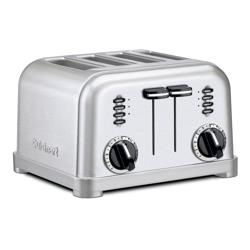
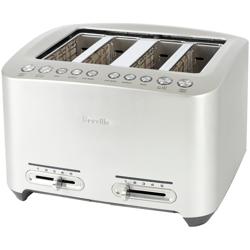
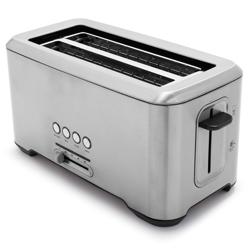
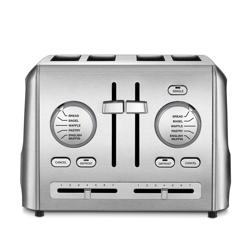
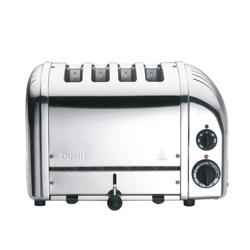
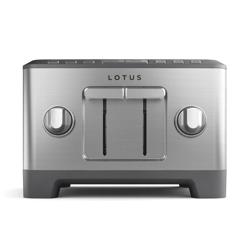
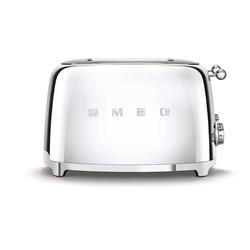
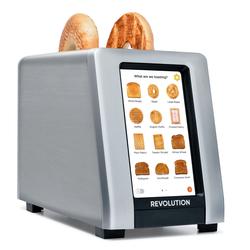
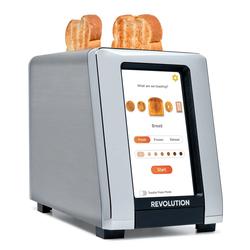
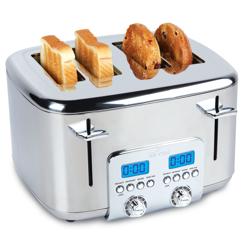
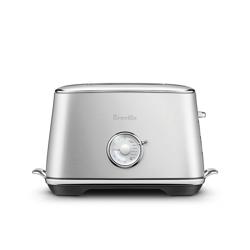
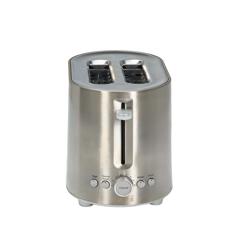
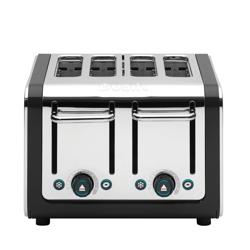
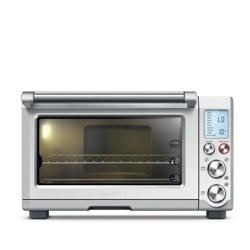
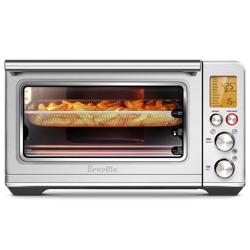
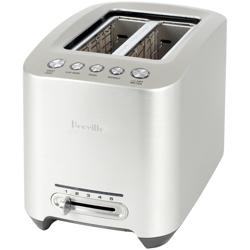
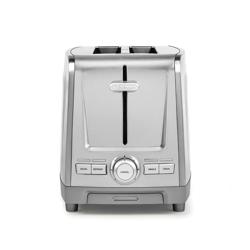
Silver four-slice toasters pair a neutral metallic finish with room for four slices of bread, making them a practical choice for households that prepare several portions at once. Common features include adjustable browning, wide slots, removable crumb trays and, on some designs, independent controls for two pairs of slots. That extra capacity helps when breakfast means toast for two people, bagels for the family or several slices to serve alongside scrambled eggs. Separate controls are especially useful when one person prefers lightly golden bread and another likes a darker, crispier slice. They can also accommodate different breads in the same batch, since a thin slice of white bread and a dense piece of whole-grain bread may need different settings. Slot dimensions matter as much as capacity: wider openings accommodate thicker slices and bagel halves, while slot length determines whether an elongated slice of sourdough fits comfortably. Four-slice capacity does not necessarily mean four separate slots; some designs use two longer openings that each hold two standard slices. The right arrangement depends on the bread you reach for most often. For smaller pieces, such as English muffin halves, a high-lift lever raises the carriage farther above the opening so the toast is easier to retrieve without reaching inside. Depending on the design, a bagel setting may concentrate browning on the cut surface while gently warming the outside. Defrost settings help account for bread taken from the freezer, while reheat functions are intended to warm previously toasted bread without repeating a full browning cycle. A cancel button offers a simple way to stop the cycle early. These details make the difference between a toaster that handles basic sandwich bread and one that comfortably fits a household’s broader breakfast routine. Browning settings are relative rather than universal, so the same numbered setting can produce different results with different bread. Moisture, thickness and ingredients all influence the finished slice, making a little adjustment useful when switching from everyday wheat bread to raisin toast or a thick-cut bakery loaf.
A silver finish gives a four-slice toaster a familiar place among stainless steel appliances without requiring every surface in the kitchen to match exactly. Brushed finishes have a softer sheen, while polished surfaces create a brighter, more reflective look. Silver describes the appearance rather than the complete construction, so the housing material is worth considering separately. Stainless steel is a common exterior material valued for its sturdy feel and resistance to corrosion, although a silver-colored toaster may also incorporate painted surfaces, plastic trim or other materials. The finish can affect everyday upkeep: reflective surfaces tend to make fingerprints more noticeable, while brushed surfaces may make light smudges less obvious. Neither finish should be treated as scratchproof, and abrasive scrubbers can leave lasting marks. Beyond appearance, a toaster’s proportions influence how comfortably it fits into a working kitchen. A wider four-slot body may suit a broad stretch of counter, while a longer two-slot design uses space differently. Measurements should account for the full footprint, the location of the controls and enough room to remove the crumb tray without moving several other appliances. If the toaster will sit near upper cabinets, follow the manufacturer’s clearance requirements and leave the openings unobstructed during use. A nearby outlet makes daily setup simpler, and a cord-storage feature can help manage excess cord when the appliance is not in use. Controls that are easy to read and operate are helpful on a busy morning, especially when several people share the kitchen. A stable base, smoothly operating levers and accessible trays contribute to a solid everyday feel, while interior bread-centering mechanisms, where included, help position slices between the heating elements. These practical details deserve as much attention as the exterior because a toaster is often handled every day. For a broader look at this versatile metallic style, explore
Silver Finish Toasters, keeping your preferred capacity, counter space and everyday bread choices in mind.
A four-slice toaster earns its counter space through uses that extend beyond a quick piece of buttered toast. It can prepare a batch of crisp slices for avocado toast, warm split English muffins for breakfast sandwiches or toast bread to serve with soup at lunch. For couples with different schedules, independent controls can allow one pair of slots to operate while the other remains unused, where the design supports that function. For a family eating together, the larger capacity reduces the number of batches needed, though the amount of bread that fits still depends on slice size. Straightforward care helps keep the appliance ready for those daily routines. Crumb trays collect loose bread particles, but they need regular emptying rather than being left until crumbs accumulate around the toaster. Unplug the appliance and let it cool before cleaning, then remove and clean the trays according to the manufacturer’s instructions. A soft cloth is generally suitable for wiping the exterior; the recommended cleaner will depend on the finish. Avoid immersing the toaster, spraying liquid into the slots or using metal utensils to retrieve stuck bread. If a slice becomes lodged, disconnect the power and follow the manufacturer’s removal instructions. Plain bread and appropriately sized bagel halves are typical uses, while buttered bread, loose toppings and filled pastries can drip or scorch unless the appliance is specifically designed to accommodate them. Keeping the slots clear and avoiding forced oversized slices helps protect the mechanism as well as the bread. For gifting, a silver four-slice toaster can be a thoughtful choice for a housewarming, wedding or shared household, particularly when the recipients regularly make breakfast for more than one person. A neutral finish is easy to coordinate with many kitchens, but counter space and eating habits are more useful considerations than appearance alone. For someone who buys bakery bread, generous slot dimensions may matter most; for a household with competing toast preferences, separate browning controls may be the feature used every day. The best fit brings together comfortable capacity, manageable care and controls that suit the way breakfast actually happens.