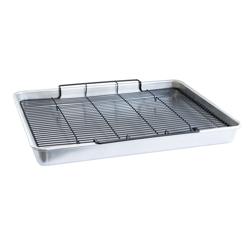
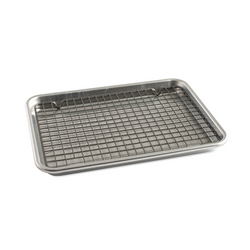
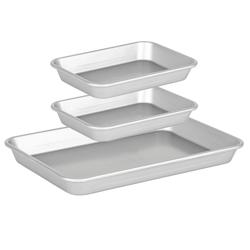
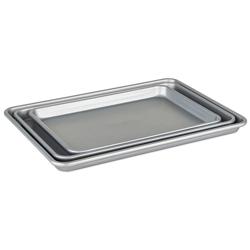
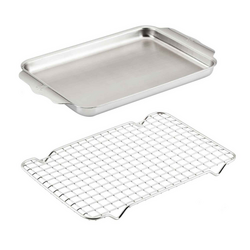
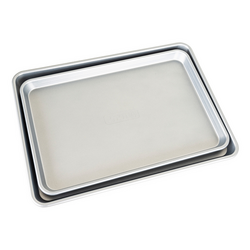
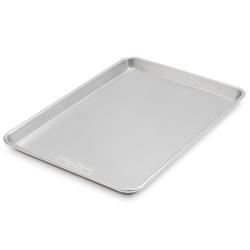
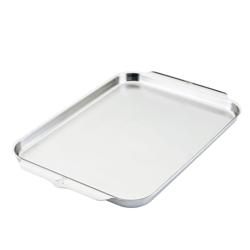
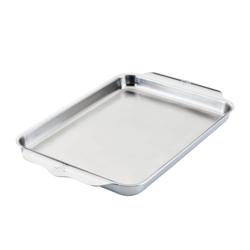
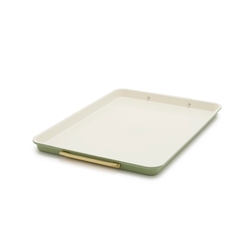
Silver cooking trays are metal pans used for baking, roasting and browning food in the oven, often called baking sheets or sheet pans. Their silver appearance usually comes from aluminum, stainless steel or aluminized steel rather than actual silver, and the material beneath that finish helps determine how each tray cooks and holds up over time. These everyday pieces of bakeware earn their place with tasks as varied as roasting carrots until their edges caramelize, baking a batch of chocolate chip cookies or reheating pizza so the bottom regains some crispness. A rimmed tray contains cooking juices and helps keep vegetables from sliding off when tossed, while a rimless baking sheet makes it easier to slide cookies or pastries onto a cooling rack. Shallow sides leave food exposed to circulating oven heat, making cooking trays especially useful when browning matters more than holding a deep layer of liquid. Aluminum conducts heat efficiently and is relatively lightweight, which can make a large tray easier to handle when it is filled with potatoes or dinner rolls. Stainless steel offers a durable, rust-resistant surface and generally tolerates contact with acidic ingredients better than bare aluminum, though it does not distribute heat as readily on its own. Aluminized steel combines a steel base with an aluminum-containing surface coating, offering strength and useful baking performance. Construction matters alongside material: thickness, reinforced edges and the presence of multiple metal layers can all affect stability and heat distribution. A silver-colored surface is not necessarily nonstick, so checking the finish is important when choosing a tray for delicate cookies or sticky glazes. Likewise, decorative silver serving platters are not interchangeable with oven-safe cooking trays. Only cookware and bakeware identified by the manufacturer as suitable for oven use should go into the oven, regardless of how sturdy or heat-resistant a piece might look.
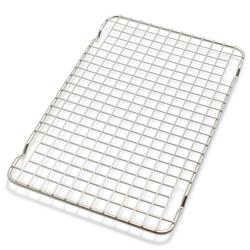
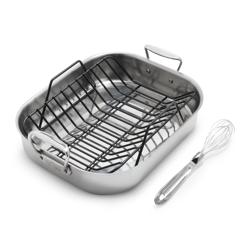
The best fit starts with both the food being prepared and the space where the tray will be used. A generous cooking surface is helpful for family dinners, but a pan still needs to fit comfortably inside the oven with room for air to circulate around it. Check exterior dimensions, including rims and handles, rather than relying only on descriptions such as large or compact. A tray that fits the oven but barely fits the sink can also make everyday cleanup awkward, especially after roasting chicken or baking something with a sugary glaze. Smaller trays suit countertop ovens, modest portions and side dishes that need a different cooking time from the main course; confirm compatibility with the appliance before use. They are also handy for separating ingredients, allowing broccoli to come out when its tips are browned while denser vegetables finish cooking. Larger trays give food more breathing room, but filling every inch can work against the result. Mushrooms, squash and potatoes release moisture as they cook, and crowding them together encourages steaming instead of browning. For cookies, room between portions lets the dough spread without joining into one sheet. A light-colored metal surface generally absorbs less radiant heat than a dark finish, although baking time and browning also depend on the recipe, oven and pan construction. Low rims make it easier to reach food with a spatula, while a more substantial rim provides a useful grip through oven mitts. A compatible oven-safe rack can elevate food above drippings and expose its underside to moving air, particularly when reheating breaded foods or roasting meat. The rack should sit securely within the tray, and both pieces must be rated for the intended temperature. Parchment can help cookies release and simplify cleanup when used within its temperature limit, while a compatible silicone baking mat offers a reusable lining for appropriate recipes. Neither a liner nor a rack makes a tray suitable for heat beyond its stated limit. For kitchens with a coordinated look,
Silver Kitchenware complements the understated finish of silver cooking trays without requiring every piece to match exactly.
Durability is about more than a tray feeling heavy in the hand. A well-constructed rim helps a pan hold its shape, and thicker metal generally resists bending better than very thin metal, but no tray is immune to damage from misuse or abrupt temperature changes. Follow the manufacturer’s oven-temperature limit and broiler instructions rather than assuming all bare metal pans can tolerate the same heat. Allow a hot tray to cool before washing it, since plunging it into cold water can encourage warping. Care requirements vary by material and finish: some stainless steel trays are dishwasher safe, while many aluminum trays benefit from hand-washing to help preserve their appearance. Even when dishwasher use is permitted, baked-on grease may need a little attention first. Warm water, mild dish soap and a nonabrasive sponge are a practical starting point, with soaking after cooling to loosen stubborn residue. Avoid harsh cleaners or abrasive tools unless the manufacturer recommends them, particularly on coated surfaces. Bare aluminum can discolor with dishwasher detergents or react with acidic foods, so prolonged contact with tomato-based sauces, lemon juice or vinegar may not suit that material. A silver tray can also develop stains and a darker patina through regular cooking; appearance alone does not necessarily indicate that it needs replacing. More meaningful concerns include damaged coatings, sharp edges or warping that makes the pan unstable. Dry trays thoroughly before putting them away, and protect coated surfaces from scratches when stacking. With thoughtful care, cooking trays can become some of the most frequently reached-for pieces in a kitchen, equally useful to a new cook learning dependable weeknight dinners and an experienced baker preparing several batches of pastries. They also make practical gifts for someone setting up a kitchen or replacing well-used bakeware, especially when sized for the recipient’s oven and storage space. During the cooler months, their appeal is easy to picture: roasted root vegetables alongside supper, warm biscuits for a shared meal and cookies cooling on the counter. The right silver cooking tray supports those familiar routines with a useful shape, manageable weight and a surface suited to the food at hand.