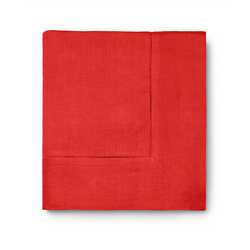
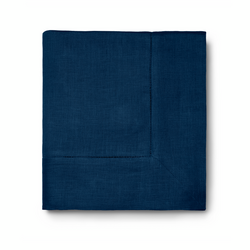
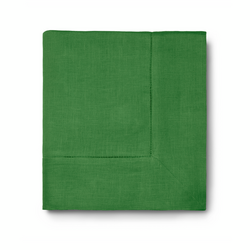
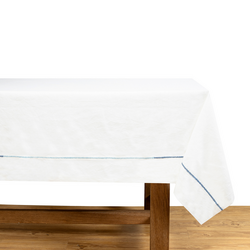
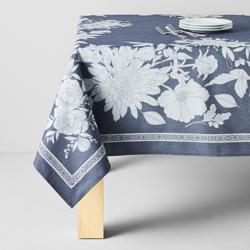
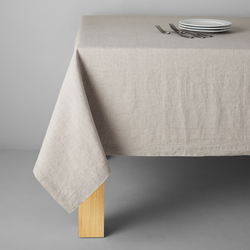
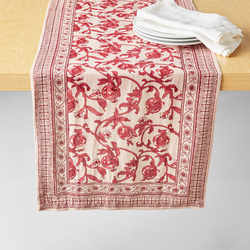
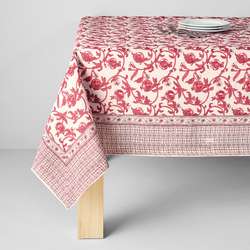
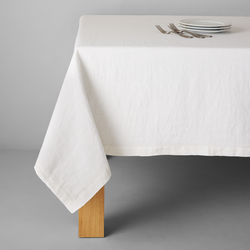
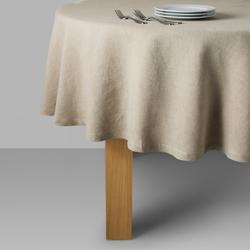
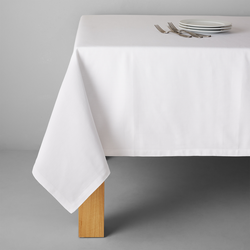
Square linen tablecloths give a dining table a softer outline and a welcoming place to gather, whether the meal is scrambled eggs for two or a leisurely dinner with friends. Their balanced shape suits square tabletops especially well, creating an even border that leaves the place settings feeling connected rather than crowded. Linen is made from flax fibers and is known for its distinctive texture, natural drape and ability to feel refined without looking overly formal. Small variations in the yarn can give the surface depth, so even a simple solid color has more character than a perfectly smooth fabric. That texture works comfortably alongside everyday stoneware, clear glassware and polished flatware, making a square linen tablecloth easy to use with pieces already in the cupboard. A pale neutral can keep attention on the food and the shape of the dinnerware, while a deeper shade creates contrast beneath light-colored plates. Pattern brings another consideration: a subtle woven design adds interest without competing with patterned dishes, while a more noticeable motif can become the main decorative element on an otherwise simple table. Fabric weight also affects the overall impression. A lighter cloth tends to fall softly around the corners, while a more substantial weave can give the setting a fuller, more structured look. Opacity varies with the weave and color, which matters when a dark tabletop sits beneath a light cloth. Linen’s gently rumpled appearance is part of its appeal, particularly for relaxed meals where everything does not need to look freshly pressed. For a more tailored setting, the same fabric can be ironed according to its care instructions. The result is a table covering that can move between casual breakfasts, birthday dinners and small celebrations without requiring an entirely different collection of tableware.
Fit makes a noticeable difference in how a square linen tablecloth looks and feels during a meal. Both the tabletop dimensions and the desired drop—the fabric hanging beyond the edge—help determine the right size. A cloth that barely reaches past the tabletop may shift easily and look undersized, while an overly long drop can bunch in someone’s lap or catch against a chair. For many everyday settings, a drop of about 6 to 10 inches offers a comfortable balance of coverage and ease. A longer drop can create a dressier effect, provided it leaves enough room for seated guests and does not interfere with chair arms. For example, a 64-inch square tablecloth on a 48-inch square table creates an 8-inch drop on every side. Measurements should account for any leaves or extensions that will be in use, and the product’s stated dimensions and shrinkage information deserve a close look before choosing a fit. A square cloth can also work on a round table, where its corners hang lower than the fabric at the midpoint of each edge. That uneven drape can look intentional and relaxed, but the longest points need enough clearance from the floor and nearby seating. On a small dining table, a single square cloth often provides enough visual interest without additional layers. On a larger surface, it may serve as a decorative overlay if its proportions suit the table beneath it. Beyond appearance, consider how the table is used. A breakfast nook that doubles as a homework spot benefits from a manageable drop and a cloth that is easy to remove for laundering. A table reserved for shared meals may accommodate a longer, more generous drape. Fabric adds a soft layer between tableware and the tabletop, but it is not a substitute for trivets beneath hot serving dishes or suitable protection under vessels that collect condensation.
Care is an important part of choosing linen for regular use, especially when the table sees tomato sauce, coffee and the occasional tipped glass. Fiber content, weave, dyes and finishing details can all affect laundering requirements, so the care label is the best reference for washing temperature, drying and ironing. Some linen tablecloths are machine washable, while others may call for more specific treatment. Spills are easier to address before they have time to settle into the fibers; gently blotting excess liquid is generally preferable to rubbing it across a larger area. Any stain treatment should be appropriate for the fabric and tested in an inconspicuous spot, particularly on saturated colors or decorative stitching. Checking that a stain has lifted before drying also helps avoid setting a lingering mark with heat. When machine drying is permitted, following the recommended setting and avoiding overdrying can help manage shrinkage and deep creases. If a pressed finish is preferred, linen is often easier to iron while slightly damp, using the temperature specified on the label. For relaxed everyday dining, smoothing the cloth after laundering may be enough. Linen typically softens with use and washing, and thoughtful care helps preserve its appearance over time. Store it clean and completely dry, with enough room to avoid tightly compressed folds. Households comparing fiber options may also consider
Linen Blend Tablecloths; the companion fibers can change the fabric’s feel, wrinkle resistance and care requirements, so the full composition matters more than the word “blend” alone. For someone who enjoys hosting, a square linen tablecloth can also make a thoughtful housewarming or wedding gift when the table’s shape and dimensions are known. A versatile color leaves room for the recipient’s own dishes and decorating preferences. Whether chosen as a gift or for an everyday dining space, the most useful cloth is one whose size, texture and care needs fit naturally into the way meals happen at home.