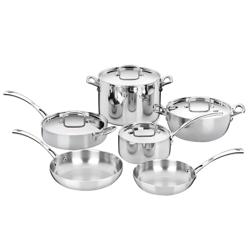
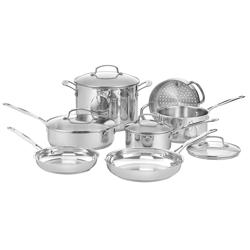
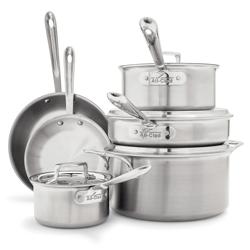
Stainless steel French cookware includes French-made pots and pans as well as French-inspired designs, often pairing durable stainless steel cooking surfaces with heat-conductive aluminum or copper layers. The appeal is practical: a pan that browns chicken, a saucepan that responds as a sauce thickens and a pot that handles repeated batches of pasta without requiring a seasoned finish. French cooking traditions place particular value on building flavor through browning, reducing liquids and moving smoothly from stovetop preparation to oven finishing. Stainless steel suits those tasks while fitting just as naturally into a routine of scrambled eggs, sautéed vegetables and weeknight rice. A French brand name, a French-style silhouette and a made-in-France designation describe different things, so country-of-origin information matters when French manufacture is part of the appeal. Construction deserves equal attention. Stainless steel provides a durable, relatively nonreactive cooking surface, but it does not distribute heat as readily as aluminum or copper. In clad cookware, bonded layers combine those materials to help spread heat across the pan. Fully clad construction extends the layered material through the base and sidewalls, while an encapsulated-base design concentrates heat-conductive material beneath the cooking surface. Both approaches can serve everyday cooking well; the overall construction, thickness and shape matter more than the layer count alone. Three-ply and five-ply descriptions identify the number of bonded layers, not a universal ranking of cooking performance. Heavier construction can help steady cooking temperatures, while lighter pieces may feel easier to lift and maneuver. Polished and brushed finishes offer different looks, but neither finish by itself establishes how evenly a pan heats. The uncoated stainless steel interior is especially useful for tomato sauces, wine reductions and other acidic preparations that can be less compatible with reactive, unlined metals. It also makes browned bits easy to see, helping a cook judge when a splash of stock can turn the bottom of the pan into the beginning of a good sauce.
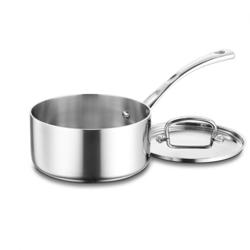
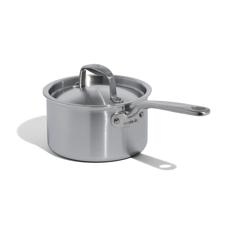
The most useful assortment of stainless steel French cookware reflects the meals prepared most often, rather than simply the number of pieces in a cabinet. A skillet with gently sloping sides gives a spatula room to reach beneath a fillet and makes it easier to slide sautéed mushrooms onto a plate. The term French skillet generally describes a sloped or flared profile, although dimensions and sidewall shapes vary by maker; it does not establish where the pan was manufactured. A sauté pan’s straighter sides help contain liquids and larger portions, making that shape useful for chicken with a pan sauce or vegetables finished in broth. Saucepans suit grains, custards and smaller quantities of soup, while a rounded saucier allows a whisk to move through the junction between the base and sides with fewer tight corners. Taller pots provide room for pasta water and stock, and a broad, shallow covered pan gives braises space without stacking ingredients too deeply. Cooking surface matters as much as stated capacity: crowded mushrooms tend to steam, while an adequately sized base gives moisture room to evaporate. Larger cookware also needs a burner that can support reasonably even heating across its base. For a smaller household, manageable everyday pieces may see more use than an oversized set; frequent entertaining can make wider pans and larger capacities more practical. Coordinated sets offer consistency in handling and storage, while individual pieces allow a kitchen to develop around specific cooking habits. Handle shape, balance and the presence of a helper handle become especially noticeable when a pan is full. Fitted lids help contain moisture, and metal versus glass lids offer different trade-offs in visibility and durability. Cooktop compatibility should always be confirmed, particularly for induction, which requires a suitable magnetic base. Oven and broiler limits also vary with handles, lids and construction, so stainless steel alone is not a guarantee that every component can tolerate the same heat.
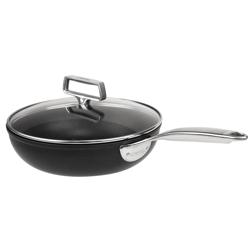
With thoughtful use and care, stainless steel French cookware can remain a dependable part of a kitchen for many years. An uncoated surface is not nonstick, and that distinction matters when cooking delicate fish or eggs. Moderate preheating, an appropriate amount of fat and enough time for browning often help food release more easily; very high heat is not necessary for every sear. The fond left after cooking meat or vegetables is part of the appeal, dissolving into wine, stock or water for a sauce with concentrated flavor. After cooking, allowing the pan to cool before washing helps avoid the stress of a sudden temperature change. Warm, soapy water and a nonabrasive sponge handle much of the daily cleanup, while a brief soak can loosen stubborn residue. Dishwasher safety varies, and hand-washing may help preserve the appearance of exterior finishes and handle details even when machine washing is permitted. Mineral deposits and rainbow-colored heat marks can develop with use; these are often surface discolorations rather than evidence that the pan has stopped performing. A cleaner approved by the manufacturer can help address them without unnecessary abrasion. Thorough drying reduces water spots, and pan protectors or a soft layer between nested pieces help limit scratches during storage. Avoiding prolonged contact with concentrated salt or chlorine-based cleaners also helps protect the steel. For someone setting up a first kitchen, building on a few well-used essentials or returning to favorite French recipes, this cookware offers room to develop familiar techniques without depending on a delicate cooking coating. It can also make a thoughtful wedding or housewarming gift, particularly when the recipient’s cooktop, storage space and preferred pan sizes are known. Cooks drawn to a darker finish can also explore
Black Stainless Steel Cookware, keeping in mind that exterior treatments and care requirements differ. Across finishes and shapes, lasting usefulness comes from matching construction and handling to the way someone actually cooks.