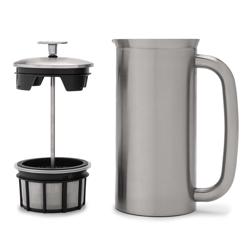
Stainless steel French presses are durable manual coffee makers that brew by steeping ground coffee in hot water, then using a plunger and filter to separate the grounds from the finished drink. Their metal bodies resist the breakage associated with glass carafes, making them a practical choice for everyday brewing, shared kitchens and frequent use. Many feature double-wall construction to help slow heat loss, while vacuum-insulated designs provide an additional barrier to heat transfer. Not every stainless steel press is insulated, so construction matters more than the metal exterior alone when comparing heat retention. The brewing experience remains straightforward: no electricity at the table, no paper filter required with a standard reusable mesh filter and direct control over the coffee-to-water ratio. Because metal mesh allows coffee oils and some fine particles into the cup, French press coffee typically has a fuller body than coffee brewed through paper. That texture can bring satisfying richness to a morning mug or stand up well to a splash of milk. Finer filtration can reduce sediment, though the result depends on the filter design and the consistency of the grind. Stainless steel also gives a press a substantial feel, whether its finish is softly brushed or brightly polished. Beyond appearance, details such as a comfortable handle, a secure lid and a well-shaped spout influence how pleasant it is to use every day. A handle with enough clearance for your fingers makes a full carafe easier to lift, while a controlled pour helps keep coffee in the cup rather than on the breakfast tray. Insulation can be useful when serving more than one person, but it does not necessarily stop brewing after the plunger is lowered. Unless a particular design isolates the grounds, transferring finished coffee to cups or a separate serving vessel helps keep the last serving closer in flavor to the first.
Choosing among stainless steel French presses starts with how much coffee you actually drink and where the press will spend its time. A smaller carafe suits a single morning serving or a kitchen with limited storage, while a larger capacity makes sense for two coffee drinkers, a leisurely breakfast with guests or a shared office coffee station. Compare capacity in ounces rather than relying only on a stated cup count, since a manufacturer’s coffee cup may be considerably smaller than a favorite mug. Two 12-ounce mugs, for example, call for more brewed coffee than two small after-dinner cups, and the grounds occupy space inside the carafe. Overall dimensions matter, too. A broad base needs room on the counter, a tall plunger may require clearance beneath a cabinet and a larger handle can affect how neatly the press fits in a cupboard. Weight is another useful consideration: a substantial stainless steel body can feel reassuringly sturdy, but the press should still be comfortable to lift when filled. When comparing the
Durable French Press collection, consider how the body, handle, lid and filter assembly work together rather than judging durability by the exterior alone. Replaceable screens and accessible components can make a difference over years of use. A simple filter assembly may appeal to someone who values easy cleanup, while a finer or multilayer filter may suit a coffee drinker who prefers less sediment. Even with fine filtration, a consistent coarse grind helps limit grit and makes plunging easier. For travel to a vacation rental or use at a campsite, stainless steel avoids the concern of packing a glass carafe, but a French press should not be assumed to be leakproof or suitable for carrying filled. Likewise, a metal body does not mean the press belongs on a stovetop or over a flame. It is a brewing vessel unless its care and use instructions specifically say otherwise.
Regular care helps a stainless steel French press stay pleasant to use and keeps old coffee oils from carrying into the next batch. A clean-looking carafe can still hold residue around the mesh, beneath the filter plates or along the inside of the lid, so access to those areas is worth considering before choosing a design. Removable filters are especially helpful for households that brew daily. After the grounds have cooled, collect them for the trash or compost rather than washing a full batch down the drain. Gentle washing with mild dish soap and a nonabrasive sponge is usually appropriate for stainless steel, but the manufacturer’s instructions should determine how each part is cleaned. Some presses are dishwasher safe, while others require hand-washing because of their finish, insulation, seals or additional components. A stainless steel exterior alone is not a guarantee of dishwasher compatibility. Thorough rinsing and drying help prevent lingering detergent and water spots, and abrasive pads can scratch a polished surface. Stainless steel resists corrosion, but it is not immune to damage from harsh cleaners or prolonged exposure to certain substances. Checking the mesh and reassembling the filter correctly also helps maintain a smooth plunge and consistent filtration. These practical details make stainless steel French presses appealing gifts for people who enjoy coffee without wanting another electric appliance. A new homeowner may appreciate the compact footprint, an experienced coffee drinker may value control over each batch and a frequent host may enjoy bringing a handsome carafe directly to the table. Paired with whole-bean coffee or a grinder suited to coarse grinding, a press can support a complete daily routine without requiring a complicated setup. The most useful choice is one that matches the recipient’s habits: enough capacity for their usual servings, a manageable weight, comfortable pouring and care requirements they will be happy to follow. Those everyday qualities matter long after the gift is unwrapped.