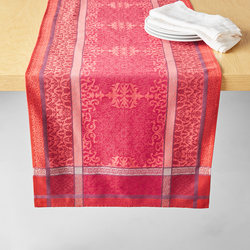
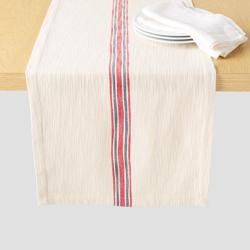
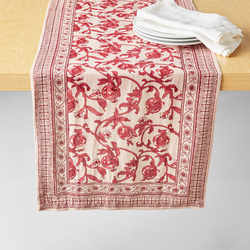
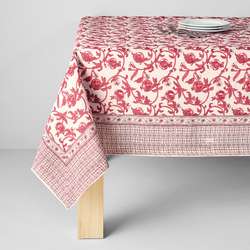
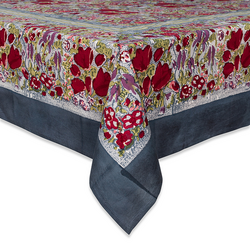
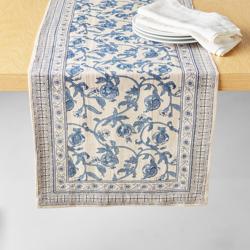
Striped table runners bring color and definition to a table while leaving the surface beneath them part of the setting. A band of fabric down the center gives a vase, serving bowl or pair of candlesticks a place to settle, whether the table is set for a relaxed breakfast or dinner with friends. Stripes offer plenty of variety within a familiar pattern: narrow lines can feel subtle and tailored, while broad bands create a stronger contrast against wood, glass or stone. Closely spaced stripes often read almost like texture from a distance, making them an easy companion for patterned plates. Wider stripes give simple dinnerware a more graphic backdrop. The direction of the pattern matters, too. Lengthwise lines draw the eye along a rectangular table, while crosswise stripes break up a long surface and create a different rhythm beneath serving pieces. Cream, gray and other neutral combinations keep the focus on food and tableware; brighter colors can pick up a detail in a favorite platter, upholstered chair or piece of art. For a setting built around blue accents,
blue patterned table runners offer another way to connect linens with dishes and decorative details. A striped runner does not need an exact match elsewhere on the table. Repeating one color in cloth napkins or glassware usually creates enough connection, leaving room for pieces collected over time. Against a bare wood tabletop, a softly textured stripe can feel relaxed and welcoming. Layered over a solid tablecloth, the same pattern becomes a more defined centerpiece for a celebration. A runner also suits smaller arrangements beyond the dining table, bringing a little structure to a breakfast nook, console or sideboard without requiring a full covering. Its relatively narrow shape makes it especially useful when the grain of a tabletop or the outline of a piece of furniture is worth keeping in view.
Material and construction influence how a striped table runner looks, feels and holds up to use. Cotton is a familiar choice for an approachable table setting, with options ranging from lightweight weaves to more substantial fabrics with noticeable texture. Linen has a distinctive, gently irregular surface that works well alongside stoneware and wood, and its natural creasing can be part of a relaxed presentation. Cotton-linen blends combine characteristics of both fibers, though the finished feel depends on the weave and proportions. Polyester and other blended fabrics may offer easier wrinkle management, but care requirements still vary from one runner to another. A smooth, tightly woven fabric provides a different backdrop from a nubby weave, particularly beneath clear glass or polished flatware. Some stripes are printed onto fabric, while others are formed with colored yarns woven into the cloth. That difference can affect the appearance of the reverse side, so a two-sided look is worth confirming rather than assuming. Finished edges matter as well: neatly secured hems and well-finished corners help a runner lie cleanly, while fringe introduces a softer, more casual outline. For a table used every day, a washable fabric and straightforward care routine can be as important as the pattern itself. A runner near shared platters is likely to encounter a little salad dressing, a splash of coffee or a stray spoonful of sauce. Following the care label, treating spills promptly and using the recommended wash and drying settings help preserve its appearance. Dark and light stripes sharing the same fabric make the first-wash instructions particularly important. Depending on the material, ironing or steaming may restore a crisp finish after laundering. Fabric runners can provide a light layer between decorative objects and the tabletop, but they are not a substitute for trivets under hot cookware or a moisture barrier beneath a wet vase. Protective pads and coasters remain useful where heat, condensation or rough pottery could affect the surface below.
The right proportions give a striped runner room to look intentional without crowding the meal. Length determines whether the fabric stays within the tabletop or hangs beyond the ends, while width affects how much space remains for plates and glasses. An overhang of about 6 to 12 inches at each end is a common choice for a rectangular dining table, although a shorter runner can work well when end seats need extra clearance. On a round or square table, a centered runner creates a defined band beneath a low arrangement, with the surrounding surface left open for place settings. The width deserves particular attention on a narrow table: a generously sized runner may look appealing on its own but leave little separation between the centerpiece and dinner plates. A slimmer shape can be more comfortable when serving bowls need to move around during the meal. On an extendable table, the most useful length may depend on whether the runner is intended for the everyday arrangement or a larger gathering. These practical details also make striped table runners thoughtful gifts for housewarmings, weddings or hosts who enjoy setting the table. A familiar color palette and manageable care requirements help the gift become part of regular use rather than something saved for a rare occasion. For someone who favors white dishes, stripes add interest without requiring a new dinnerware collection; for someone with colorful ceramics, a quieter stripe gives those pieces space to stand out. Between meals, a runner can anchor a fruit bowl or a small grouping of objects, helping a dining surface feel considered without keeping it fully set. When it is time to gather, leaving open space along the fabric keeps the pattern visible and makes room for the food. The result is a table that feels welcoming and personal, with enough structure for a special dinner and enough ease for an ordinary meal.